 EMERGING TECH
EMERGING TECH
EMERGING TECH


EMERGING TECH

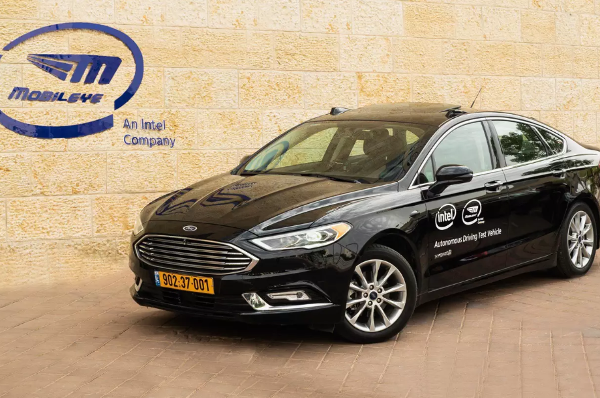
Intel Corp.’s Mobileye division will launch a trial of self-driving taxis in Israel next year, Intel Chief Executive Officer Bob Swan announced Sunday.
As first reported by Bloomberg, Swan made the announcement after riding in a self-driving vehicle developed by Mobileye in Jerusalem. “The most impressive thing is to just to see how far they have come in each one of the successive drives that I have gone on over the last two years,” Swan said.
Intel acquired Mobileye, a developer of autonomous vehicle systems for $15.3 billion, in March 2017. The purchase was described at the time as a placing a major bet that it could become the leading supplier of technology to power self-driving cars.
Completing the acquisition in August 2017, Intel was quick out of the gates, announcing that it was deploying a test fleet of 100 fully autonomous vehicles. That was just the start, however, with an announcement in May 2018 that the division has signed a deal with an unnamed European automaker to supply autonomous driving technology for 8 million cars.
Though never officially named, the company is likely Volkswagen AG given that the German carmaker is a partner in the so-called “robo-taxi” service along with Champion Motor Group Inc.
The software development for the service is expected to be completed by the end of the year. The Israel trial is a stepping stone in Intel’s longer-term ambition to roll out self-driving taxis globally.
The service will eventually see Intel compete directly with Waymo LLC, which rolled out a commercial driverless taxi service in Phoenix in December. In a sign that at least for now, partnerships are required to expand the use of the technology, ride-hailing firm Lyft Inc. announced in May that it would provide access to Waymo vehicles to customers.
Other notable firms planning to launch self-driving taxi services include a partnership between Daimler AG and Robert Bosch GmbH, which are planning to launch a trial service in San Jose, California, this year, and General Motors Corp., which was also planning a similar trial but has been quiet on the potential service of late.
Given that the technology is new, there may not be a first-mover advantage in self-driving taxis, but there’s certainly a growing race as companies seek to bring their technology to market as soon as possible.
Although starting from a base of near zero, the self-driving taxi market is predicted to grow at a compound annual growth rate of 167% out to 2022, with more than 100,000 self-driving taxis expected to be deployed for commercial service in that time.
Support our mission to keep content open and free by engaging with theCUBE community. Join theCUBE’s Alumni Trust Network, where technology leaders connect, share intelligence and create opportunities.
Founded by tech visionaries John Furrier and Dave Vellante, SiliconANGLE Media has built a dynamic ecosystem of industry-leading digital media brands that reach 15+ million elite tech professionals. Our new proprietary theCUBE AI Video Cloud is breaking ground in audience interaction, leveraging theCUBEai.com neural network to help technology companies make data-driven decisions and stay at the forefront of industry conversations.