 SECURITY
SECURITY
SECURITY







SECURITY

For the chief executive officer of HackerOne Inc., running a company from home without a central office is nothing new. He has been doing it since his first day at the helm of MySQL AB in 2001.
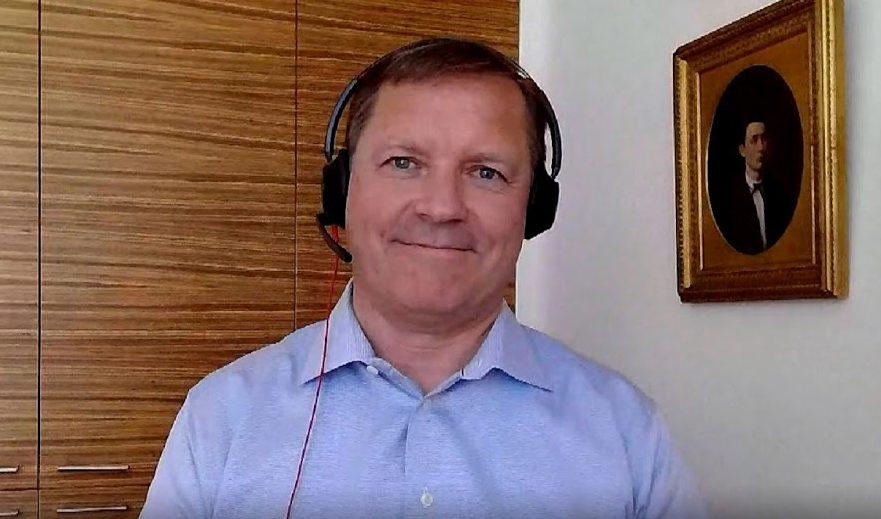
One day, Marten Mickos (pictured), suggested to one of MySQL’s co-founders that the company should at least open a small office in Scandinavia to store contracts and hold occasional meetings. “He said: ‘No office; over my dead body. It will kill the company culture,’” Mickos recalled.
Mickos spoke with Jeff Frick, host of theCUBE, SiliconANGLE Media’s livestreaming studio. They discussed lessons learned from MySQL’s remote work model, how online communication will become standard practice for most companies, adjustments necessary for using the visual medium, and the impact of open-source in global collaboration.
MySQL’s culture was based on the ethos of open-source collaboration that fueled the development of its relational database management system. Although online video conferencing was available, it was still expensive and cumbersome to use 20 years ago.
“They had developed a way of working with open-source contributors all over the world using email and Internet Relay Chat back then, which was a predecessor of Slack,” Mickos said. “They just developed a method of working together and made sure everything was digital and everything was written down.”
Two decades later, much of the world is now doing business in the same way as MySQL, forced into virtual communities by the coronavirus pandemic. It became necessary as a result of the need for isolation in a time of global emergency, but Mickos believes that as the world has shifted, so too will methods of running companies from home instead of a large office.
“I think it will flip,” Mickos said. “Soon, this will be the real conversation, and if we meet in person then it’s an anomaly. Most of the time we will connect like this and we will figure out ways to understand each other.”
Although online video communication may become the new normal for many people, that does not mean the dynamics of human behavior will suddenly disappear. The same elements of communication that were present in the office environment still exist and must be translated using the new medium, according to Mickos.
“When you go to an office, people are paying attention to how you walk, where you stop, what you look like,” Mickos said. “Those are vital functions of a group that works together. You have to bring that part of yourself into the digital reality, because people won’t ultimately trust you until they know that you are a human being.”
A key element for transitioning to a completely online work environment is measurement. There is no more “looking busy” around an office. Now, results are tracked and measured for everyone to see.
“It’s so easy to fake it in an office,” Mickos explained. “You go in there, you look busy, and people think you are amazing. When you work from home, the only thing you have to show for it is your work results, so you have to create metrics that can be tracked in a way that others can understand what you are doing.”
Founded in 2012, HackerOne leverages the power of the ethical hacker community to test for and identify security vulnerabilities and notify organizations when they must be fixed. Through the payment of bug bounties, six hackers on its platform have already earned over $1 million.
By tapping into a network of “white hat” hackers around the world, Mickos’ company is endeavoring to show that open source can be a key solution in a time when global collaboration has taken on a whole new meaning.
“The biggest accomplishments in society are always about collaboration by large groups of really intelligent, driven people,” Mickos said. “I will never give up hope about what will come once we come out of this. With that mindset, as a company, as a family, as an individual human being, or as a society, you can get through any problem.”
Here’s the complete video interview, one of many CUBE Conversations from SiliconANGLE and theCUBE:
Support our mission to keep content open and free by engaging with theCUBE community. Join theCUBE’s Alumni Trust Network, where technology leaders connect, share intelligence and create opportunities.
Founded by tech visionaries John Furrier and Dave Vellante, SiliconANGLE Media has built a dynamic ecosystem of industry-leading digital media brands that reach 15+ million elite tech professionals. Our new proprietary theCUBE AI Video Cloud is breaking ground in audience interaction, leveraging theCUBEai.com neural network to help technology companies make data-driven decisions and stay at the forefront of industry conversations.