 INFRA
INFRA
INFRA
INFRA



INFRA

International Data Corp., a global provider of market intelligence, advisory services and events for the information technology industry, has been doing research on the effects of COVID-19 and the convergence of cloud strategies. So what does the research show?
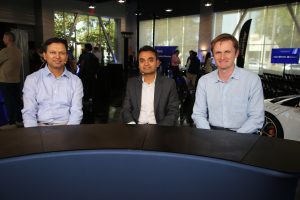
“Obviously, with COVID, a lot of folks have pivoted or accelerated their move to the cloud in many ways,” said Mary Johnston Turner (pictured), research vice president of cloud management at IDC. “They’re building out edge, they’ve got remote work from home, they’ve got traditional VM workloads, they’ve got modern cloud native container-based workloads running on-prem and in public clouds and public cloud services. So it’s really … a striking world of connected clouds.”
Turner spoke with John Furrier, host of theCUBE, SiliconANGLE Media’s livestreaming studio, during AnsibleFest 2020. They discussed research around subjects like cloud strategies, automation and containers. (* Disclosure below.)
One of the major things IDC does is track IT markets and spending and purchasing around the world. At the beginning of the year, there was a very rapid shift to cloud — particularly to support work from home, according to Turner. There was a lot of investment in virtual desktops, remote work and collaboration tools very early on. But now that the pandemic has evolved and companies are maturing and moving into more of ongoing recovery resiliency phase, IDC continues to see very strong spending on cloud.
“Overall, [COVID-19] accelerated this move to more connected environments,” Turner said. “We’re not seeing a whole-hog exit from on-prem resources. The other thing is edge. We’re seeing a lot of growth on edge. There’s sort of work from home, but also more remote monitoring, more support for all kinds of IoT and remote work environments, whether it’s lab testing or data analysis or contact tracing. I mean, there’s just so many different use cases.”
Because of this rapidly increasing connected world, it’s getting more and more challenging for organizations to maintain consistent configuration, stable APIs, security and compliance. And those companies that are coping the best with it are the ones that have been investing in automation — particularly in continuous integration and continuous delivery pipelines and code-based environments, according to Turner.
“They’re really starting to look at automation as the way to deal with the increasing scale and velocity of change, because that’s one of the things that’s happening,” she said. “We’ve seen organizations stand up applications they never thought they were going to have to stand up, and they not only stood them up very quickly, but then they continue to update them with great frequency, often multiple times a day or a week.”
It seems as if automation is a step toward everything as a service, known as XaaS, according to Turner. But many organizations are still in the early stages of working with containers, and IDC’s research shows that five to 10% of applications have been containerized.
“Over the next couple of years, most enterprises tell us they think a third of their workloads could be containerized,” Turner said. “So it’s ramping very, very quickly. The goal for many organizations is certainly containers allow for faster development, very supportive microservices — but, increasingly, it’s also about portability. I talk to many organizations that say, ‘Yeah, one of the reasons I’m moving even traditional workloads into containers is so that I have that flexibility.'”
Here’s the complete video interview, part of SiliconANGLE’s and theCUBE’s coverage of AnsibleFest 2020. (* Disclosure: TheCUBE is a paid media partner for AnsibleFest 2020. Neither Red Hat, the sponsor for theCUBE’s event coverage, nor other sponsors have editorial control over content on theCUBE or SiliconANGLE.)
Support our mission to keep content open and free by engaging with theCUBE community. Join theCUBE’s Alumni Trust Network, where technology leaders connect, share intelligence and create opportunities.
Founded by tech visionaries John Furrier and Dave Vellante, SiliconANGLE Media has built a dynamic ecosystem of industry-leading digital media brands that reach 15+ million elite tech professionals. Our new proprietary theCUBE AI Video Cloud is breaking ground in audience interaction, leveraging theCUBEai.com neural network to help technology companies make data-driven decisions and stay at the forefront of industry conversations.