 AI
AI
How has that direction continued to mature throughout 2025, and how does Dell’s AI PC evolution fit within the broader shift toward AI-enabled enterprise infrastructure?










AI

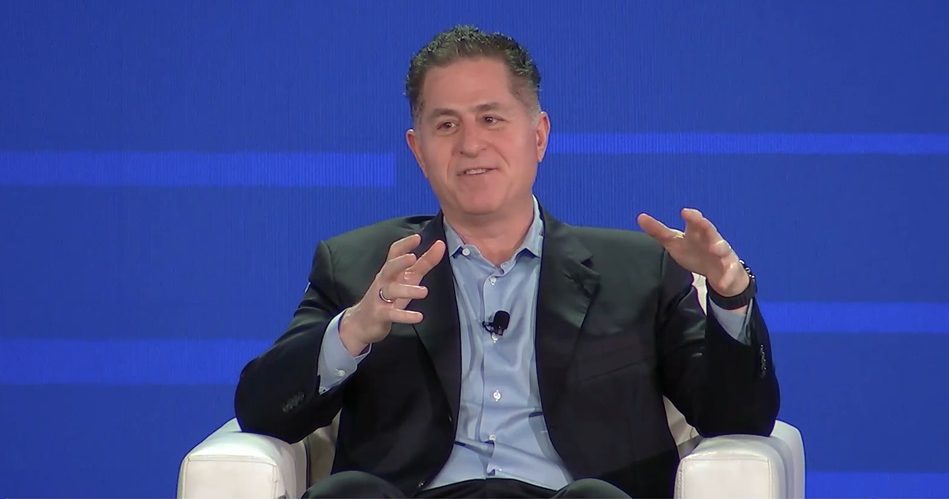
When Michael Dell (pictured) launched his computer company from a dorm room at the University of Texas in 1984, he envisioned a world where the personal computer would be a device everyone would want. More than 40 years later, he finds himself still meeting that need, adapting PC technology for the new world of artificial intelligence.
“If you’re a large organization and you’re installing tens of thousands of these and replacing things that are three and four years old, the last thing you want to do is install the thing that doesn’t work with the thing the customer wants, that the end user wants to do in the future,” Dell said. “And what is that thing they want to do in the future? It’s AI.”
Dell’s remarks came during a question/answer session in New York with theCUBE, SiliconANGLE Media’s livestreaming studio, earlier this year. At the time, Dell Technologies Inc. unveiled three new product lines — the Dell for everyday users, Dell Pro for professional creators, and Dell Pro Max for advanced workloads — each designed around integrated neural processing units (NPUs) to power AI locally. The conversation centered on how the PC was evolving from a productivity device into a platform for edge inferencing, small language model tuning and AI-driven security. The message was clear: AI was no longer a feature but the foundation of Dell’s client computing strategy.
This feature is part of SiliconANGLE Media’s ongoing series exploring how AI is reshaping enterprise infrastructure, from the data center to the personal computer. Here’s how that strategy has progressed in 2025. (* Disclosure below.)
The announcements earlier this year at CES were part of a broader brand re-launch for Dell as it positions its portfolio to be a “leader in the AI PC movement.” Dell’s decision to showcase its announcements at the mammoth CES gathering highlighted how the consumer world is being imbued with technology bleeding over from enterprise-scale efforts and powerful hardware.
A key element in Dell’s AI PC investment centers on leveraging advances in the technologies driving application processing at the edge. These innovations involve advanced neural, graphics and central processing units that comprise the core engines for making AI deliver results users have come to expect.
“You can think about productivity applications today, security, creator applications that are leading the way using the NPU, the GPU [and] the CPU to do AI,” said Sam Burd, president of the Client Solutions Group at Dell, during an interview with theCUBE. “As we look into the future, we see companies using their data that’s at the edge in their model on their device, and that agent small language model on PCs. For companies that are smart and individuals buying systems today, we’d urge them to be ready for what two or three years from now [will] look like.”
Across 2025, Dell expanded that lineup with refreshed configurations using Intel Core Ultra (Lunar Lake) and AMD Ryzen AI Pro processors, boosting NPU performance and enabling more advanced multimodal workloads directly on the device.
The company also expanded its enterprise offerings by combining AI-aware client software such as Dell Optimizer with device-management services like Cloud Client Workspace (for thin-client and VDI deployments), giving IT administrators tools to manage and secure endpoints — though the availability of those tools depends on the device class and use case.
The evolution of Dell’s AI strategy since earlier this year extends far beyond the device. In May 2025, Dell unveiled the “AI Factory with Nvidia,” a co-engineered portfolio that brings together data center servers, workstations, storage and networking with Nvidia’s Blackwell architecture. The partnership formalized Dell’s position as both an enterprise infrastructure provider and a PC innovator, linking edge devices to large-scale model training environments.
The company’s Infrastructure Solutions Group has since launched new AI-optimized servers with liquid-cooled designs, improved energy efficiency and expanded GPU density for large-scale inferencing. In fall 2025, Dell extended the AI Factory program with new reference architectures for retrieval-augmented generation, agentic automation pipelines and multimodal enterprise search — tying the PC, workstation and data center layers into a cohesive operational fabric.
In parallel, Dell updated its AI Data Platform in August 2025 — adding retrieval-augmented generation workflows, vector search powered by Elastic and native integration with Dell PowerScale object storage to simplify data-to-model pipelines. A subsequent October update added automated data lineage tracking and MLOps governance hooks, driven by rising demand for compliant enterprise model pipelines.
These developments reflect Dell’s shift toward a unified “device-to-data center” AI architecture, one in which PCs act as the intelligent edge nodes of a much larger distributed AI ecosystem.
The future of the personal computer and its role will also depend on its value to developers. Businesses seeking to deploy AI throughout organizations are seeking to train models on proprietary data and then run them on distributed PC networks. By leveraging NPU technology, Dell is making it easier for developers to build and run models through the Dell Pro AI Studio.
“As you know, it’s been a fantastic year for AI, especially for the AI PC — it’s kind of the new kid on the block,” said Marc Hammons, senior distinguished engineer at Dell Technologies, in a conversation with theCUBE. “Through the years, we’ve had independent hardware vendors out there with great CPU, GPU performance, but now there’s a new component … the neural processing unit. [Dell Pro AI Studio is] going to layer on top and simplify things for developers.”
Dell Pro AI Studio provides a toolkit of validated frameworks, templates and models to build and manage AI software regardless of the underlying silicon. According to Dell, this toolkit is expected to reduce model development and deployment time from six months to as little as six weeks.
“Part of the focus of this studio is to help SIs, ISVs and our enterprise customers figure out how to best build and develop and ultimately operate AI workloads or AI applications on the device,” said Jon Siegal, senior vice president of Dell portfolio marketing. “There’s not a week that goes by that there’s not another new model. Oftentimes, the process of trying to build an AI application is overwhelming. It can take months to just research which model to use.”
Since CES, Dell Pro AI Studio has integrated with Hugging Face model repositories, enabling developers to fine-tune and deploy models directly on AI PCs or sync workloads to Dell’s enterprise infrastructure for larger-scale inferencing. In late 2025, Dell added guided RAG pipelines, AutoNPU optimization passes and “one-click deployment” for lightweight agentic copilots — features aimed at making distributed AI development feasible for mainstream enterprise teams.
Early users have reported AI application development cycles shrinking from months to weeks — particularly for use cases such as summarization, image classification and local copilots.
Dell’s interest in streamlining the development process on AI personal computers goes beyond the productivity advantage. The company is also paying closer attention to the impact that greater PC use may have on user health.
Along with innovations for the AI PC, Dell also showcased new wellness-focused features for enhanced user experiences. These included Dell UltraSharp monitors, 4K screens with the highest five-star eye comfort certification. The company has built the UltraSharp with a specialized lens to measure light wavelengths, according to Mike Turner, monitor product manager at Dell, who spoke with theCUBE.
“What the health benefit would be is, if I have less of that harmful blue light that comes through, about 440 nanometers, and goes way back in my eyes, that tells my brain, ‘Stay wired, stay alert, stay awake?’” Turner explained. “If I’m working on something at night and then I try and lay down and go to sleep, then my brain is really stimulated.”
By mid-2025, Dell expanded its ergonomics portfolio with proactive wellness features such as adaptive display tuning, micro-break reminders and posture-tracking peripherals. The company is also experimenting with AI-based ergonomics coaching on select Latitude models, signaling a broader push toward “human-aware” PC design as AI PCs become always-on companions for work.
Dell’s integration of AI with its PC lineup highlights the ongoing debate within the technology world over the ultimate impact of artificial intelligence. How can companies make AI real and deliver value to the business?
“Enterprises are fighting a dual mandate of operating inside a tight information technology budget envelope while at the same time transforming their organization into an AI-first company,” wrote theCUBE Research’s co-founder and Chief Analyst Dave Vellante in an edition of his Breaking Analysis series.
Dell’s answer to this is the AI Factory, a broad portfolio of AI hardware and software solutions. The AI personal computer is expected to bring productivity and collaboration to the mix as developers and general users experiment with new tools and applications.
Financially, Dell’s Infrastructure Solutions Group has overtaken its Client Solutions Group in revenue, signaling a business increasingly driven by AI infrastructure and data services. Throughout 2025, Dell’s earnings calls repeatedly emphasized the AI Factory pipeline, workstation momentum for AI development workloads and continued strength of the PC business as enterprises refresh fleets for on-device inference. It also highlighted growing demand for AI-ready commercial laptops as organizations pilot distributed agentic workflows on the edge.
Yet, the company continues to emphasize the PC as a critical bridge between the end user and the enterprise AI stack — a space where everyday productivity meets intelligent automation.
For Michael Dell, it is a familiar story. As he built his PC empire, Dell saw how specific technologies such as Wi-Fi would become standard in his company’s products. The AI PC is a continuation of this trend.
“Just go back and look at the developers and the momentum that’s going on, and you can’t really find a software developer that’s not excited about using this power to enhance the experience,” said Dell, during his discussion with theCUBE. “Just like there came a point where nobody would think of buying a notebook without Wi-Fi, that is what is going to happen here.”
(* Disclosure: TheCUBE is a paid media partner for the “Dell Bets Big on AI PCs at CES 2025” event. Neither Dell Technologies Inc., the sponsor of theCUBE’s event coverage, nor other sponsors have editorial control over content on theCUBE or SiliconANGLE.)
Support our mission to keep content open and free by engaging with theCUBE community. Join theCUBE’s Alumni Trust Network, where technology leaders connect, share intelligence and create opportunities.
Founded by tech visionaries John Furrier and Dave Vellante, SiliconANGLE Media has built a dynamic ecosystem of industry-leading digital media brands that reach 15+ million elite tech professionals. Our new proprietary theCUBE AI Video Cloud is breaking ground in audience interaction, leveraging theCUBEai.com neural network to help technology companies make data-driven decisions and stay at the forefront of industry conversations.