 CLOUD
CLOUD
CLOUD
CLOUD








CLOUD

Shares of Microsoft Corp. dropped more than 5% in extended trading today even though the technology giant reported better-than-expected financial results, as its Azure cloud revenue sagged in the latest quarter.
The company delivered second-quarter earnings before certain costs such as stock compensation of $4.14 per share, easily beating Wall Street’s forecast of $3.97 per share. Revenue for the period rose 17% from a year ago, to $81.27 billion, surpassing the analyst consensus estimate of $80.27 billion.
All told, net income came to $38.46 billion in the quarter, up from $24.11 billion a year earlier. Microsoft’s adjusted earnings excluded the impact of its investments in OpenAI Group PBC. Gross margin, at 68%, declined to its narrowest in three years.
The after-hours decline appears to be a reaction to the company’s cloud revenue numbers. Azure cloud sales rose 39% in the quarter, beating the Street’s estimate of 38%, but down slightly from the 40% growth rate seen three months ago.
At the end of the quarter, Microsoft’s commercial remaining performance obligations, which are a measure of unearned revenue and amounts that will be recognized as revenue later, came to $625 billion, up 110% from a year earlier. A huge amount of that stems from OpenAI’s commitment to purchase $250 billion worth of cloud computing capacity over the coming years.
Jeffries analyst Brent Thill told CNBC that the RPO number would normally be seen as a positive, but the huge reliance on OpenAI is cause for concern. “The disclosure that OpenAI is 45% of the backlog goes back to the situation where people are asking, can OpenAI achieve these financial goals to pay Oracle, Microsoft and many of the providers?” he said.
Valoir analyst Rebecca Wettemann agreed that Microsoft’s reliance on OpenAI is becoming a major concern for investors because OpenAI is facing increased competition from rivals such as Google LLC and Anthropic PBC. “Investors are losing patience, largely because much of Microsoft’s eventual potential payback is tied to money coming from OpenAI that is mostly hypothetical at this point,” she explained.
Though Microsoft reported on Azure’s growth rate, it doesn’t break out exact numbers for the cloud business. Instead, those are bundled with the company’s Intelligent Cloud business segment, which generated $32.91 billion in sales, up 29% from a year earlier and above the Street’s consensus estimate of $32.4 billion.
Investors want to see more rapid growth in Microsoft’s cloud business because the company has been relentless in its efforts to expand its data center infrastructure to support the expected growth in artificial intelligence demand. During the quarter, Microsoft’s capital expenditures and finance leases, which refer to its agreements to rent cloud computing capacity from third-parties such as CoreWeave Inc., jumped 66%, to $37.5 billion, above the Street’s forecast of $34.3 billion.
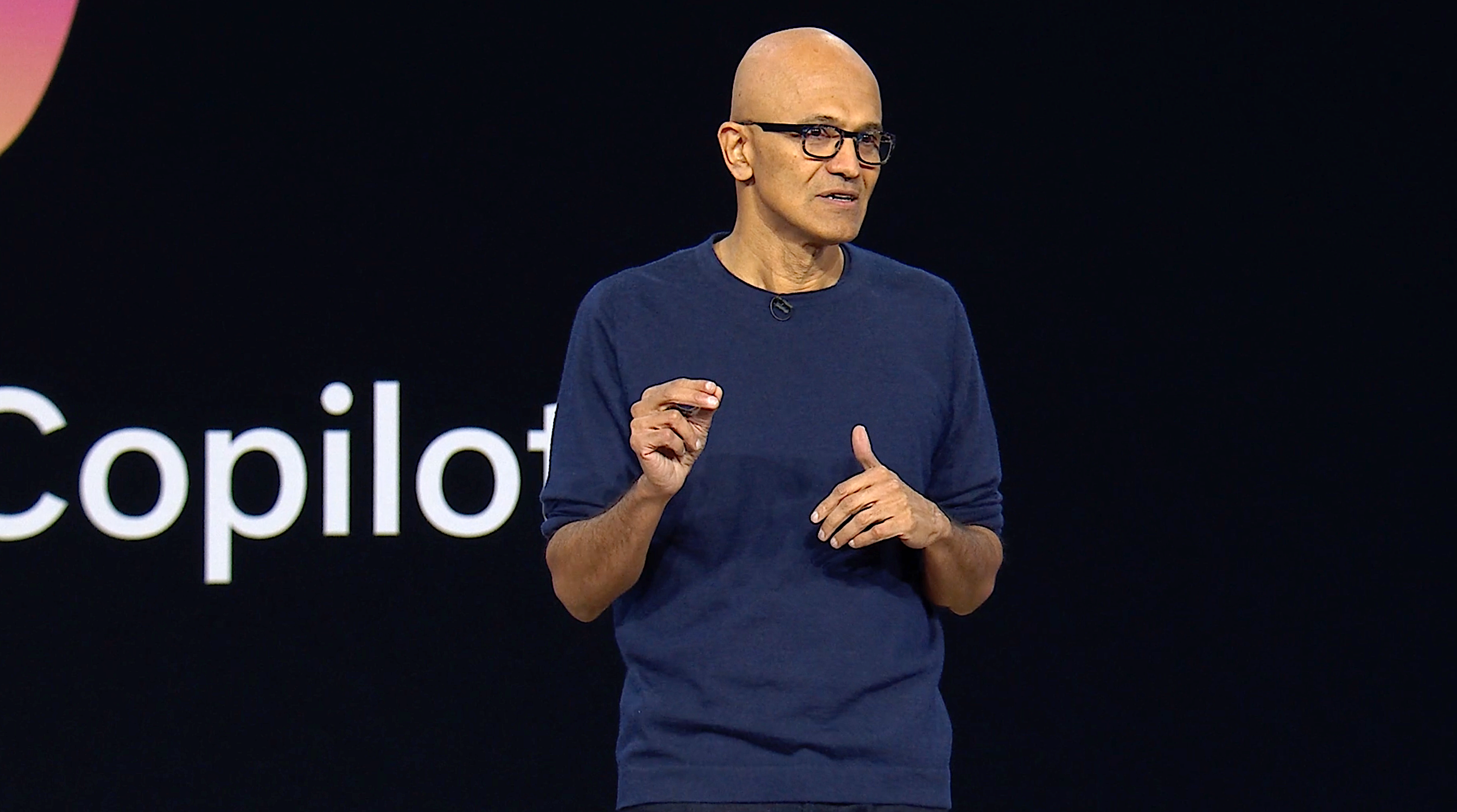
Microsoft Chief Executive Satya Nadella (pictured) insisted this was a good thing for the company, given how it has been struggling to keep up with customer demand in recent quarters. “All up, we added nearly 1 gigawatt of total capacity in this quarter alone,” he told analysts on a conference call.
Concerns over Microsoft’s data center spending were eased somewhat during the quarter when it announced that OpenAI’s rival Anthropic PBC had agreed to buy $30 billion in cloud services and rent up to a gigawatt of additional cloud computing capacity from the company.
EMarketer analyst Jeremy Goldman told SiliconANGLE that Microsoft did what it needed to do in the quarter by reassuring investors that AI scale can coexist with financial discipline. “The message wasn’t ‘AI is the future.’ It was ‘AI is already a business,’” he said. “Management framed AI less as a cost center and more as an extension of cloud demand, and the tone suggested confidence that the heavy investment phase is manageable rather than open-ended. That matters after months of concern that Microsoft was asking the market to suspend disbelief on margins.”
Microsoft said revenue from its Productivity and Business Processing segment, which accounts for Office and LinkedIn, rose 16%, to $34.12 billion in the quarter, above the Street’s $33.48 billion consensus estimate. Meanwhile, the More Personal Computing segment, which includes Windows, Xbox, Bing and Surface, contributed $14.25 billion in sales, down 3% from a year earlier and below the Street’s target of $14.38 billion. That number was likely disappointing for investors, as Gartner Inc. said recently that shipments of personal computers had grown more than 9% in the fourth quarter of last year, driven by the end of support for Windows 10 in October.
Today’s after-hours movements mean that Microsoft’s stock is now down 11% in the last three months, compared with a 1% gain in the broader S&P 500 index over the same period.
Support our mission to keep content open and free by engaging with theCUBE community. Join theCUBE’s Alumni Trust Network, where technology leaders connect, share intelligence and create opportunities.
Founded by tech visionaries John Furrier and Dave Vellante, SiliconANGLE Media has built a dynamic ecosystem of industry-leading digital media brands that reach 15+ million elite tech professionals. Our new proprietary theCUBE AI Video Cloud is breaking ground in audience interaction, leveraging theCUBEai.com neural network to help technology companies make data-driven decisions and stay at the forefront of industry conversations.