 AI
AI
AI
AI


AI

Krisp Technologies Inc., a developer of software for noise cancellation, transcription and summarization of live meetings, today is introducing a real-time voice technology that improves the understanding of accented English in live conversations.
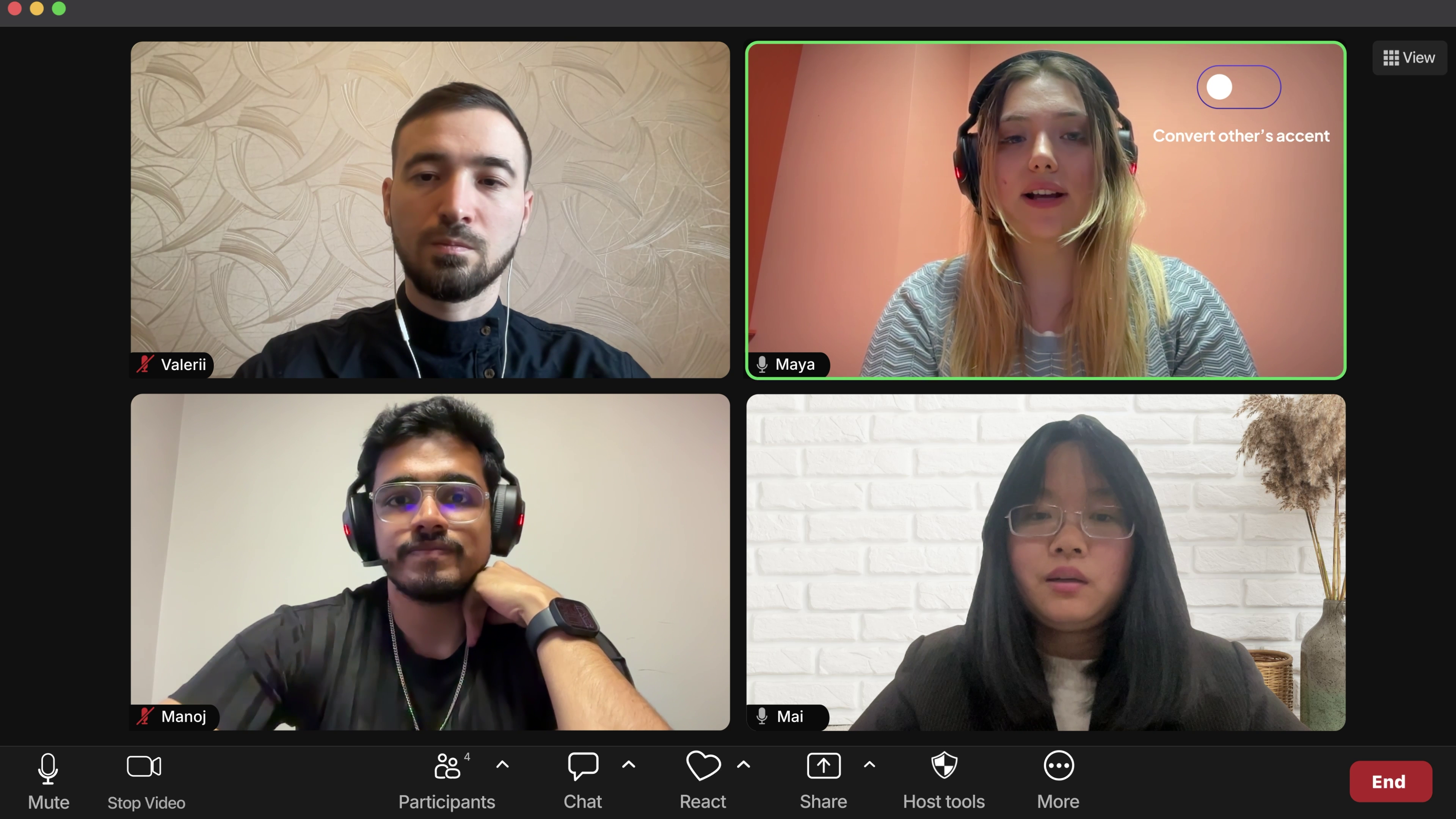
The Berkeley, California-based company’s Listener-Side Accent Conversion system adapts incoming speech for individual listeners without altering how the speaker sounds to others. That differs from traditional accent-modification tools that change a speaker’s outbound audio, the company said.
Krisp instead operates locally, processing speech on the listener’s device and clarifying phonemes that are commonly misheard across accents, while preserving the speaker’s natural tone and vocal identity. Only the listener hears the adapted version of the speech, and users can enable or disable the feature at any time.
The company has built its business around real-time audio enhancement, including noise cancellation and voice AI tooling. Last year, it introduced an outbound accent-conversion feature that modifies how a speaker sounds to all listeners. This new release flips the model by limiting modifications to individual listeners.
Accent variability can reduce speech recognition performance in AI agents, increase friction in human conversations and increase the risk of errors. “As voice becomes a primary interface for work and customer interaction, comprehension is emerging as a systems-level requirement, not just a personal challenge,” the company said.
The technology processes incoming audio at the phoneme level and runs locally with less than 200 milliseconds of latency, a delay the company says is imperceptible to the human ear. It requires no transcripts or post-processing and stores no raw audio. All processing is done on the local device, with no cloud dependency.
Krisp asserts that accent variability has a measurable effect on productivity. Participants in meetings may repeat themselves, slow down conversations or miss context. In contact centers, agents handling diverse accents can experience longer handle times and higher cognitive load. In artificial intelligence systems, recognition accuracy and automation performance can decline.
One 2022 study found that poor communication in the workplace accounts for a loss of more than seven hours of productivity time per employee per week.
Krisp Co-founder and President Arto Minasyan, who is Armenian, said he has seen the effects first-hand. “I know what it feels like to repeat yourself on a call, or to see someone concentrating on your pronunciation instead of your idea,” he said in written comments. “Over time, that changes how freely people speak.”
The feature is generally available for human-to-human meetings through Krisp’s Voice AI for Meetings application on Macintosh and Windows PCs. Integration into the company’s Call Center AI platform is underway, and the capability will also be exposed through a software development kit so developers can embed it directly into applications and voice AI agents.
Accent-modification technologies have drawn criticism from people who argue they can pressure speakers to conform or erase identity. Krisp said it seeks to sidestep that concern by leaving the speaker’s voice untouched.
The company said the system does not “score, rank or judge speakers” and does not impose a single standard of speech. Adaptation occurs only on the listener’s device to reduce listening effort and the risk of mishearing.
Models are trained across diverse English accents, with the strongest results reported across Indian, Filipino, Latin American, African and Chinese-Mandarin accents. Coverage continues to expand.
Krisp, founded in 2017, says its software is deployed on more than 200 million devices and processes more than 80 billion minutes of voice conversations each month.
Support our mission to keep content open and free by engaging with theCUBE community. Join theCUBE’s Alumni Trust Network, where technology leaders connect, share intelligence and create opportunities.
Founded by tech visionaries John Furrier and Dave Vellante, SiliconANGLE Media has built a dynamic ecosystem of industry-leading digital media brands that reach 15+ million elite tech professionals. Our new proprietary theCUBE AI Video Cloud is breaking ground in audience interaction, leveraging theCUBEai.com neural network to help technology companies make data-driven decisions and stay at the forefront of industry conversations.