 CLOUD
CLOUD
CLOUD
CLOUD







CLOUD

Oracle Corp. brushed aside fears that artificial intelligence might be eating its software business today as it delivered a solid third-quarter earnings beat and lifted its revenue guidance for the fiscal year.
The database and cloud infrastructure giant reported adjusted earnings of $1.79 per share, easily beating Wall Street’s consensus estimate of $1.70 per share. Revenue for the period was also better than expected, with the company delivering sales of $17.19 billion in the quarter, up 22% from a year ago and ahead of the Street’s $16.91 billion forecast. Profitability increased too. All told, Oracle was able to generate a net profit of $3.72 billion in the quarter, up from $2.94 billion one year before.
Oracle also reported $8.9 billion in total cloud revenue, a number that includes sales of both infrastructure and software-as-a-service. That figure was up 44% from a year earlier, surpassing the Street’s consensus estimate of $8.85 billion. Cloud infrastructure accounted for $4.9 billion of those sales, up 84% from a year earlier, accelerating from the 68% growth rate it achieved in the previous quarter. The company said it had secured business from new enterprises including Air France-KLM, SoftBank Group Corp., Lockheed Martin and Microsoft Corp.’s Activision Blizzard.
For the current quarter, Oracle said it’s looking for earnings of between $1.92 and $1.96 per share, well ahead of the analysts’ $1.70 per share forecast. In terms of revenue, it said it’s eying growth of between 17% and 20%, compared to the Street’s 20% consensus.
Executives also said they’re raising the company’s fiscal 2027 revenue forecast by $1 billion to $90 billion overall. The Street is targeting total sales of just $86.6 billion.
Oracle’s stock jumped more than 9% in late trading on the report, helping to relieve some of the pressure on a company whose investments in artificial intelligence infrastructure and exposure to the threat of a “SaaSpocalypse” have made investors increasingly nervous. Despite today’s gains, Oracle’s stock is still down more than 50% from its September all-time high, having been hit by fears that AI may eventually steal business from enterprise software vendors.
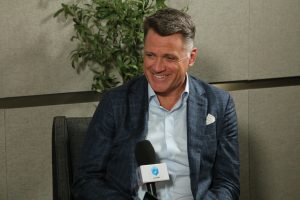
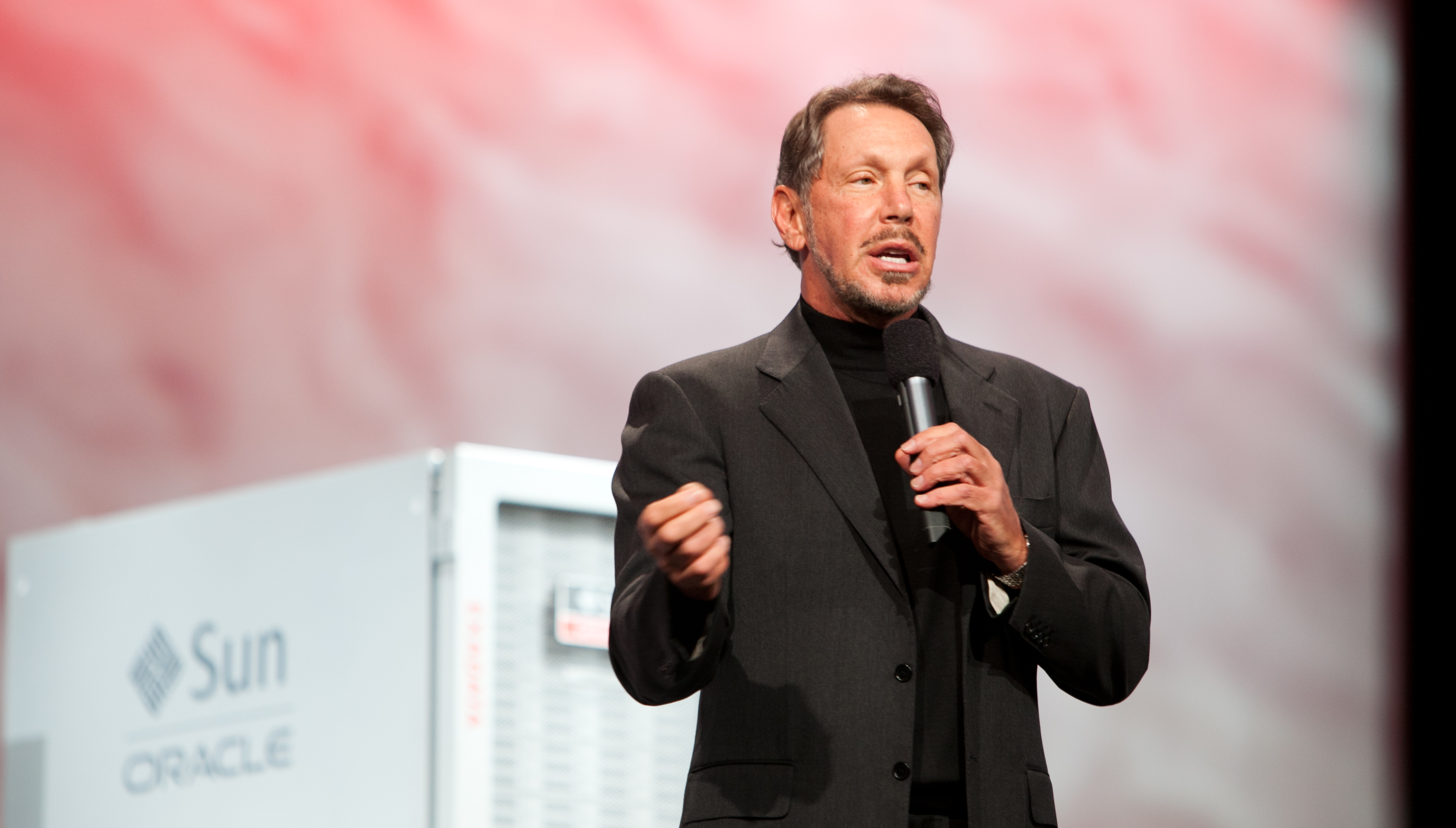
On a conference call with analysts, Oracle co-founder, Chairman and Chief Technology Officer Larry Ellison (pictured) was predictably dismissive of the threats to his company. “We have these coding tools now that allow us to build a comprehensive set of software, agent-based software, to implement and to automate a complete ecosystem like healthcare or financial services,” he said. “That’s what we’re doing at Oracle. That’s why we think we’re a disruptor. That’s why we think the SaaS apocalypse applies to others but not to us.”
Valoir analyst Rebecca Wettemann told SiliconANGLE that Oracle’s results demonstrate that fears of the so-called SaaSpocalypse are overblown. “Although AI-driven efficiencies are driving some seat-count reductions, the underlying applications customers buy from Oracle and others aren’t going anywhere overnight,” she said. “The reality is that many customers are still struggling to get their AI experiments beyond the initial phases, and until they can, the kind of broad job and software subscriber changes some have suggested won’t happen.”
That may be so, but analysts have also become increasingly wary about Oracle’s multibillion-dollar investments in AI infrastructure, which has been funded by massive debt. Even after today’s gains, Oracle’s shares have declined 23% in the year to date, contrasting with the broader S&P 500, which is down just 1% so far this year.
While Oracle has won substantial contracts to provide cloud infrastructure to AI model makers such as OpenAI Group PBC, it doesn’t have the money on hand to fund its data center buildouts that competitors such as Amazon Web Services Inc. and Microsoft do. Moreover, Oracle’s cloud infrastructure ekes out a smaller profit margin than software, as evidenced by the company’s $13.18 billion in negative free cash flow over the past 12 months.
Last month, Oracle announced a plan to raise an additional $45 billion to $50 billion this fiscal year to fund its AI buildout. It said it will bring more than 10 gigawatts of cloud computing capacity online in the next three years.
Today’s solid beat may have helped to settle some investor’s fears, as the results showed surging demand for AI infrastructure and a growing backlog. Oracle’s remaining performance obligations quadrupled from a year earlier, to $553 billion, and co-Chief Executive Officer Clay Magouyrk told analysts the company has the capital to support that growth.
“Most of the increase in RPO related to large-scale AI contracts where Oracle does not expect to have to raise any incremental funds, as most of the equipment is either funded upfront via customer prepayments,” he said. “Oracle can purchase the GPUs, or the customer buys the GPUs and supplies them to Oracle.”
Wettemann said the AI spending debate is unlikely to go away anytime soon, but Oracle does have one advantage over its competitors. “If it can maintain its growth and revenue momentum while containing its capex, that’s a good sign,” she said. “The good news is that with the autonomous database, Oracle can deliver on AI infrastructure at a lower cost and greater efficiency than some of its competitors.”
Some analysts had been wondering if the company might announce any layoffs today, but that failed to happen. Last week, Bloomberg reported that Oracle was planning to let go of a significant part of its workforce, potentially up to 30,000 workers. That would represent 18% of its approximately 162,000 employees globally. Bloomberg said the layoffs could begin as early as this month, but there’s no sign of anyone getting the chop so far.
Wettemann didn’t dismiss the possibility. She noted there are legitimate reasons to think Oracle has put too many eggs into the OpenAI basket. “We’re still in the first act of the AI drama,” she said. “Oracle has made a big bet on OpenAI, but as Claude and Gemini get better and as other players emerge, we’ll see a lot more partnerships evolve and dissolve. But Oracle has a value story in its cost-effective infrastructure and its autonomous database, which can run on any cloud.”
Support our mission to keep content open and free by engaging with theCUBE community. Join theCUBE’s Alumni Trust Network, where technology leaders connect, share intelligence and create opportunities.
Founded by tech visionaries John Furrier and Dave Vellante, SiliconANGLE Media has built a dynamic ecosystem of industry-leading digital media brands that reach 15+ million elite tech professionals. Our new proprietary theCUBE AI Video Cloud is breaking ground in audience interaction, leveraging theCUBEai.com neural network to help technology companies make data-driven decisions and stay at the forefront of industry conversations.