 AI
AI
AI
AI





AI

Companies are increasingly focused on enterprise data transformation, using AI to turn vast stores of unstructured information into actionable intelligence for automated agents. But what does it take to make decades of unstructured data usable for AI systems?
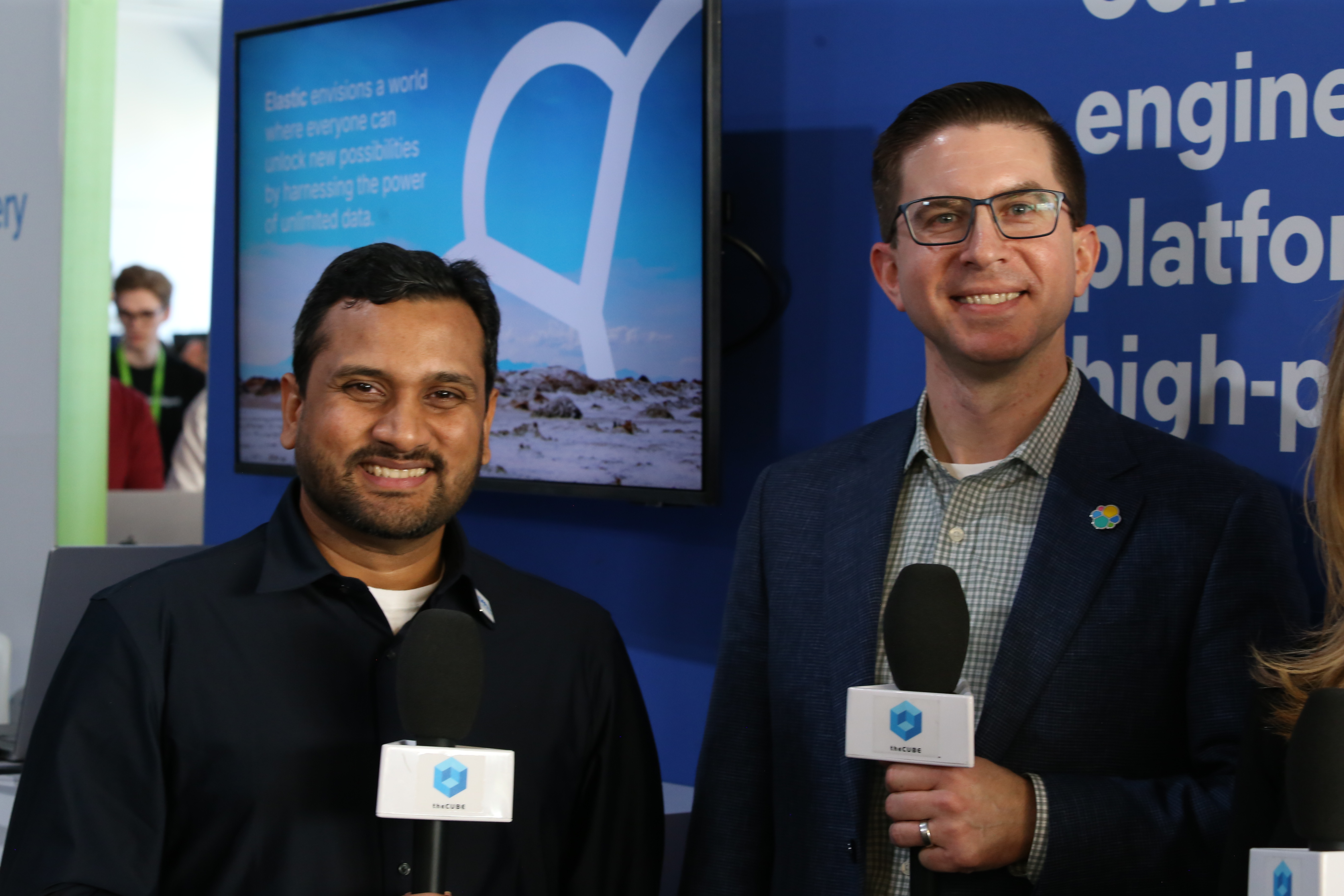
While businesses have stored documents and images for decades, the rise of reasoning models has finally provided the “killer use case” needed to unlock real value from those assets, according to Vrashank Jain (pictured, left), director of product at Dell Technologies Inc. That also highlights a broader challenge: Enterprise AI can only scale with a ready data foundation.
“I think even [Nvidia Corp.] — and everybody else — has started to realize [that the] way to get AI factories into production at enterprises has to start with solving the data problem,” Jain said. “It requires an entire ecosystem of companies and tools coming together to actually make it happen.”
Jain and Steve Kearns (right), vice president and general manager of search at Elastic, spoke with theCUBE’s Gemma Allen at the Nvidia GTC AI Conference & Expo, during an exclusive broadcast on theCUBE, SiliconANGLE Media’s livestreaming studio. They discussed the importance of strategic partnerships, enterprise data transformation and ensuring security for on-premises AI deployments. (* Disclosure below.)
To ensure accuracy, AI agents must retrieve the most relevant subset of information from a company’s data store. Vector search technology allows these models to understand semantic meaning and broadens access to complex documents in a secure way, Kearns noted. That capability underscores the Dell-Elastic collaboration, which brings Elastic’s hybrid search and vector database technology into the Dell AI Data Platform to help enterprises retrieve and govern unstructured data for AI workloads.
“One of the nice things about the partnership and the way that Elastic operates [is that] we actually implement the security at the data store level,” Kearns explained. “When you grant your OpenClaw privileges to go see things, it can only see what it is allowed to see.”
As organizations move toward sovereign AI, the most valuable information remains in the data center. Successful AI outcomes depend on maintaining control over closely guarded enterprise secrets, Jain noted. He said that need for control is fueling a broader shift to on-premises AI, where companies can keep sensitive data secure while still taking advantage of the latest models.
“That’s one of the reasons Dell is really focused on this, because frankly, a large majority of those data centers are running our equipment — that data is sitting on our storage,” he said. “It’s our imperative to go and help those customers get value.”
Here’s the complete video interview, part of SiliconANGLE’s and theCUBE’s coverage of the Nvidia GTC AI Conference & Expo:
(* Disclosure: Elastic sponsored this segment of theCUBE. Neither Elastic nor other sponsors have editorial control over content on theCUBE or SiliconANGLE.)
Support our mission to keep content open and free by engaging with theCUBE community. Join theCUBE’s Alumni Trust Network, where technology leaders connect, share intelligence and create opportunities.
Founded by tech visionaries John Furrier and Dave Vellante, SiliconANGLE Media has built a dynamic ecosystem of industry-leading digital media brands that reach 15+ million elite tech professionals. Our new proprietary theCUBE AI Video Cloud is breaking ground in audience interaction, leveraging theCUBEai.com neural network to help technology companies make data-driven decisions and stay at the forefront of industry conversations.