 AI
AI
AI
AI



AI

The next cybersecurity battle will not be over whether companies use AI, but whether they can trust what they build with it. That is why AI cybersecurity trust discussions are moving to the top of the industry’s agenda.
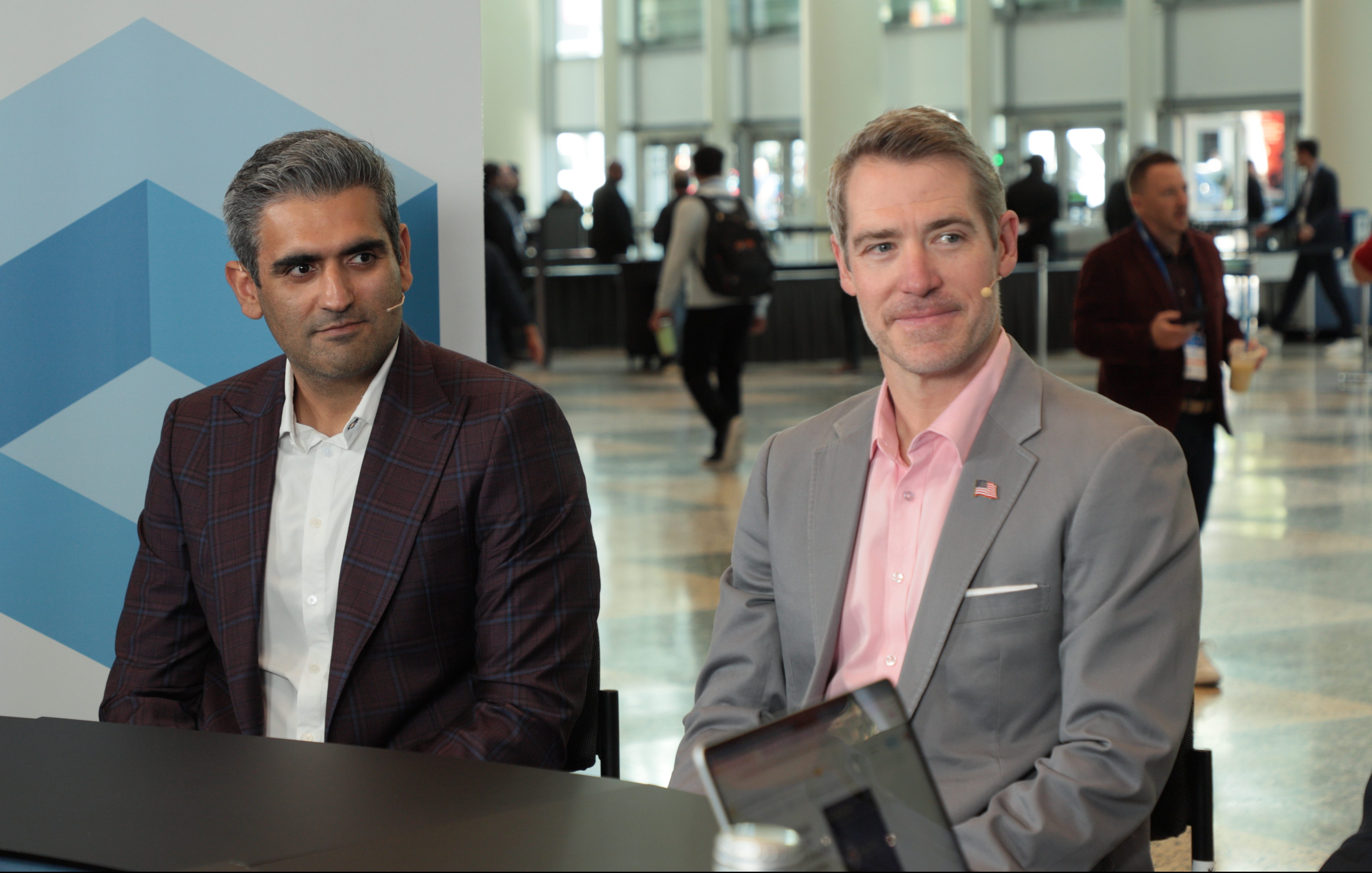
No longer a side conversation, AI instead finds itself as foundational for how modern cyber defense operates, according to Ernst & Young LLP risk professionals. The biggest questions organizations are now asking are how to deploy it at scale and how to build the trust needed to use it confidently, according to Kapish Vanvaria (pictured, left), EY Global and Americas Risk Consulting Leader. That through-line now runs across everything from penetration testing to the security operations center.
“I don’t think you can actually skip a booth without seeing the word AI,” Vanvaria told theCUBE. “Honestly, I think it’s a good thing. I think it’s an embracing of where the future’s headed from a security perspective. I spent a lot of time with our clients — yesterday, this morning, right before this — and a lot of the questions they’re asking [are around] scale deployment. And two: How do they answer the mail on trust?”
Vanvaria and Dan Mellen (right), EY Global and US Cyber Chief Technology Officer, spoke with theCUBE’s Dave Vellante and Christophe Bertrand at the RSAC 2026 Conference, during an exclusive broadcast on theCUBE, SiliconANGLE Media’s livestreaming studio. They discussed the growing need to build AI cybersecurity trust into systems from the start. (* Disclosure below.)
EY Consulting’s own posture has consistently been that cyber leaders can no longer treat AI as an add-on to existing security models. The speed of deployment is making it harder for organizations to keep up as strategies and expectations evolve almost continuously, according to Mellen.
“I think the change cycle that used to be six months long is now six weeks long,” he said. “I joke with my European colleagues when they go out for the month of August, they’ve missed an entire cycle. You’ve got to play catch-up with all of that.”
According to EY Consulting’s new cyber research roadmap study, 96% of respondents said AI is now part of their cyber defense strategy. The word “strategy” is significant because it can describe a wide range of implementation maturity stages, especially given that 95% of organizations say they are already deploying AI somewhere across the broader business, Mellen noted.
“You’ve got this situation where AI is being deployed [and] cyber’s trying to play catch-up,” he said. “We’re seeing a little bit of the repeated bad behavior from cloud, where security’s just bolting capabilities on to try to secure these [systems]. But the business is outpacing governance — it’s outpacing controls; it’s outpacing cyber’s ability to train folks.”
The survey indicates that many organizations have folded AI into their strategy, but the bigger question is where that ambition is still falling short in day-to-day execution. Too often those AI cybersecurity trust strategies still lean on familiar ideas without fully translating them into operational practice, Vanvaria added.
“We’ll have things like traceability [and] explainability, but really, that’s a bolt-on method because you’re taking compliance and governance and applying it to something that already exists,” he said. “Where we’re trying to push the market to and people to — just change their frame of reference — is think of trust in design.”
That position is consistent with EY Consulting’s messaging that AI cybersecurity trust has to be strongly governed, with compliance built into systems from the outset. As products move through design and development, a critical question is whether cybersecurity, regulatory, legal and compliance teams are involved early enough to help shape them, according to Vanvaria. That matters especially as companies build AI agents and other tools meant to improve customer and employee experience. Relatedly, EY Consulting has also stressed that AI should support decision-making without replacing human judgment, a posture that stresses using technology to help people move more efficiently.
“I think there’s a statement many organizations use about ‘human in the loop.’ I think the most advantageous organizations out there will be the ones who take humans and empower them with the power of technology to run faster,” Vanvaria said.
Here’s the complete video interview, part of SiliconANGLE’s and theCUBE’s coverage of the RSAC 2026 Conference:
(* Disclosure: EY sponsored this segment of theCUBE. Neither EY nor other sponsors have editorial control over content on theCUBE or SiliconANGLE.)
Support our mission to keep content open and free by engaging with theCUBE community. Join theCUBE’s Alumni Trust Network, where technology leaders connect, share intelligence and create opportunities.
Founded by tech visionaries John Furrier and Dave Vellante, SiliconANGLE Media has built a dynamic ecosystem of industry-leading digital media brands that reach 15+ million elite tech professionals. Our new proprietary theCUBE AI Video Cloud is breaking ground in audience interaction, leveraging theCUBEai.com neural network to help technology companies make data-driven decisions and stay at the forefront of industry conversations.