 SECURITY
SECURITY
SECURITY



SECURITY

AI agents are entering enterprise environments at machine speed, but the data-centric security controls needed to govern their access and behavior are still catching up, creating a new rift in enterprise AI.
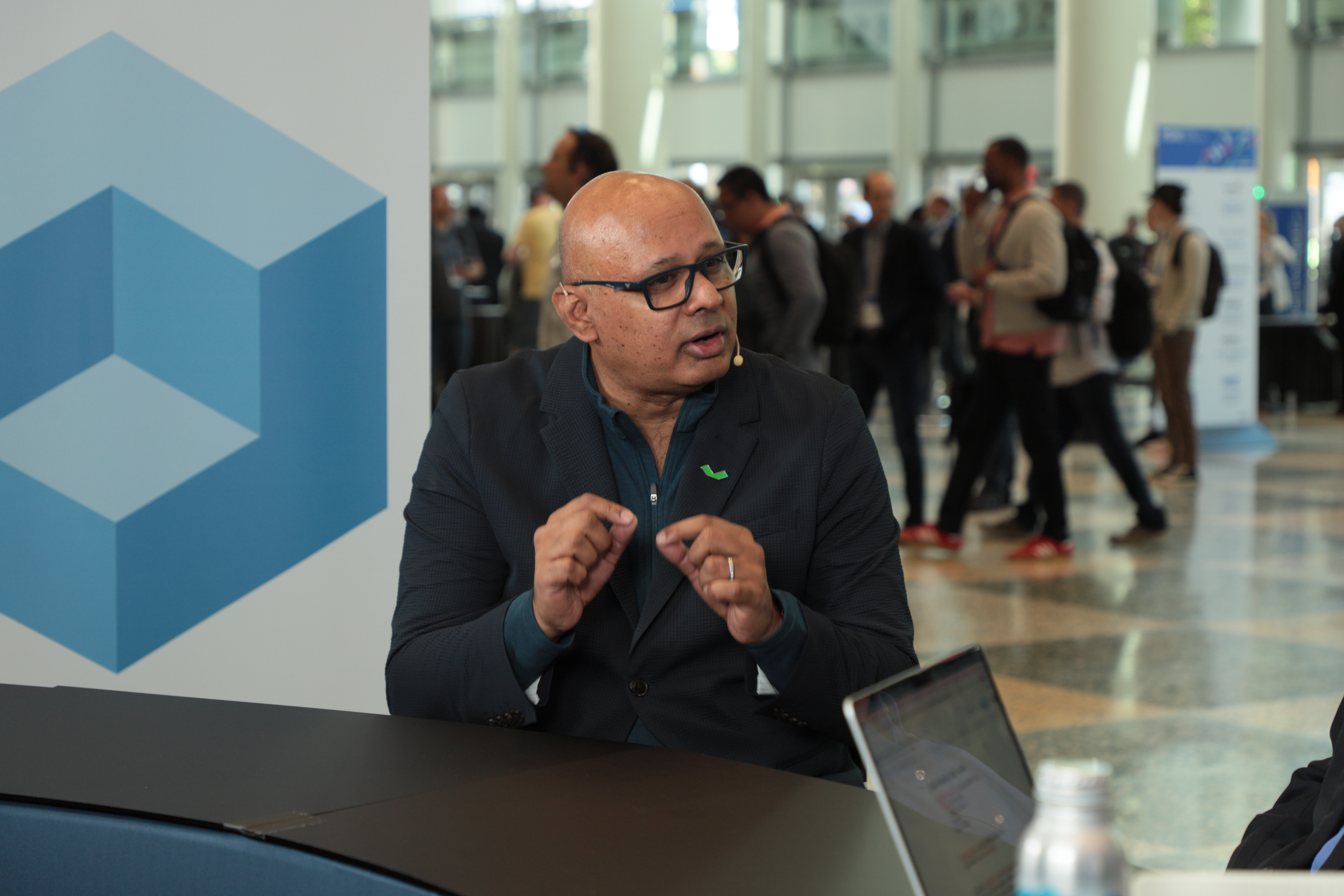
That gap is exactly where Veeam Software Corp. GmbH is staking its future. Following its $1.725 billion acquisition of Securiti Inc., the company is evolving from a data resilience leader into what it calls a trusted data platform for the agentic enterprise, according to Anand Eswaran (pictured), president and chief executive officer of Veeam.
“The infrastructure for deploying AI has fast outpaced the infrastructure for trusting AI. You have autonomous agents acting at machine speed,” Eswaran told theCUBE. “If you do not have a way to make sure the data feeding those agents is trusted — [that] it’s got the right identity permissions — you have a problem.”
Eswaran spoke with theCUBE’s Dave Vellante and Christophe Bertrand at the RSAC 2026 Conference, during an exclusive broadcast on theCUBE, SiliconANGLE Media’s livestreaming studio. They discussed data-centric security, Securiti AI integration and Veeam’s roadmap as a trusted data platform for the agentic era. (* Disclosure below.)
The core argument is that security’s center of gravity has shifted from endpoints and perimeters to the data itself. As enterprises push data into AI pipelines rather than bringing applications down to data, the control point has fundamentally moved, Eswaran explained. That shift demands understanding data at a granular level — not at the file or database level, but at the level of individual data elements, roles, identities and entitlements, he added.
“The only way you get to the heart of solving this is you unify this into a singular control plane — not patchwork products, not patchwork partnerships,” he said, referring to the need to bring data security, privacy, compliance, governance and resilience together.
Veeam’s answer to that new data-centric control problem is Agent Commander, the first product from the Securiti AI integration, built on what the company calls the Data Command Graph — a real-time relational intelligence engine that maps connections between data, identities, AI models and autonomous agents. When something goes wrong, Veeam can surgically undo specific agent actions rather than rolling back an entire day of operations, according to Eswaran.
“We can precision undo those five seconds of a specific state of a data element which was done wrong by an agent, because we have this best-of-breed visibility across the entire data life cycle with this unified platform,” he said.
The company is now positioning itself as an enabler for enterprises — and software companies in particular — to successfully navigate their AI transformations. Veeam’s posture is that its role between infrastructure and applications gives it a vantage point over data quality and control as organizations look for safer ways to deploy AI.
“Based on what we do, you can unleash your AI transformation and not worry about AI risk,” he said. “That’s the journey we are on, sort of foundationally fueling every company’s AI transformation.”
Here’s the complete video interview, part of SiliconANGLE’s and theCUBE’s coverage of the RSAC 2026 Conference:
(* Disclosure: TheCUBE is a paid media partner for the RSAC 2026 Conference. Sponsors of theCUBE’s event coverage do not have editorial control over content on theCUBE or SiliconANGLE.)
Support our mission to keep content open and free by engaging with theCUBE community. Join theCUBE’s Alumni Trust Network, where technology leaders connect, share intelligence and create opportunities.
Founded by tech visionaries John Furrier and Dave Vellante, SiliconANGLE Media has built a dynamic ecosystem of industry-leading digital media brands that reach 15+ million elite tech professionals. Our new proprietary theCUBE AI Video Cloud is breaking ground in audience interaction, leveraging theCUBEai.com neural network to help technology companies make data-driven decisions and stay at the forefront of industry conversations.