 INFRA
INFRA
INFRA
INFRA


INFRA

Silicon Data, a startup that provides market intelligence for artificial intelligence compute infrastructure, is bringing much-needed transparency to the cost of renting enormous clusters of graphics processing units.
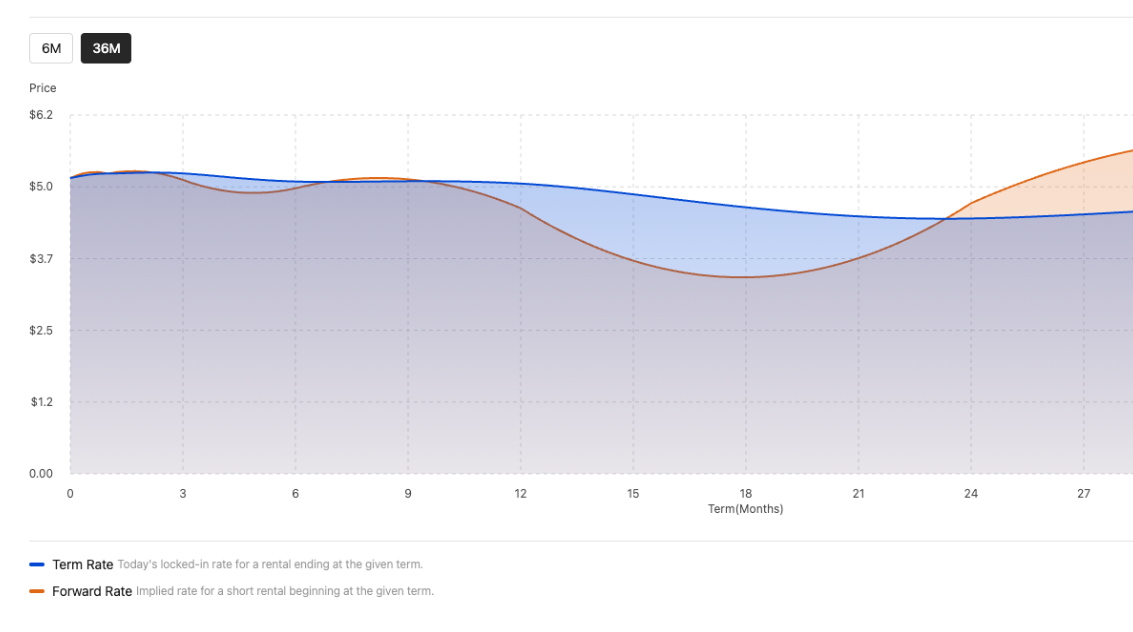
The company today announced a new service called the GPU Forward Curve, offering the first “standardized” look at the anticipated costs of GPU capacity, both now and in the future. By introducing forward-looking visibility into the extremely opaque and volatile market for an increasingly precious resource, Silicon Data says, it’s transforming AI compute into a financialized commodity.
The startup wants to address a growing headache facing almost every enterprise that’s experimenting with AI. As automation begins to take off, the demand for cutting-edge silicon has grown immensely and is beginning to outgrow the available supply, leading to rising prices. But although on-demand pricing has become more transparent, there’s still very little visibility into the long-term costs of AI.
That’s problematic for any company trying to plan a multiyear AI project. Though they may know what they’re paying for their GPU infrastructure today, they have no way of understanding the ongoing costs of that project, or what the required capacity will cost them in 18 or 36 months.
Long-term price discovery has always been an alien concept to the AI compute industry, which means that budgeting and capital allocation becomes a guessing game. As a result, companies cannot plan, and some may even find themselves priced out of the market during periods of peak demand.
Silicon Data’s GPU Forward Curve could be just what such companies need. It applies sophisticated financial modeling to real-world GPU rental data, aiming to provide two key insights: term rates that reveal the cost of locking in GPU capacity today for a specific term, and implied forward rates, which represent the industry’s “collective expectation” of future on-demand GPU prices.
The startup says it has already revealed some surprising insights through the GPU Forward Curve. For instance, it shows that long-term contracts aren’t necessarily cheaper than on-demand prices. That’s because some enterprises are so desperate to secure future AI resources that they’re willing to pay above and beyond the current rate to lock-in access to the hardware they need.
Silicon Data Chief Executive Carmen Li said GPU Forward Curve offers insights into the cost of hardware from Nvidia Corp., including its A100, H100 and B200 Blackwell GPUs, and will seek to add support for additional chips over time. She said that as AI infrastructure scales, the economics will eventually become just as critical as the capabilities of the technology itself.
“Compute is no longer just a technical input, but an economic resource,” Li explained. “What’s missing is a way to understand not just what computing costs today, but what the market expects it to cost in future. The GPU Forward Curve begins to make that visible.”
The implications of this could be significant. For chief financial officers and budget teams, GPU Forward Curve’s insights replace the guesswork that informs their existing strategies, enabling them to take a data-based approach and decide if it’s better to secure access to GPU capacity now, or wait for future price drops.
Support our mission to keep content open and free by engaging with theCUBE community. Join theCUBE’s Alumni Trust Network, where technology leaders connect, share intelligence and create opportunities.
Founded by tech visionaries John Furrier and Dave Vellante, SiliconANGLE Media has built a dynamic ecosystem of industry-leading digital media brands that reach 15+ million elite tech professionals. Our new proprietary theCUBE AI Video Cloud is breaking ground in audience interaction, leveraging theCUBEai.com neural network to help technology companies make data-driven decisions and stay at the forefront of industry conversations.