 CLOUD
CLOUD
CLOUD
CLOUD







CLOUD

As hybrid and multicloud strategies evolve, a new reality is coming into focus — one where open architectures are increasingly central to operational resilience, sovereignty and choice.
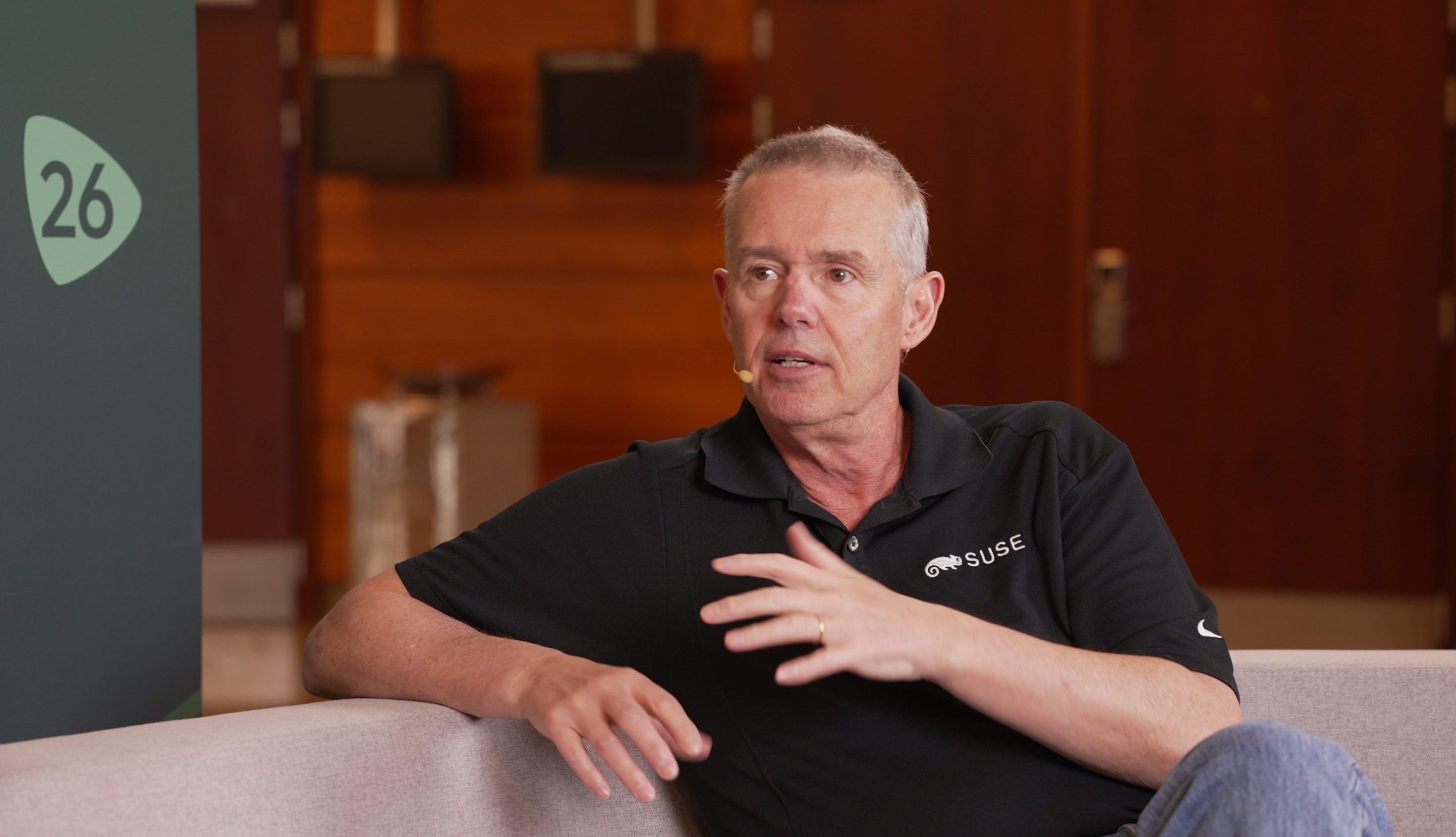
The industry’s recent trajectory has made the stakes clear. Many technology providers are moving toward proprietary stacks at precisely the moment customers need the opposite — flexibility that does not come at the cost of durability. SUSE S.A. has staked its position on that gap, with open source’s low barrier to entry and capacity to adapt serving not just as a philosophical preference, but as the foundation of operational resilience, according to Peter Smails (pictured), general manager of cloud-native at SUSE.
“The need for resiliency is important,” Smails said. “A lot of vendors … they’re going more proprietary at the worst possible time, because customers need the exact opposite, which positions SUSE very well.”
Smails spoke with theCUBE’s Paul Nashawaty at SUSECON 2026, during an exclusive broadcast on theCUBE, SiliconANGLE’s livestreaming studio. They discussed how open architectures and interoperable ecosystems are streamlining complexity across hybrid and multicloud environments. (* Disclosure below.)
Complexity and skill gaps remain the dominant barriers to modernization, and the pressure to solve them has fallen squarely on technology providers. SUSE’s answer centers on consistent operations at scale, with SUSE Rancher Prime delivering a unified control plane across data centers, cloud and edge environments that reduces operational fragmentation without demanding a rip-and-replace approach from customers, according to Smails.
“When you take the open source ethos — you take the interoperability — and then you overlay that with this notion of consistent operations at scale, that’s an unbelievably powerful concept,” Smails said. “Whether you’re [in] data centers, multiple clouds, multiple edges, wherever you want to go, you’ve got a simple, consistent paradigm to operate against for all of your environments.”
The post-VMware landscape has added urgency to the market. With Broadcom’s acquisition reshaping the economics and strategy around virtualization, enterprises are actively seeking modern alternatives to traditional infrastructure. SUSE Virtualization gives enterprises a path to run traditional virtual machines and container-based workloads side by side under one control plane, modernizing infrastructure at their own pace, according to Smails. Underpinning all of it is a standards-driven chain — where interoperability enables common control planes and common control planes make a trusted ecosystem possible.
“Interoperability is based on standards. The common control plane is based upon interoperability. The ecosystem of trust is based upon the ability to have a common control plane,” he said. “If you look at that in aggregate, as a customer looking for technologies, that’s something I can get my head around.”
Here’s the complete video interview, part of SiliconANGLE’s and theCUBE’s coverage of SUSECON 2026:
(* Disclosure: TheCUBE is a paid media partner for SUSECON 2026. Sponsors of theCUBE’s event coverage do not have editorial control over content on theCUBE or SiliconANGLE.)
Support our mission to keep content open and free by engaging with theCUBE community. Join theCUBE’s Alumni Trust Network, where technology leaders connect, share intelligence and create opportunities.
Founded by tech visionaries John Furrier and Dave Vellante, SiliconANGLE Media has built a dynamic ecosystem of industry-leading digital media brands that reach 15+ million elite tech professionals. Our new proprietary theCUBE AI Video Cloud is breaking ground in audience interaction, leveraging theCUBEai.com neural network to help technology companies make data-driven decisions and stay at the forefront of industry conversations.