 AI
AI
AI
AI








AI

Historically, investment research involved human analysts spending days reading and evaluating massive financial reports. Now, AI-driven financial analysis is covering all of that work in just a few minutes.
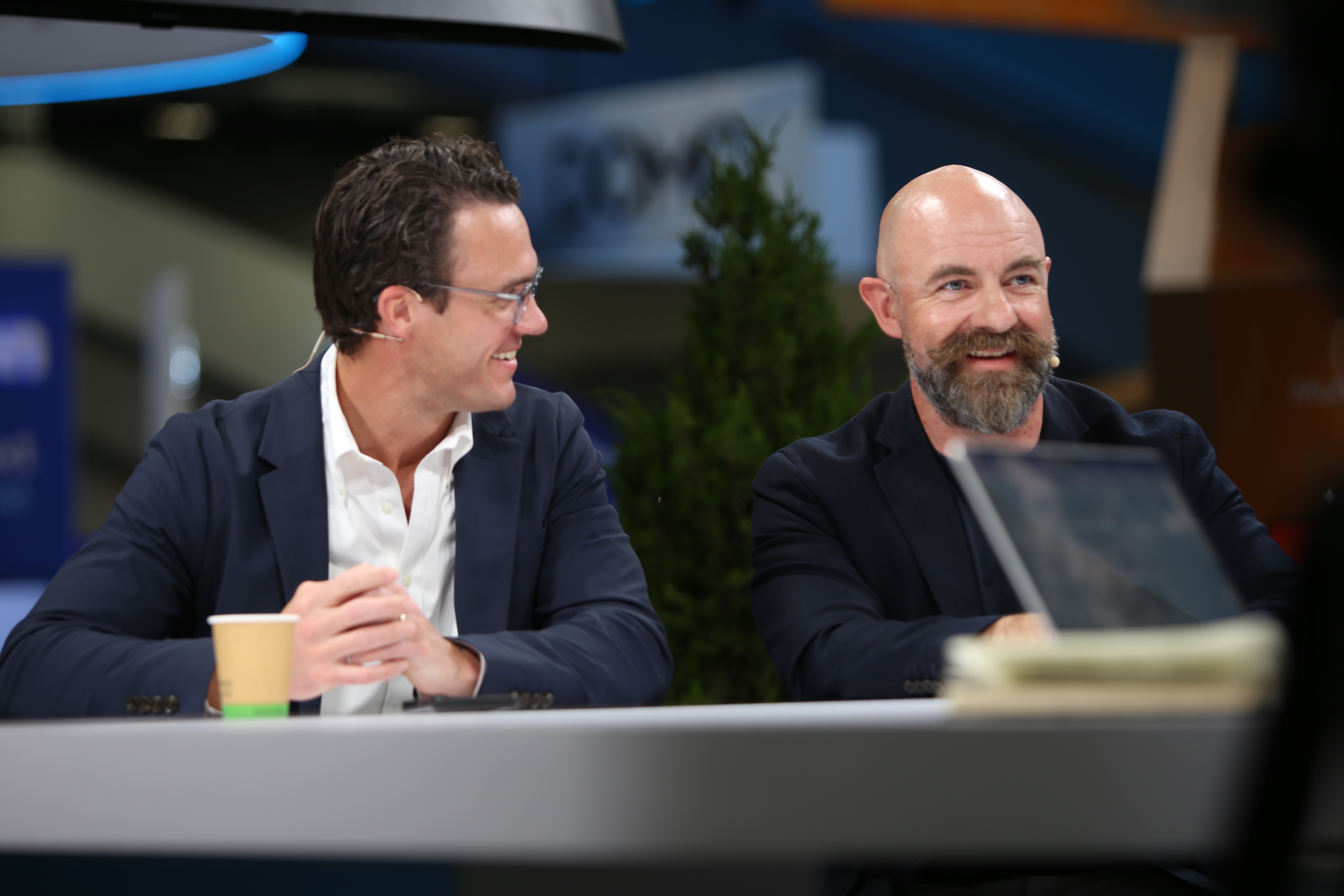
The catalyst was a 2020 academic paper titled “Lazy Prices,” published by Harvard professor Lauren Cohen, which found that changes in the risk sections of SEC Form 10-K and Form 10-Q filings reliably predicted negative stock performance. This was true even without reading the text, according to Liam Hynes (pictured, right), Global Head of New Product Development for Public Markets at S&P Global. The resulting AI-driven financial analysis framework, built with Snowflake’s Cortex and CoWork tools, used large language models to identify precisely what changed.
“I can use one of the tools that Snowflake CoWork has, which is setting up a function, which is really like a stored procedure,” Hynes told theCUBE. “That means anytime I’m engaging with the database, the large language model knows, ‘Oh, he’s asking about revenue revisions for the energy sector this year. That means I need to go to this skill and this stored procedure to get the correct information to answer that question.’ We have all of that ecosystem now within CoWork.”
Hynes and John Heisler (left), Industry Principal for Financial Services at Snowflake, spoke with theCUBE’s Rebecca Knight and Dave Vellante at Snowflake Summit 2026, during an exclusive broadcast on theCUBE, SiliconANGLE Media’s livestreaming studio. They discussed how agentic workflows are compressing the gap between financial research and production deployment, and what it will take for financial services firms to build AI systems that are deterministic and enterprise-wide in scope.
The framework derived from Lazy Prices illustrates a broader shift in financial services, where AI-driven financial analysis is collapsing the timeline between academic research and production deployment. What once required quant hedge fund infrastructure is now passed to a fundamental equity analyst as a morning workflow, according to Hynes. The entire S&P 500 is then scanned for newly disclosed risks in roughly ten minutes.
“It’s the latter; it’s the democratization,” he said. “If you think about what happened in the dotcom area, when the internet came on, what was democratized then was data and knowledge. I can go online, and I can go and look up the data that I need to go and solve a problem. Everybody had the library at their fingertips, basically. But you still had to take that input, and you still had to solve the problem that you’re trying to solve.”
The challenge mirrors how the brain constructs knowledge and how LLMs replicate that architecture, according to Heisler, whose background includes neuroscience research in learning and memory. The bottleneck in both cases isn’t raw capability. It’s signal extraction, in terms of finding the change inside a massive corpus of largely static text. The focus on signal extraction aligns with the Lazy Prices approach while addressing the broader question of how financial institutions should build agentic systems that remain consistent and can be audited at enterprise scale.
“Governing data is governing AI,” Heisler added. “When we think about role-based access control, I’m John. Whether I’m using an agent or I’m querying the data directly, I’m John. I have permissions to certain data sets, and I don’t have permission to other data sets. That’s a big piece of this, which is mechanical.”
On the question of what separates financial services organizations that will succeed with AI from those that fall behind, both guests pointed to successful institutions starting with strategy, not technology. Heisler framed it as a “nesting doll” approach. In short, business strategy drives data strategy, data strategy drives AI strategy and AI strategy drives semantic architecture. He argued that skipping any layer is like painting on a compromised canvas, and Hynes furthered his point.
“The companies that sit down with their clients and literally say, ‘What do you do on a day-to-day process? When you log in and sit down, what is your process? What is your brain telling your fingers to type?’ Those are the ones that are going to succeed,” Hynes said. “The ones that put their clients and their processes first.”
Here’s the complete video interview, part of SiliconANGLE’s and theCUBE’s coverage of Snowflake Summit:
* Disclosure: TheCUBE is a paid media partner for Snowflake Summit event. Neither Snowflake, the sponsor of theCUBE’s event coverage, nor other sponsors have editorial control over content on theCUBE or SiliconANGLE.
Support our mission to keep content open and free by engaging with theCUBE community. Join theCUBE’s Alumni Trust Network, where technology leaders connect, share intelligence and create opportunities.
Founded by tech visionaries John Furrier and Dave Vellante, SiliconANGLE Media has built a dynamic ecosystem of industry-leading digital media brands that reach 15+ million elite tech professionals. Our new proprietary theCUBE AI Video Cloud is breaking ground in audience interaction, leveraging theCUBEai.com neural network to help technology companies make data-driven decisions and stay at the forefront of industry conversations.