 INFRA
INFRA
INFRA
INFRA





INFRA

Lam Research Corp., a major supplier of chipmaker equipment, plans to spend more than $3 billion over the next five years to enhance its engineering capabilities.
The company detailed the initiative on Thursday.
Nasdaq-listed Lam sells machines that chipmakers use to produce memory chips, advanced packaging and other products. It also has a presence in certain adjacent markets, including the fab robotics segment. The company’s customer base includes Micron Technology Inc., Samsung Electronics Co. and SK hynix Inc., the world’s three largest memory producers.
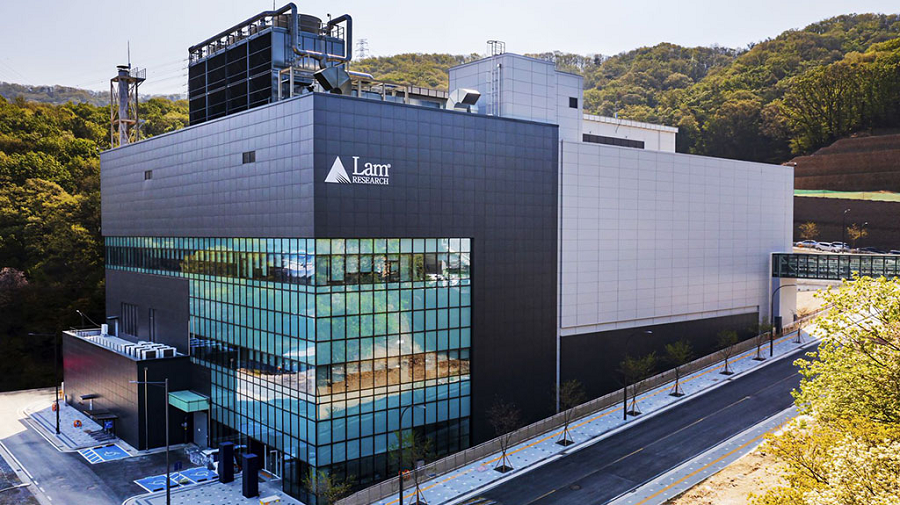
Lam operates a network of research and engineering hubs that spans three continents. The company says that its newly announced investment will finance a “multi-site expansion,” which hints it plans to build multiple new labs. The initiative is expected to grow Lam’s experiment capacity by more than 50%.
The company’s labs already run more than 1 million experiments annually. Some of the hubs carry out basic research in areas such as materials science and mechatronics, a field that encompasses robotics. The other facilities focus on productizing the new technologies that Lam develops.
The company’s lab network regularly brings new chipmaking machines to market. The latest addition to Lam’s product portfolio, a system called Vector Teos 3D, debuted in September. It can be used to make three-dimensional artificial intelligence accelerators in which chiplets are stacked atop one another.
Vector Teos 3D produces so-called dielectric gapfill films. Those are thin layers of insulating material deposited in the space between a processor’s stacked chiplets. According to Lam, they provide mechanical support that makes AI accelerators less susceptible to damage. Additionally, gapfill films play a role in heat dissipation.
The space between a processor’s chiplets contains not only insulating support layers but also microbumps. Those are tiny metal structures with a diameter of a few dozen micrometers, or millionths of a meter. They’re responsible for moving data and electricity between chiplets.
Lam offers a microbump production machine called SABRE 3D. It works by submerging chips in a specialized liquid that gives them a negative electrical charge. From there, the machine adds in metal particles that have a positive electrical charge. The positively charged particles attach themselves to the surface of the negatively charged chips to form microbumps.
The process of turning a silicon wafer into chips comprises hundreds of steps. After fab operators complete a step, they clean the wafer to remove any debris that may have been deposited on its surface. Lam makes machines that speed up the workflow. Additionally, it sells mass metrology systems that verify the cleaning was carried out correctly.
The company also competes in the robotics market. In 2024, it introduced a robotic arm that fab technicians can use to automate equipment maintenance tasks.
The launch of the company’s lab expansion initiative comes about two weeks after it reported second-quarter results. Lam’s revenue grew 15% year-over-year to $6.72 billion, $50 million more than analysts had expected. The company attributed its stronger-than-anticipated growth to strong demand for AI chips.