 INFRA
INFRA
INFRA
INFRA











INFRA

Waymo LLC today shared new details about the computing module that powers its autonomous taxis.
The Alphabet Inc. unit operates about 4,000 vehicles in 11 U.S. cities. Most are based on the Jaguar I-Pace crossover, while the rest are Zeeker minivans and Hyundai Ioniq 5 SUVs. Consumers order rides via a standalone app and Uber.
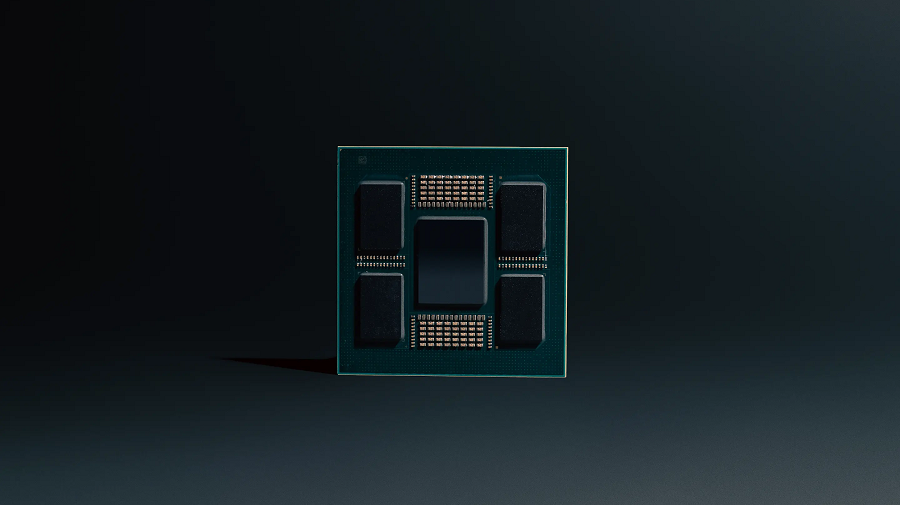
Waymo’s autonomous driving module is in its sixth iteration. Much of the current version’s computing power comes from two custom ASICs, or application-specific integrated circuits. An ASIC is a chip designed from the ground up for a specific set of tasks. Waymo says the accelerators can perform more than 1,000 trillion calculations per second.
“To make real-time driving decisions, the autonomous system operates entirely onboard, constantly processing decisions within milliseconds,” Waymo executives Satish Jeyachandran and Daniel Rosenband wrote in a blog post. “We have engineered our stack for ultra-low latency, minimizing the delay from first pixel to action.”
Waymo makes its ASICs using Taiwan Semiconductor Manufacturing Co.’s five-nanometer node. Waymo’s decision to use the older technology over one of TSMC’s newer processes may have to do with the fact that it’s available in a vehicle-optimized edition. N5A, as the customized node is called, includes optimizations designed to reduce the risk of manufacturing faults. It complies with three different auto industry reliability standards.
Waymo included two ASICs in its autonomous driving module to mitigate the impact of hardware failures. If one of the processors goes offline, the other can take over.
The chips process data from a sensor suite that comprises 13 cameras and four lidar devices. Cameras are better at capturing fine-grained details such as text on street signs, while lidars work more reliably in low-light conditions. Waymo’s sensor suite also includes six radars that collect data points such as the speed of nearby vehicles.
The Alphabet unit optimized its ASICs for artificial intelligence inference. The chips run AI models optimized for sensor fusion, the task of combining readings from different types of sensors into a single dataset. The process involves adjusting the raw data for the fact that a car’s sensors collect measurements from different angles.
Sensor fusion models are also responsible for error correction. According to Waymo, its autonomous driving module uses an error correction method called temporal denoising. The technique enables AI models to verify that a frame contains noise by checking adjacent frames.
Besides the ASICs, Waymo’s autonomous driving modules also include central processing units and graphics processing units. They chips are stored in a ruggedized enclosure designed to operate in challenging conditions. The system dissipates heat with the help of the liquid cooling system in the host vehicle’s battery.
“We have engineered our compute to thrive in the physical world with remarkable endurance and reliability from the component to the system level,” Jeyachandran and Rosenband wrote. “Our hardware operates under constant vibration, shock, and extreme temperatures.”
Support our mission to keep content open and free by engaging with theCUBE community. Join theCUBE’s Alumni Trust Network, where technology leaders connect, share intelligence and create opportunities.
Founded by tech visionaries John Furrier and Dave Vellante, SiliconANGLE Media has built a dynamic ecosystem of industry-leading digital media brands that reach 15+ million elite tech professionals. Our new proprietary theCUBE AI Video Cloud is breaking ground in audience interaction, leveraging theCUBEai.com neural network to help technology companies make data-driven decisions and stay at the forefront of industry conversations.