 INFRA
INFRA
INFRA
INFRA










INFRA

Dutch chipmaker Euclyd BV today announced that it has raised more than €200 million, or $230 million, from a group of prominent investors.
Samsung Electronics Co., Somerset Capital Partners and the Scaleup Europe Fund led the Series A deal. They were joined by several other institutional backers, including imec.xpand, a fund associated with the Imec nanotechnology research center. Peter Wennink, former chief executive of ASML Holdings NV, joined Euclyd’s board as part of the raise.
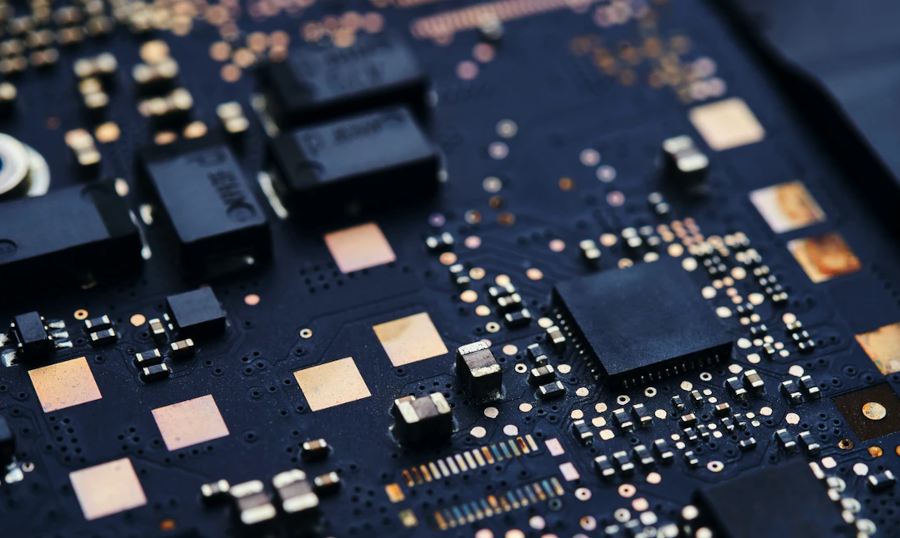
Euclyd is headquartered in High Tech Campus Eindhoven, a research hub located a few miles from ASML’s head office. The company is developing an artificial intelligence chip called craftwerk. Euclyd will ship the chip as part of a system called CWS that is expected to power AI clusters with more than an exaflop of performance.
The company says craftwerk is designed to run AI agents. That suggests the chip will include circuits optimized for inference rather than training. Additionally, it’s likely that either craftwerk or CWS will include central processing unit cores. AI agents require not only inference accelerators but also CPUs that can run their tools.
According to Euclyd, craftwerk’s computing module will be an application-specific integrated circuit, or ASIC. The chip will also feature an “innovative memory architecture.” Euclyd elaborated that it plans to pursue “processor-memory co-design,” which indicates that its RAM architecture will be specifically optimized to work with its ASIC.
Multiple custom memory designs have cropped up in the AI ecosystem over the past few years. They aim to replace the standard HBM memory that ships with today’s graphics processing units.
An HBM module comprises multiple memory dies that are stacked atop one another. That stack is placed on a so-called base die, which is in turn installed on the host GPU. The base die functions as the interface between the GPU and the HBM module.
Last month, Nvidia debuted a custom memory architecture called NVHBM. It moves certain circuits from the base die to the HBM stack that sits on top of it. Additionally, Nvidia has shrunk the hardware channels that move data through the base die. The company says that those changes can free up to 30% of a GPU’s surface area, which enables engineers to add in more computing circuits.
A startup called d-Matrix Inc. has also developed a custom memory architecture for its chips. The design uses SRAM, a high-speed memory variety, to carry out some inference calculations. Computations that can’t be performed in-memory are sent to a set of processing cores likewise designed by d-Matrix. The company says its chips are more power-efficient than traditional GPUs.
Euclyd is likewise prioritizing power-efficiency with craftwerk. The company says the chip is designed for a “future in which advanced AI is no longer constrained by infrastructure cost, power availability or geography.” Euclyd also hopes to tackle the so-called memory wall, an engineering challenge that is complicating efforts to speed up AI chips. It relates to the rate at which data moves between a GPU’s computing and HBM modules.
Euclyd’s partnership with Samsung, one of the lead investors in its funding round, could be conducive to its engineering efforts. The electronics giant is one of the world’s top HBM suppliers. Last month, it debuted a technology that makes it possible to place HBM memory directly atop a GPU’s computing circuits. Today, chip designers implement memory dies and computing modules side-by-side.
According to CNBC, Euclyd plans to launch its silicon in 2028. The company intends to sell the hardware to data center operators and license the underlying technologies to fellow chipmakers. Euclyd reportedly hopes to gain thousands of enterprise customers by 2030.
Support our mission to keep content open and free by engaging with theCUBE community. Join theCUBE’s Alumni Trust Network, where technology leaders connect, share intelligence and create opportunities.
Founded by tech visionaries John Furrier and Dave Vellante, SiliconANGLE Media has built a dynamic ecosystem of industry-leading digital media brands that reach 15+ million elite tech professionals. Our new proprietary theCUBE AI Video Cloud is breaking ground in audience interaction, leveraging theCUBEai.com neural network to help technology companies make data-driven decisions and stay at the forefront of industry conversations.