 AI
AI
AI
AI







AI

Knowledge graphs are moving to the center of autonomous software development as enterprises push coding agents beyond quick fixes and into large, interconnected codebases. The more code an agent touches, the more it needs to know about everything that code connects to.
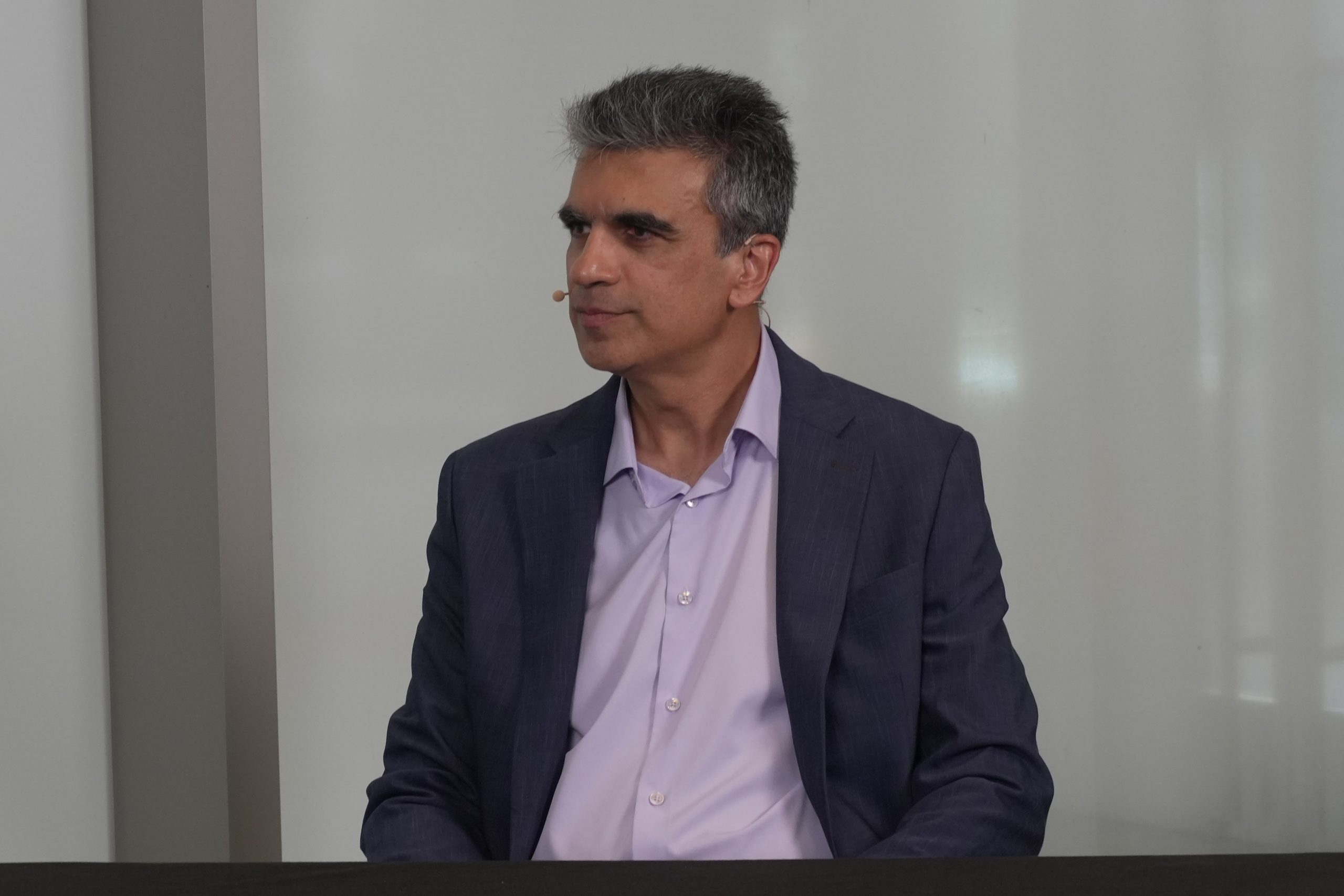
Investors are betting heavily on platforms built for that problem. Blitzy Inc. raised $200 million at a $1.4 billion valuation in May to run thousands of coding agents in parallel. The real obstacle for autonomous coding is not generating code but understanding the system around it, according to Neeraj Deshmukh (pictured), director of engineering at Blitzy.
“I think when people talk about changing software autonomously, the biggest problem is not whether AI can write code. It’s about does AI know or understand the system that it’s writing the code for?” Deshmukh said. “The reason that understanding is crucial is because I may be changing a line of code here, but it may have downstream impact somewhere far away.”
Deshmukh spoke with theCUBE Research’s John Furrier at GraphSummit, during an exclusive broadcast on theCUBE, SiliconANGLE Media’s livestreaming studio. They discussed how Blitzy uses a graph database from Neo4j Inc. to give its coding agents the context needed to change enterprise codebases safely and at scale. (* Disclosure below.)
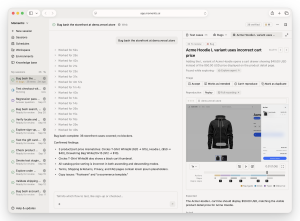
Blitzy’s platform starts by reverse-engineering a customer’s existing environment and building a dynamic graph of its codebase. That graph plugs into source control systems such as GitHub and GitLab, so it updates whenever developers or agents change the code. Using knowledge graphs for this job reflects a basic fact about how software is built, Deshmukh explained.
“Fundamentally, code is a graph because you think about, ‘Oh, we have modules, we have files, we have functions, we have objects, we have classes, variables,'” Deshmukh said. “Each of these are entities that are related to each other. So even before you bring AI into the picture, a codebase is a graph intrinsically.”
Without that structure, agents fall back on vector searches or grep commands to trace dependencies, and those searches burn through working memory fast. An agent’s effective context tops out at about 200,000 to 300,000 tokens, or about 20,000 to 30,000 lines of code, Deshmukh noted. On a 100-million-line codebase, agents start compacting results and losing information.
“With a graph, you know exactly what you’re going to reach because you basically get to pick the point where you want to start. And you know exactly what is accessible. And so you have that effective context. Every agent knows the context that it needs to and nothing else,” Deshmukh said.
That efficiency changes how projects get scoped. With less context lost to broad searches, Blitzy can tackle whole projects at once rather than splitting them into the epics, user stories and tasks of the traditional sprint model. Quality control is built into the process: Humans approve an Agent Action Plan before coding begins, and every line of generated code is tested immediately. The company cited an 84.95% score on SWE-Bench Pro in June.
“On top of that, we have agents who are watching other agents to make sure that they abide by the spec, the plan that we had created and approved by the human in the loop,” Deshmukh said. “That ensures that there is no drift or hallucination.”
The query language matters too. Neo4j used GraphSummit to pitch knowledge graphs as shared context for AI agents, and Blitzy’s agents run queries in Neo4j’s Cypher language constantly. Cypher’s strictness doubles as a safeguard because a malformed query from a hallucinating agent simply returns nothing, according to Deshmukh.
“You only get a result for a correct query,” Deshmukh said. “So there is no question of the agents working off of made-up information or something false. You’re always grounded in truth of what’s in the knowledge graph.”
Here’s the complete video interview, part of SiliconANGLE’s and theCUBE’s coverage of GraphSummit:
(* Disclosure: TheCUBE is a paid media partner for GraphSummit. Neither Neo4j, the sponsor of theCUBE’s event coverage, nor other sponsors have editorial control over content on theCUBE or SiliconANGLE.)
Support our mission to keep content open and free by engaging with theCUBE community. Join theCUBE’s Alumni Trust Network, where technology leaders connect, share intelligence and create opportunities.
Founded by tech visionaries John Furrier and Dave Vellante, SiliconANGLE Media has built a dynamic ecosystem of industry-leading digital media brands that reach 15+ million elite tech professionals. Our new proprietary theCUBE AI Video Cloud is breaking ground in audience interaction, leveraging theCUBEai.com neural network to help technology companies make data-driven decisions and stay at the forefront of industry conversations.