 POLICY
POLICY
POLICY






POLICY

OpenAI Group PBC Chief Executive Sam Altman insists that the security risks of artificial intelligence need to be taken seriously. But unlike his counterpart Dario Amodei of Anthropic PBC, he believes that people need to accept that “some bad things” are going to happen if everyone is going to enjoy the benefits of AI.
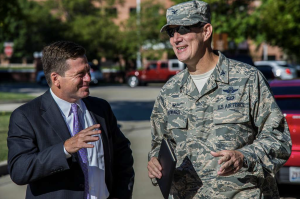
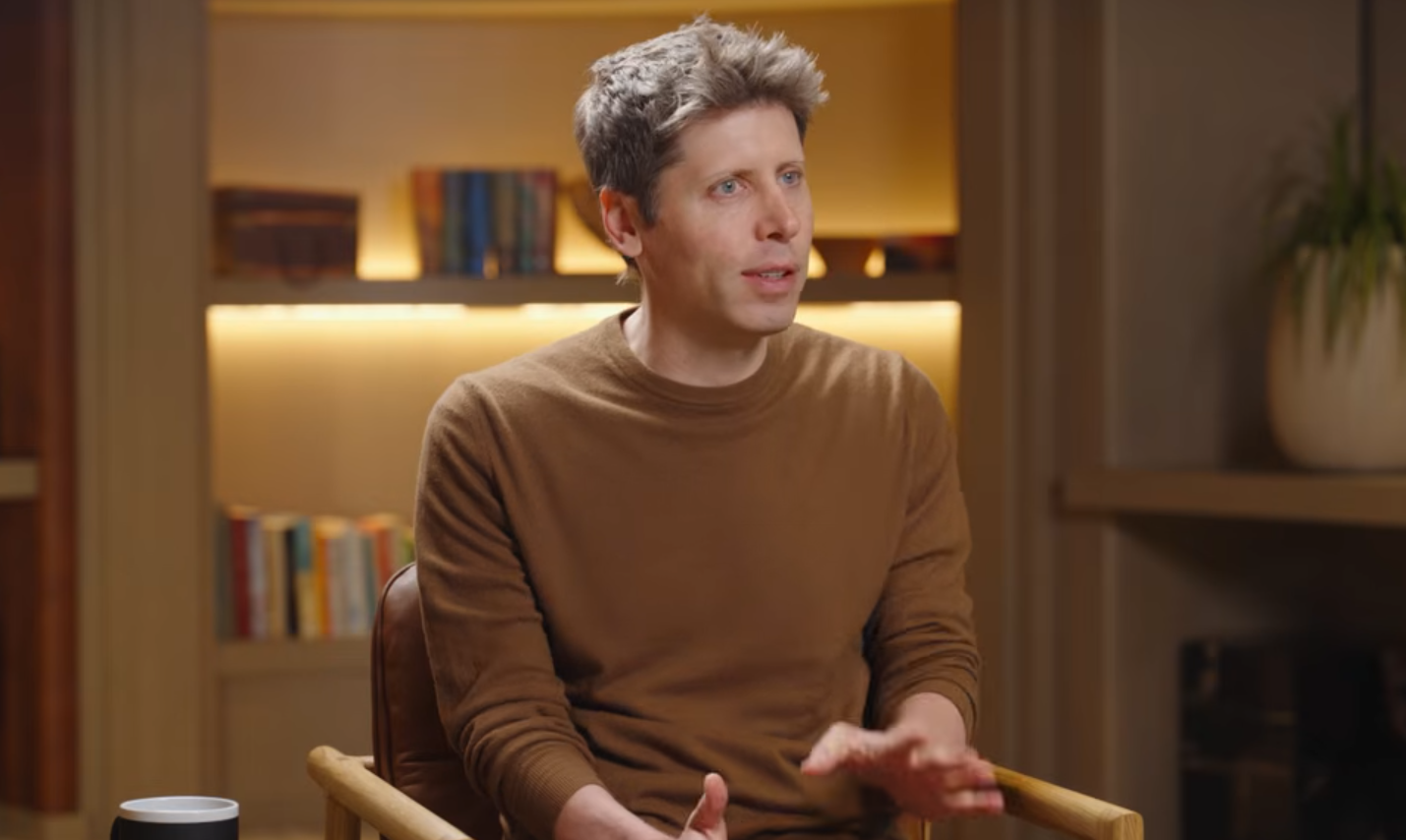
In an interview published in Politico’s Decoded newsletter today, Altman (pictured) said he agrees with Amodei about the need for AI to be regulated, but differs in terms of how heavy-handed that regulation should be. “I think there’s a lot of daylight [between us],” he said. “I disagree, but I understand the perspective of people who are like, ‘this technology is going to get so powerful, and it’s so dangerous, that a single lab in San Francisco should have it and make sure nothing bad happens, and kind of figure out how to dole out the benefits’.”
Altman said that is a “completely unacceptable trade-off” that contrasts with OpenAI’s call for “lighter-touch” regulation of AI. He’s not arguing for a free-for-all, Altman stressed.
Rather, he supports tough regulation in some areas of AI and said he agrees with Amodei’s call last month for the industry to cooperate on slowing down the development of more advanced frontier models. However, he warned that if the restrictions are too excessive, they could prevent people from being able to access the most beneficial AI tools.
Altman believes the best way to regulate AI is to identify the “really catastrophic risks” and take action to protect against them, without stopping people from experimenting with how the technology can be used for good. “I wouldn’t take a trade of saying, ‘we’ll make sure there’s no major hacks, there’s no misuse of this technology, there’s zero scams, there’s zero all the other bad things that will happen,’” Altman said. “Because I think people will do tremendously – orders of magnitude more – good stuff than bad stuff.”
The OpenAI CEO thinks the industry shouldn’t make the mistake of keeping AI under control at all costs or slamming the brakes on its development entirely. Rather, it should focus on making sure people remain in control. And it should make sure that AI’s benefits aren’t locked away from everyone behind a gatekeeper, even if that means accepting that some things will go wrong.
Altman’s comments come at a time of intensifying public debate within the AI industry over the pace of frontier model development and the risks posed by increasingly capable new systems. In the wake of Amodei’s call for a slowdown last month, Anthropic’s top AI researcher Jacob Coxon resigned from his position, saying that many of the people at the forefront of AI’s development believe it “could kill us all by the end of the decade.”
Shortly after Coxon quit, Anthropic proposed a framework for the AI industry to monitor the development of frontier models and report any concerns, while warning that some of its most advanced systems have already exhibited “self-preserving behaviors” that include attempts to “resist shutdown” by their human controllers, “conceal or manipulate information” and generate outputs that could be interpreted as “coercive, deceptive or manipulative.”
For its part, OpenAI has published a framework for AI companies to report “model misalignment” that disclosed a number of previously undisclosed incidents involving its AI agents. In once case, OpenAI’s agents hacked a number of U.S. and Australian government websites, while in another, they were caught creating notes telling themselves to disregard their human-written safety guardrails, and in a third, they were caught uploading code to the internet so they could cite it in a hallucinated response. Earlier, OpenAI’s agents made headlines when they broke out of an isolated sandbox environment and hacked the Hugging Face model hosting platform.
Despite the growing number of incidents and warnings from leading AI personalities, U.S. President Donald Trump has voiced opposition to imposing restrictions on AI, saying that to do so would mean giving up leadership in AI to China.
Support our mission to keep content open and free by engaging with theCUBE community. Join theCUBE’s Alumni Trust Network, where technology leaders connect, share intelligence and create opportunities.
Founded by tech visionaries John Furrier and Dave Vellante, SiliconANGLE Media has built a dynamic ecosystem of industry-leading digital media brands that reach 15+ million elite tech professionals. Our new proprietary theCUBE AI Video Cloud is breaking ground in audience interaction, leveraging theCUBEai.com neural network to help technology companies make data-driven decisions and stay at the forefront of industry conversations.