 POLICY
POLICY
POLICY


POLICY

OpenAI Group PBC called in the Federal Bureau of Investigation to come and arrest one of its employees after a “sophisticated recording device” was discovered hidden within the artificial intelligence company’s executive conference room.
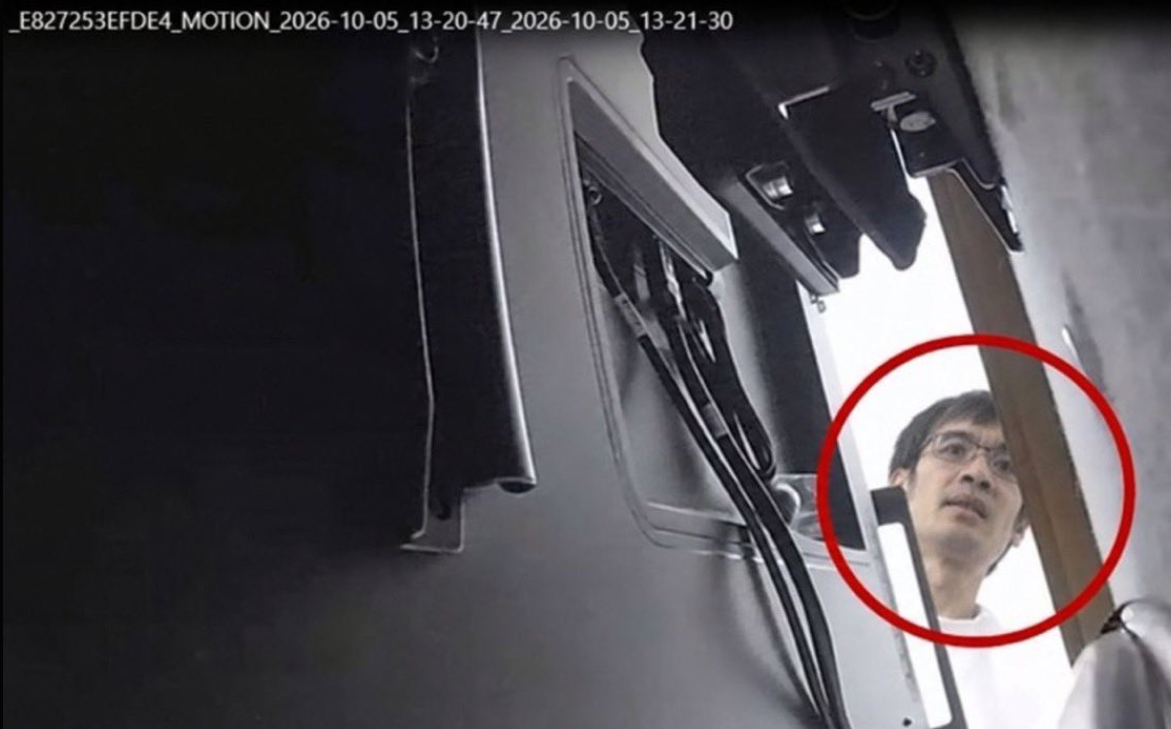
Abdulrahman Alfozan (pictured in a CCTV image), a 35-year-old Saudi Arabian national, was arrested on Friday and appeared in a federal court earlier today, where he was charged with illegally intercepting oral communications, according to a news release by the Department of Justice.
The device was discovered by OpenAI on Sept. 30. It had been inserted into a USB port on the back of a television inside the executive conference room located at one of the company’s offices in San Francisco. OpenAI said its investigations showed that the device had been installed just a couple of days earlier and concealed in toilet paper. They could not ascertain what communications had been recorded, as the device had been encrypted.
“We used our models to understand the device and where it had come from, identifying that a specific employee had planted it a few days earlier,” OpenAI said in a post on X. “At this time, we have no indications of this individual inappropriately accessing or exfiltrating model weights, source code or customer data.”
An investigation by the FBI revealed that Alfozan had used a productivity tool to learn about OpenAI’s meeting rooms, its calendars and “leadership and exec” locations, according to OpenAI’s official complaint. A chatbot associated with the suspect’s spouse showed that someone had used it to ask questions about installing and remotely accessing a recording device. That account, which shared multiple identifiers and attributes with Alfozan’s own chatbot account, was also prompted for information about continuous audio recording and Wi-Fi.
The DOJ said in its statement that Alfozan, who had worked with OpenAI as an engineer on one of its product teams since July 2025, was spotted by CCTV cameras going close to, and entering the conference room multiple times before the device was found, despite having no authorization to enter that room. It added that meetings within the conference room “frequently involved discussions of highly confidential technical, commercial and strategic information, including proprietary research, product plans and business-development opportunities.”
Following Alfozan’s arrest, company officials discovered a bag belonging to him that contained a second recording device identical to the one found earlier.
We discovered a sophisticated recording device that was hidden inside one of our offices. We used our models to understand the device and where it had come from, identifying that a specific employee had planted it a few days earlier. We referred the matter to the FBI, and we’re…
— OpenAI Newsroom (@OpenAINewsroom) October 13, 2026
Alfozan has since been fired by OpenAI. According to the DOJ, he faces a maximum penalty of five years imprisonment, a potential fine of up to $250,000 and three years of supervised release if found guilty of the charges. “For us, it is a matter of national security,” U.S. Attorney Craig Missakian for the Northern District of California said in a statement. “This arrest highlights our relentless efforts in partnership with the FBI to identify and prosecute those who seek to steal our technology, as alleged in the complaint.”
The incident comes at a time of heightened scrutiny around safety and security in the AI industry, following a number of cyber incidents involving autonomous AI agents, which escaped their testing environments and hacked into third-party systems. Dario Amodei, chief executive of OpenAI rival Anthropic PBC, has called on the industry to coordinate an industry-wide slowdown on the development of frontier AI models so that such systems can be evaluated for safety by neutral experts. Though no agreement on how to implement a slowdown has been agreed upon, OpenAI last month called off the planned October release of GPT-6.1 Astra, which fell short of its bar for staying within scope and authorization.
Last week, OpenAI stirred up further controversy when it fired three of its safety researchers, alleging they were guilty of a “significant breach of trust” after they “violated clear policies on handling sensitive information.”
The researchers – Jasmine Wang, Tomek Korbak and Mikita Balesni – raised safety concerns in a letter to OpenAI’s executive leadership, saying that communications around their exit from the company “have made our former colleagues afraid to speak and operate in ways that, until last week, were an integral part of working at OpenAI.”
Support our mission to keep content open and free by engaging with theCUBE community. Join theCUBE’s Alumni Trust Network, where technology leaders connect, share intelligence and create opportunities.
Founded by tech visionaries John Furrier and Dave Vellante, SiliconANGLE Media has built a dynamic ecosystem of industry-leading digital media brands that reach 15+ million elite tech professionals. Our new proprietary theCUBE AI Video Cloud is breaking ground in audience interaction, leveraging theCUBEai.com neural network to help technology companies make data-driven decisions and stay at the forefront of industry conversations.