 SECURITY



SECURITY

Running servers and restored data don’t guarantee that a business can safely operate after a disruption. That gap is pushing enterprises to rethink operational resilience as attackers use AI to scale their campaigns and companies embed automation deep into critical processes.
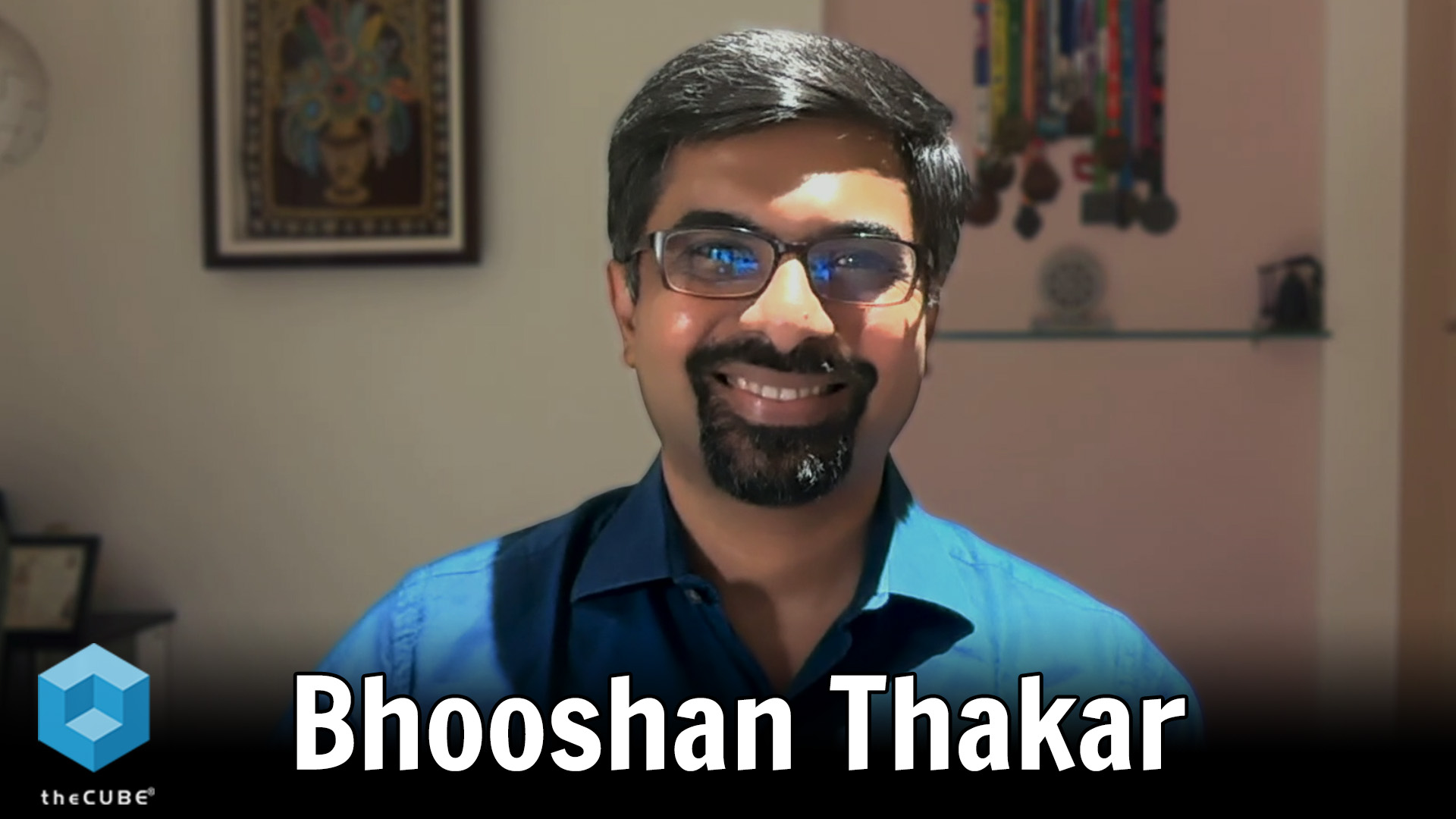
Many organizations have yet to adjust. As AI raises the stakes for trust and cyber resilience, traditional disaster recovery still protects servers, storage and networks one component at a time, according to Bhooshan Thakar (pictured), senior vice president and general manager of InfoScale at Cloud Software Group Inc.
“The infrastructure survived, but the operational state did not. From the business perspective, the main question becomes: ‘Can the business continue to operate with confidence?'” he said. “Ultimately, resilience is about maintaining the trust in the operational state.”
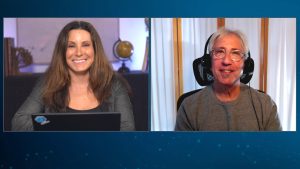
Thakar spoke with theCUBE’s Krista Case for the AI Cybersecurity and Resilience Summit, during an exclusive broadcast on theCUBE, SiliconANGLE Media’s livestreaming studio. They discussed why static disaster recovery playbooks break down in dynamic AI environments. (* Disclosure below.)
The pace of change is part of the problem. Enterprises that once ran a planned failover every six months now patch business-critical applications daily or weekly against security threats, Thakar noted. AI is accelerating that cycle, and Cloud Software Group, InfoScale’s parent company, joined Anthropic PBC’s Project Glasswing in June to use the Claude Mythos Preview model for security work.
“In the past, the disruption or downtime was an ‘if, not when’ kind of an event. Today, it is not ‘if,’ it’s ‘always,'” he said. “What I mean by that is you have to always plan for a disruption, whether it’s a planned or an unplanned.”
Public cloud adds a false sense of security. Application owners often assume cloud service providers guarantee their resilience, yet business applications are multitiered stacks whose layers depend on one another. If any layer fails or data is corrupted, the business stops even while infrastructure reports as healthy, according to Thakar.
“If you really look at the fine print, what the CSPs guarantee is resiliency of the cloud, but resiliency in the cloud is your responsibility, meaning an application owner’s responsibility,” he said. “Ultimately, what you’re looking for is whether your business is resilient as opposed to a component of the stack being resilient.”
That view shapes InfoScale’s approach. Rather than acting only after a failure, a resilience platform should run alongside live applications, tracking dependencies, runtime states and data integrity, while real-time replication and immutable checkpoints let teams return to a trusted good state quickly, Thakar explained. He also argued that traditional investments in prevention and recovery leave a gap in resilience.
“If you think about the last decade, our buyers have spent billions of dollars of their budget into two silos: prevention, which is on the security side, and recovery, which is on the backup and infrastructure side,” he said. “If you really think of it, prevention is leaky and recovery is too slow.”
Measurement also needs to change, Thankar noted. Downtime now brings regulatory exposure alongside financial loss and customer churn. Instead of tracking the time to restore a virtual machine, he suggested measuring how long it takes to reach the first validated, clean business transaction after an active disruption, a metric that ties operational resilience to business outcomes.
“Today, when I talk to the [chief information security officers] and [chief information officers] in this context, they’re not asking vendors, ‘How fast can you restore my data after I take an outage?'” I think that is yesterday’s question,” he said. “They are asking, ‘How does your platform guarantee that my mission-critical application or operation keeps running right through an active disruption?'”
Here’s the complete video interview, part of SiliconANGLE’s and theCUBE’s coverage of the AI Cybersecurity and Resilience Summit:
(* Disclosure: InfoScale sponsored this segment of theCUBE. Neither InfoScale nor other sponsors have editorial control over content on theCUBE or SiliconANGLE.)
Support our mission to keep content open and free by engaging with theCUBE community. Join theCUBE’s Alumni Trust Network, where technology leaders connect, share intelligence and create opportunities.
Founded by tech visionaries John Furrier and Dave Vellante, SiliconANGLE Media has built a dynamic ecosystem of industry-leading digital media brands that reach 15+ million elite tech professionals. Our new proprietary theCUBE AI Video Cloud is breaking ground in audience interaction, leveraging theCUBEai.com neural network to help technology companies make data-driven decisions and stay at the forefront of industry conversations.