 AI
AI



AI

Agentic AI is rewriting the business development playbook for chipmakers and server builders. Graphics processing units still grab the headlines, but as supercomputing and AI converge, the next wave of demand is landing on central processing units that must fit inside the power budgets data centers already have.
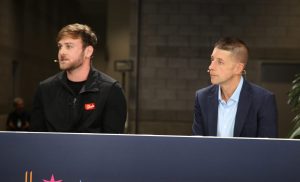
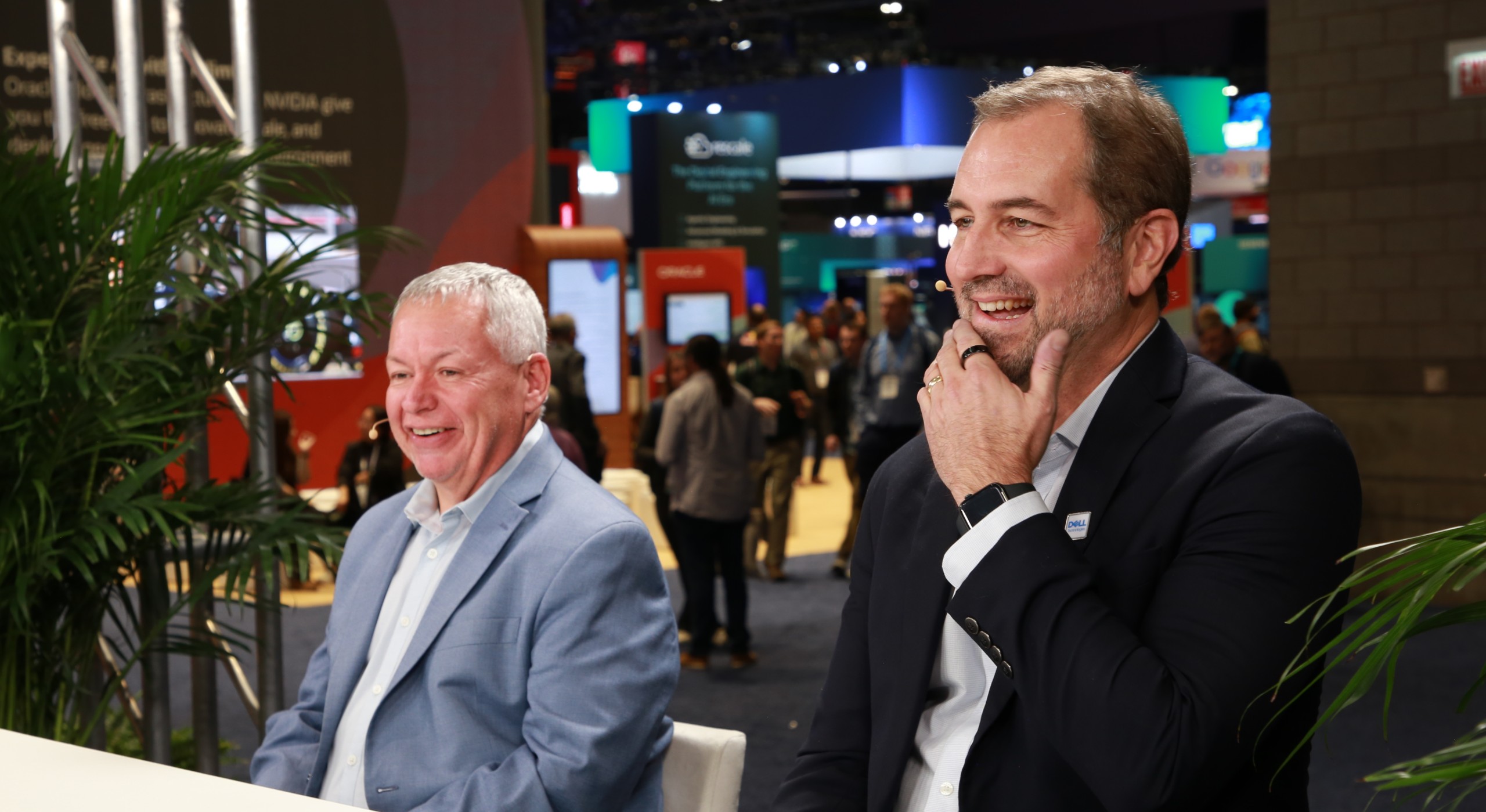
The shift has been building for years. Customers that hung more GPUs off a single CPU found they were starving expensive accelerators of data, leaving them idle, according to Scott Tease (pictured, left), vice president of business development for high-performance computing and sovereign AI at Advanced Micro Devices Inc.
“People have realized how important that CPU is in a GPU architecture. But beyond that, agentic is not necessarily just a GPU thing,” Tease said. “Agentic is going to be very CPU heavy because with agentic, what you’re looking at, you want to go very fast, but you also want concurrency.”
Tease and David Schmidt (right), vice president of PowerEdge product management at Dell Technologies Inc., spoke with theCUBE Research’s John Furrier and Gemma Allen at SC26, during an exclusive broadcast on theCUBE, SiliconANGLE Media’s livestreaming studio. They discussed why agentic AI is putting the CPU back at center stage and how power limits are reshaping business development for compute. (* Disclosure below.)
Dell and AMD have been building rack-scale AI platforms together, but power remains the binding constraint. When Dell began planning its portfolio 2.5 years ago, enterprise customers forecast rack power holding at 15 to 20 kilowatts and said they often ran out of power before filling a rack, according to Schmidt. Dell responded with the PowerEdge R9825, a 3U server built on AMD’s sixth-generation EPYC 9006 processors.
“It’s been optimized for power efficiency and cooling efficiency,” Schmidt said. “That means we’re using less power to cool the system overall, and that’s power that we can return to our customers.”
That efficiency compounds at refresh time. A single EPYC 9006 server can take 13 legacy machines out of production while cutting the system power needed for cooling by 80 percent, Schmidt noted. Tease sees reclaimed power feeding agentic workloads, where agents could turn one researcher’s ideas into thousands of compute jobs.
“Same number of researchers, massive increase in the amount of compute. So agentic is going to continue to drive more and more IT, and we’ve got to find a way to power it,” Tease said.
Here’s the complete video interview, part of SiliconANGLE’s and theCUBE’s coverage of SC26:
(* Disclosure: Dell sponsored this segment of theCUBE. Neither Dell nor other sponsors have editorial control over content on theCUBE or SiliconANGLE.)
Support our mission to keep content open and free by engaging with theCUBE community. Join theCUBE’s Alumni Trust Network, where technology leaders connect, share intelligence and create opportunities.
Founded by tech visionaries John Furrier and Dave Vellante, SiliconANGLE Media has built a dynamic ecosystem of industry-leading digital media brands that reach 15+ million elite tech professionals. Our new proprietary theCUBE AI Video Cloud is breaking ground in audience interaction, leveraging theCUBEai.com neural network to help technology companies make data-driven decisions and stay at the forefront of industry conversations.