














 NEWS
NEWS
NEWS
NEWS
NEWS

SAP reported its strongest ever 2nd quarter performance this morning with net profits of €661 million, or nearly $800 million. That’s a 12% increase over 2011 Q2 results.
Among the highlights, SAP’s services revenue was up 16% compared to last year, topping €2 billion. That’s an impressive feat considering the majority of SAP’s business is in the struggling Euro Zone and industry-wide services revenue is expected to grow by a measly 2.3% this year.
 SAP’s in-memory analytic database appliance HANA also had a good quarter. HANA sales hit €85 million in Q2 and the company said it is on track to deliver on its forecast of €320 million in HANA sales for the year.
“HANA Wins the Gold Medal”
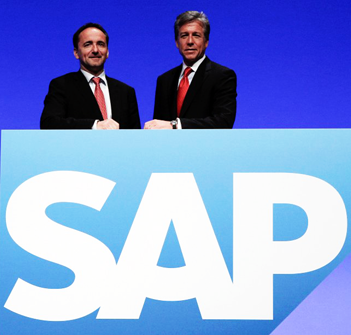
During today’s earnings call with investors, SAP Co-CEO Jim Hagemann Snabe talked up HANA’s results, saying, “HANA wins the gold medal this quarter.” (Hat tip @twailgum) That Snabe would single out HANA (and use an Olympics reference) is not surprising when you consider SAP is betting much of its future growth on the homegrown, in-memory analytic database as more and more of its customers look to tap Big Data Analytics.
While obviously a critical part of the equation, HANA is not the only element necessary for SAP to successfully deliver Big Data Analytics, however. The German software maker must also create compelling but intuitive end-user applications that allow regular business users to quickly derive practical, actionable insights from HANA-powered analytics.
SAP took another step in that direction last week with the 1.0.1 release of its Visual Intelligence application, which makes it possible for non-power users to merge and visualize third-party data sets with large volumes of data stored in HANA. Crystal Report users can also now directly access Hive and HDFS data, according to Jason Rose, Vice President of Business Intelligence Marketing at SAP.
Role-based Big Data Applications
I met with Rose and his colleague James Fisher, Vice President of Analytics Marketing at SAP, last week in Boston. What came across to me is that both understand the nuances of delivering Big Data applications to end users. That is, not all end users are created equal, and Big Data applications must be tailored to particular roles.
Frontline operational workers, for example, are better served by alert-based analytic applications that let users know that an anomaly has occurred. A produce manager at a grocery store wants to be alerted when a shipment of tomatoes is likely to arrive late due to a combination of traffic, weather and supplier conditions. Knowledge workers, on the other hand, are more interested in ad hoc query capabilities and interactive data visualizations. A business analyst at the same grocery chain wants to drill down into the data to understand why tomato shipments are being delayed and be able to create dashboards that make it easier to visualization trends in such activity.
Big Data applications also need to incorporate social networking and mobile capabilities so users can share insights and access them on any number of devices.
From what I heard from Rose and Fisher, SAP gets it. Almost as important, the company has most of the technology pieces in place to build and support compelling Big Data applications – HANA, StreamWorks, BusinessObjects, etc. — and is even doing so now for customers like Valero and FreshDirect.
The challenge for SAP is to continue building out its Big Data application portfolio based on the practical needs of role-based users and to do so in an open fashion. While HANA will be a crucial component in most SAP customers’ Big Data deployments, it must be able to easily integrate with existing IT infrastructures and be able to seamlessly integrate data to and from Hadoop and other third-party Big Data technologies. Likewise, Big Data applications must be able to work with non-SAP data to deliver maximum effectiveness.
For more on SAP’s Big Data Analytics strategy, check out the below videos with Fisher and Rose from inside theCUBE at SAPPHIRE earlier this summer.
Jason Rose inside theCUBE @ SAPPHIRE 2012
James Fisher inside theCUBE @ SAPPHIRE 2012
Support our mission to keep content open and free by engaging with theCUBE community. Join theCUBE’s Alumni Trust Network, where technology leaders connect, share intelligence and create opportunities.
Founded by tech visionaries John Furrier and Dave Vellante, SiliconANGLE Media has built a dynamic ecosystem of industry-leading digital media brands that reach 15+ million elite tech professionals. Our new proprietary theCUBE AI Video Cloud is breaking ground in audience interaction, leveraging theCUBEai.com neural network to help technology companies make data-driven decisions and stay at the forefront of industry conversations.