 EMERGING TECH
EMERGING TECH
EMERGING TECH



EMERGING TECH

In 2017, a thousand variations on “Virtual reality is dead” stared coldly from the headlines of tech blogs. But despite lackluster content and sagging headset sales, some proponents say VR is still in the fight. Perhaps to enthrall viewers, VR just needs that old black magic Hollywood’s always counted on to sell tickets: Paleomammalian cortex arousal. That is, emotions.
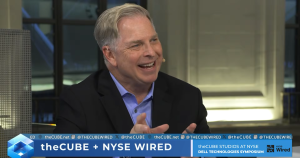
This is the gist of Kane Lee’s (pictured) outlook on the state of VR. Lee is head of content at Baobab Studios Inc., a two-year-old startup that fuses VR and animation for a broad, all-ages audience. Baobab develops rich characters whom viewers forge relationships with, Lee explained during an interview at Sundance Film Festival in Park City, Utah.
“For us, emotional connection is the key to getting people to put on headsets and to come back to our experiences,” Lee said. He spoke with John Furrier (@furrier, pictured, right), co-host of theCUBE, SiliconANGLE Media’s mobile livestreaming studio. (* Disclosure below.)
Last year, Baobab’s second feature titled Asteroids was the first red-carpet VR premier in the history of Sundance. Viewers interacted with “Asteroid’s” space-alien characters via handheld controllers. Younger people plunged into the experience more readily than older audience members, Lee pointed out. Raised on social media and real-time interactions online, they’re trained to build bonds through virtual and technological channels, he added.
“I think one thing that distinguishes us from some of the other people in VR is that we’re so focused on characters,” Lee said. Micro-tweaking things like facial expressions, eye contact and instantaneous reactions creates believable characters. These are personalities with whom viewers can make friends, enemies and everything in between.
Watch the complete video interview with Kane Lee below:
Can the human bonding instinct fill in the void in commonly unimpressive VR content?
Despite generous price cuts, consumer-grade VR headsets have not exactly flown off shelves. Two big headset makers — Facebook-owned Oculus VR LLC and HTC Corp. — would not even release sales figures to the public for most of last year. Finally, in November, a report from Canalys put Q3 figures at 490,000 units for Sony; 210,000 units for Oculus; and 160,000 units for HTC. The three companies made up 86 percent of the headset market for Q3.
In October of last year, Icelandic developer CCP Games — a VR early starter — announced the shuttering of its VR unit. To many, this was an official notice that VR would never have legs in the mass consumer market, and developers may as well move on.
Clearly, most VR content to date simply hasn’t pushed the hot buttons for most consumers.
Meanwhile, augmented reality gained a lot of steam in 2017 as “Pokemon Go” and other AR apps continued to colonize smartphone screens the world over. Is it “Go’s” stunning visuals or superior user immersion that made it everything VR has failed to become for a broad audience? Not really. Sitting Bulbasaur on the living room sofa is a neat trick, but it’s not what made “Go” the most downloaded app in the world in 2016. The lure is largely a social one. It’s possible to play the game solo, but the majority choose to play in teams of other Pokemon trainers. Connections form, which keep players invested in the game. They can potentially go live in real-world meetups and even while dating.
Companies are trying to infuse the habit-forming lure of a gaming tribe into all kinds of apps. VR — typically an intensely solo experience — has not been so effective at this, which might account for it failures, at least in part. If an app like “Go” can addict users through team psychology with less-than-mind-blowing graphics, can VR, with a much broader canvas for visual stimuli, do the same through relationships to life-like characters?
AR has an easy in with consumers via ubiquitous smartphones. “But I’m equally as excited about what’s coming in VR and interactive VR, room-scale VR,” said Ari Kuschnir, founder and executive producer at m ss ng p eces (pronounced missing pieces).
Watch the complete video interview with Ari Kuschnir below:
Attendees at this year’s Sundance experienced first-hand how VR can be much more than neat or entertaining. It can actually deeply affect or even disturb. Starbreeze Studios’ VR experience “Hero,” for instance, hurls viewers into a war-torn world of chaos in which they are called upon to rescue fellow citizens. The production combines documentary elements, physical sensations and DTSX object-based audio to bring the story to life.
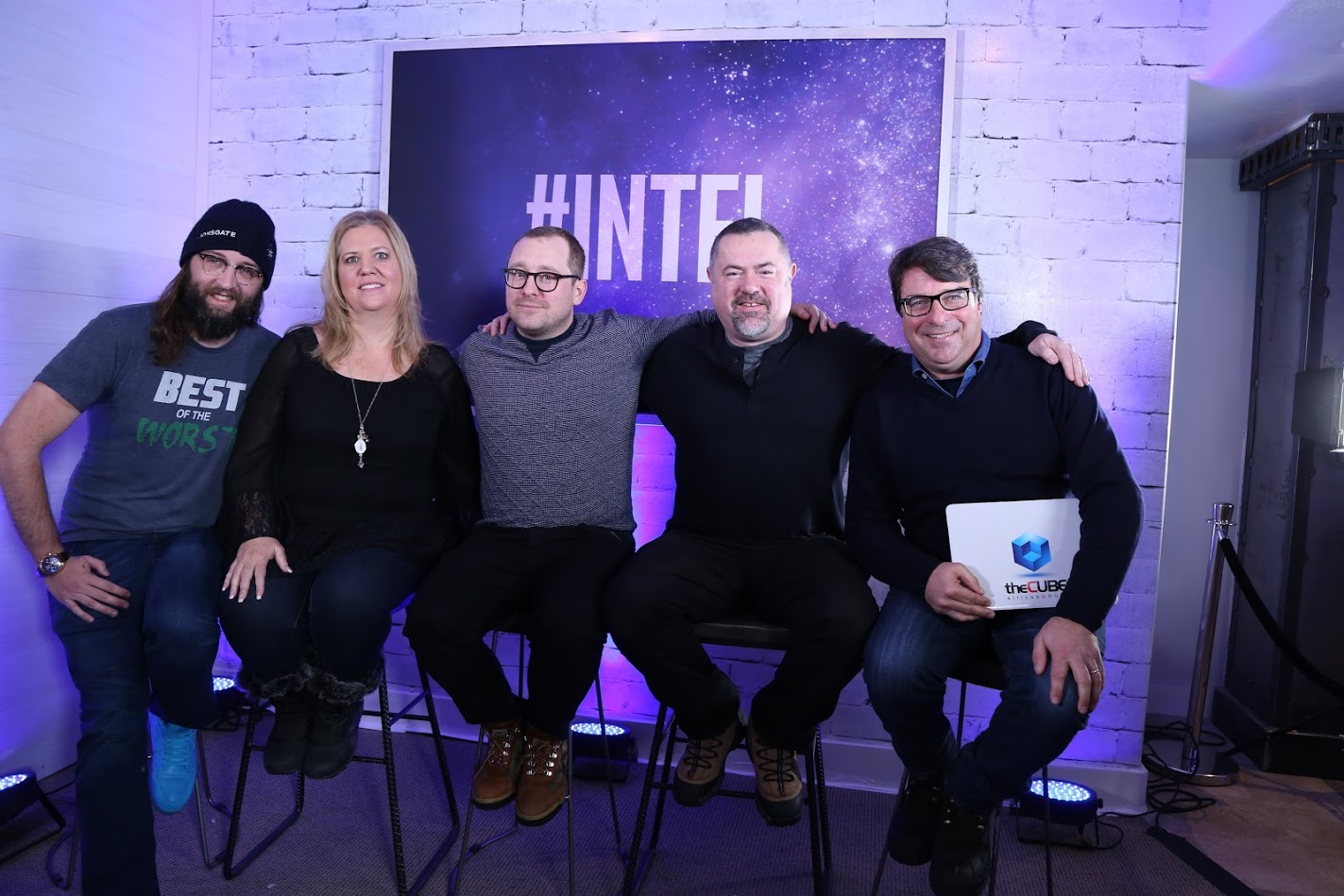
“A number of them simply, actually couldn’t handle it,” said Brooks Brown (pictured, left), global director of VR at Starbreeze, during theCUBE’s “The New Creative” panel session at Sundance. “We had to pull people out. The moment we took the headset off, tears were streaming down their face.”
VR experience “Giant” from New Reality Co., which ran at Sundance 2016 and is now viewable here — similarly shakes viewers — so much so that it comes with a trigger warning. The experience revolves around a family in the moments before a bomb attack. “We had to go and buy tissues right off the bat, because people were crying in the headset,” said Winslow Porter (pictured, center), “Giant’s” producer and co-founder and director at New Reality.
These productions etch out a picture of what VR — as unique from games and films — is becoming, Brown pointed out. Instead of passively taking in a film with a linear plot or choosing from a limited set of options in a game, they render an event within which each viewer acts independently. “Our goal is to put people through that and come out of it changed — traumatized actually,” he said.
Watch the complete video interview with the Sundance New Creative Panel below:
The emotional experiences possible through VR entertainment are useful for a range of healthcare and social applications, according to Gary Radburn, director of workstation virtualization, commercial VR and AR at Dell Technologies Inc.
“Entertainment is great, and that’s really pushing the envelope and allowing us to then take it for the good of human kind,” he said. “What’s really cool for me is seeing people’s reaction to that content and to the entertainment content.”
Some psychologists are actually using VR catharsis to de-traumatize patients suffering from post traumatic stress disorder. Albert “Skip” Rizzo is research director at USC Institute for Creative Technologies for Medical Virtual Reality. Rizzo extends traditional prolonged exposure therapy further with immersive VR reenactments of triggering memories. “Bravemind” — the medical VR program he developed — successfully treated veterans to the degree that some no longer met the diagnosis for PTSD.
“It’s about confronting your past and moving past it,” Rizzo told Bloomberg Businessweek.
Blending entertainment, education and social involvement, VR documentary “ZIKR: A Sufi Revival” takes four participants into a Sufi mystical ritual. It was acquired at this year’s Sundance by Dogwoof Ltd. The slated online version will allow multiple players to partake in the ceremony.
Along with seven-figure acquisition of VR production “Spheres,” this marks a turning point for VR at the festival. “This feels like the breakout year,” said Lisa Watts (pictured, second from left), VR marketing strategist at Intel Corp.
Automation technology is allowing artists to focus on creating vivid characters and moving stories, according to Michael Smit, chief commercial officer at Ziva Dynamics Inc.. “You don’t want creatives to get hung up on trying to make your cheek look exactly the way it needs to look over 500 frames when you want them to be bringing the story to life,” he said.
This is partly why VR is improving and finally blending in at Sundance, Smit pointed out. “The emerging technology used to be like the additive thing, like, ‘Let’s go see what’s next,'” he said. “Now it’s just a part of the big story.”
Watch the complete video interview with Michael Smit below:
(* Disclosure: TheCUBE is a paid media partner for the Sundance Film Festival event. Neither Intel, the event sponsor, nor other sponsors have editorial control over content on theCUBE or SiliconANGLE.)
Support our mission to keep content open and free by engaging with theCUBE community. Join theCUBE’s Alumni Trust Network, where technology leaders connect, share intelligence and create opportunities.
Founded by tech visionaries John Furrier and Dave Vellante, SiliconANGLE Media has built a dynamic ecosystem of industry-leading digital media brands that reach 15+ million elite tech professionals. Our new proprietary theCUBE AI Video Cloud is breaking ground in audience interaction, leveraging theCUBEai.com neural network to help technology companies make data-driven decisions and stay at the forefront of industry conversations.