











 EMERGING TECH
EMERGING TECH
EMERGING TECH
EMERGING TECH

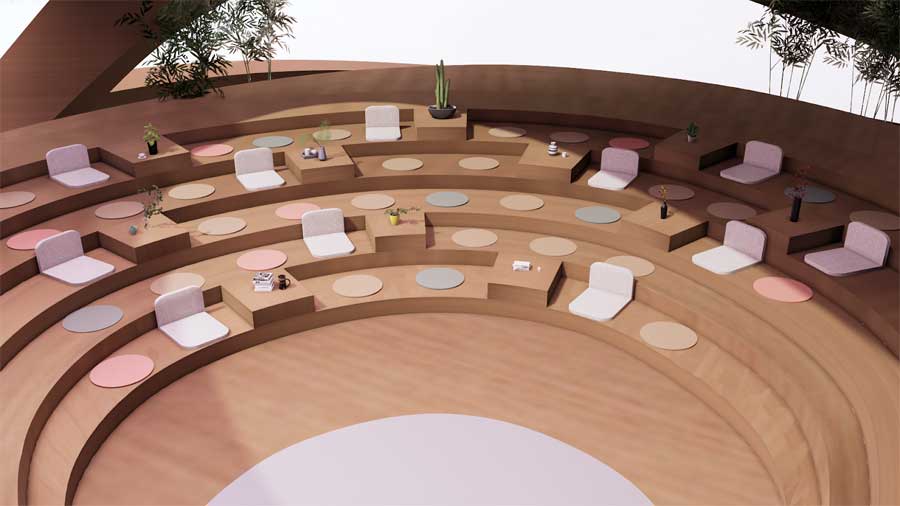
Spatial Systems Inc., a holographic collaboration platform for augmented and virtual reality, today announced the addition of a new auditorium environment and other features and updates.
Spatial told SiliconANGLE that the company continues to expand in this era of continuing remote work, with a 10-fold increase in usage since the launch of the Oculus Quest 2 in September. The company’s platform runs on Quest, HoloLens, Magic Leap devices, desktop and mobile.
The new Spatial auditorium will seat more than 40 people and can be used for anything from lectures and conferences to all-hands-on-deck meetings. It allows for remote work and big meetings to continue apace even in this era where COVID-19 has pushed a lot of businesses apart.
With virtual settings, meetings can still happen from home, but the people involved can don headsets can “see” their colleagues sitting next to them even while seated in their home-office chairs in front of their computers and separated by hundreds or thousands of miles.
“Spatial is the only solution we want to use for meetings from now on,” said Florian Couret, head of Digital Innovation at BNP Paribas S.A., a French international banking group. “We use Spatial on Magic Leap for real estate development planning across several offices. Being able to review 3D information and feel like we’re actually in the room with colleagues helps us cut down on a lot of travel.”
Amid platform updates, Spatial now also supports Microsoft Office Suite Word documents, Powerpoint slides, and Excel spreadsheets, Google Drive, OneDrive and SharePoint integrations. Users can link their existing cloud services and easily pull files into Spatial.
Spatial has improved hand tracking for controller updates to teleport to seats or hotspots in environments in Quest VR environments and move objects with thumbsticks.
For content updates, there is now improved text readability on documents, rooms have autosave, rooms now have larger boundaries to allow bigger group scenarios and videos now come with MP4 looping support. Avatars also just got better, for anyone who wanted to do “fist bumps,” that has gotten more responsive. And on the tech side, the latest Oculus software development kits have been integrated and ARKit meshing and occlusion have been added for lidar-enabled devices.
Spatial said it will continue to improve its platform for remote workers and enterprise users in the coming months.
Support our mission to keep content open and free by engaging with theCUBE community. Join theCUBE’s Alumni Trust Network, where technology leaders connect, share intelligence and create opportunities.
Founded by tech visionaries John Furrier and Dave Vellante, SiliconANGLE Media has built a dynamic ecosystem of industry-leading digital media brands that reach 15+ million elite tech professionals. Our new proprietary theCUBE AI Video Cloud is breaking ground in audience interaction, leveraging theCUBEai.com neural network to help technology companies make data-driven decisions and stay at the forefront of industry conversations.