













 INFRA
INFRA
INFRA
INFRA

INFRA

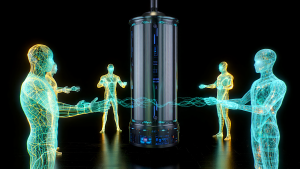
Enterprises are building the connective tissue that lets data, processes and decisions flow as one system. Intelligence is no longer confined to isolated dashboards or static reports. Now, it moves across silos in real time, fueled by AI agents and process intelligence platforms that map how work actually happens.
It’s the digital equivalent of the assembly line revolution, but for knowledge work. Analysts from theCUBE, SiliconANGLE Media’s livestreaming studio, observed how this shift is taking hold across industries during Celosphere 25. Better algorithms and faster computing power now liberate data from fragmented systems, connecting it directly to business operations. That visibility is what makes AI agents effective and enables measurable return on investment, according to Savannah Peterson, principal analyst at theCUBE Research.
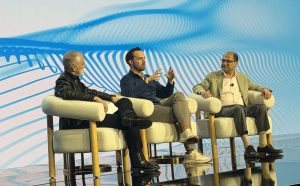
TheCUBE Research’s Savannah Peterson, Rob Strechay and George Gilbert discuss how AI agents are transforming enterprise integration.
“The focus has truly been on liberating some of this data, getting data out of data jail,” Peterson said during the event. “It’s truly about empowering people to do their best work and have the most fun at work while they’re at it.”
Peterson, alongside theCUBE’s Rob Strechay and George Gilbert, provided exclusive analysis at the event, during theCUBE’s broadcast. They discussed how liberating data from fragmented systems and connecting it to operational context is transforming enterprise artificial intelligence — enabling agents to function effectively, delivering measurable return on investment and empowering organizations to build adaptive, intelligent operations at scale. (* Disclosure below.)
Here’s theCUBE’s complete video analysis with Savannah Peterson, Rob Strechay and George Gilbert:
Here are three insights you may have missed from theCUBE’s coverage of Celosphere 25:
As digital environments become increasingly intricate, having visibility into entire processes is now crucial. AI agents are advancing this area by linking previously isolated applications and fostering a new generation of enterprise intelligence. These agents perform best when they have access to a comprehensive view of processes, which modern data architectures make possible, according to Gilbert.
TheCUBE’s Savannah Peterson and Rob Strechay discuss how process intelligence is helping drive measurable business value.
“”Just the way the smartphone really accelerated the rise of the cloud, agents are going to accelerate the rise of the digital twin because they’re only useful when they can see across the enterprise,” Gilbert said. “Agents need the four-dimensional dynamic map; that’s what Celonis is. That’s the big picture.”
That holistic perspective depends on a technical evolution that’s easy to overlook but critical to understand. Traditional process mining tracked individual workflows in isolation, but newer approaches allow a single entity — a customer, an order or a claim — to move fluidly across multiple processes. That shift empowers enterprises to break free from departmental silos and view operations as interconnected systems, according to Gilbert.
“They made this big transition; it was a pretty profound transition,” he said. “The technical term is object-centric process mining, but that’s where an object, like a customer or a sales order, can participate in many different processes. That’s crucial for busting out of these silos.”
Beyond the technical architecture, the real test is whether organizations can translate visibility into measurable business value. Evidence is mounting that they can. Celonis SE’s customer community has seen more than 120 “Celonaut champions” achieve a combined value of $8.1 billion, according to Peterson. That scale of return on AI underscores how process intelligence transforms theoretical potential into realized performance, but it also depends on cultural buy-in and trust.
“We talk about making AI real,” Peterson said. “[Celonis has] achieved 1 billion in value, and I think that’s nothing to scoff at. I haven’t heard of that level of tangible, scalable result in a lot of circumstances.”
For all the momentum AI brings to enterprise operations, that energy can turn chaotic without the proper foundation. Process intelligence acts as the stabilizing force, ensuring that automation and analytics don’t simply accelerate broken workflows but instead guide organizations toward sustainable, scalable improvement. The metaphor of riding a wave captures both the opportunity and the risk, according to Strechay.
“I’ve said it a couple of times today: AI’s that wave at our back,” he said. “One of the things that it’s doing is it can crash on you if your processes aren’t right.”
Here’s theCUBE’s complete video analysis with Rob Strechay and Savannah Peterson:
The challenge facing enterprises isn’t a lack of AI capability; it’s the absence of clarity in how to apply it. Organizations are building what Celonis calls a “process language,” a shared business understanding that cuts through technical complexity and enables AI to function as intended. That common framework addresses a fundamental gap: Companies struggle with agentic AI because their underlying processes remain fragmented and misunderstood, according to Carsten Thoma, president at Celonis.
The same limitation shows up at the operational level, where AI agents fail when disconnected from the multi-system reality of how work actually happens, according to Manuel Haug, chief field technology officer at Celonis.
Celonis’ Alex Rinke talks with theCUBE about how composable architecture if transforming enterprise IT.
“AI is everywhere, but it’s not working everywhere at the moment,” Haug told theCUBE. “I think we have the chance and the opportunity to change that, and I think that’s really the exciting part of Celonis and process intelligence — [to] really make that work and at companies at scale.”
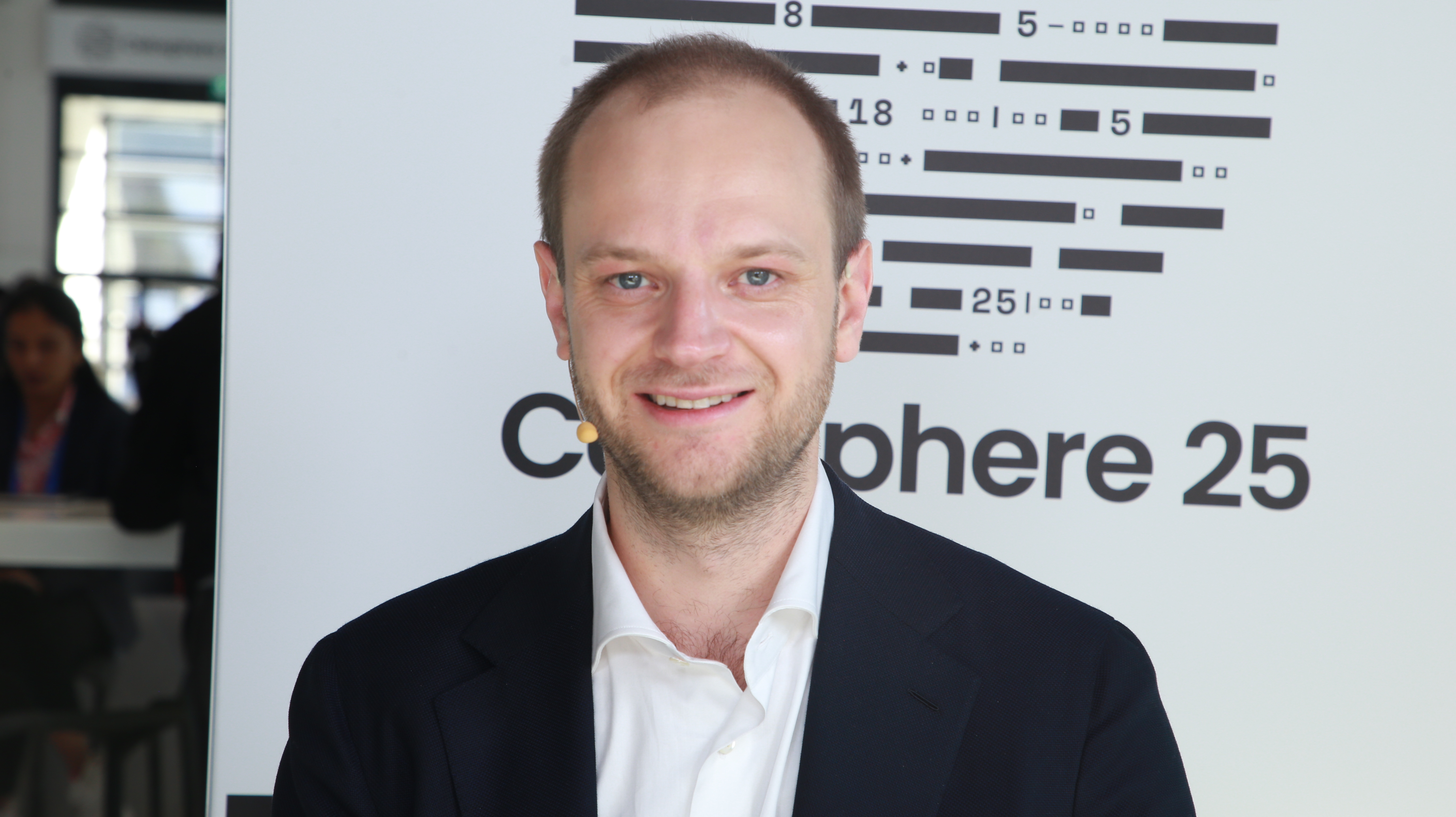
The architecture enabling that scale is fundamentally different from what came before. Instead of monolithic systems, enterprises are building modular, composable environments that will allow AI to be integrated strategically across operations. The shift addresses a sobering reality: Only 11% of companies are achieving measurable returns from AI investments, according to Alex Rinke (pictured), co-chief executive officer and co-founder at Celonis. Composable architecture changes that equation by providing the context, strategic deployment and process integration AI requires to deliver business outcomes.
“There’s three things AI needs,” Rinke said during the event. “It needs an understanding of the context of how your business runs. If it doesn’t have that and it doesn’t have that crucial information, it can’t really automate for you. Secondly, it needs to be deployed in the right places strategically because you’re looking at giant organizations. Three, it needs to work and integrate in your processes to work with everything else that you’re already doing.”
The proof is accumulating across industries. Object-centric process mining has moved from experimental concept to mainstream practice, with organizations applying it to core business challenges rather than just administrative workflows, according to Wil van der Aalst, chief scientist at Celonis. Real-world applications range from minimizing flight delays to improving supply chain reliability, demonstrating how process intelligence delivers measurable results by connecting AI to operational data. That evidence-based approach is what separates genuine impact from theoretical possibility.
“If you look at customers that were on the main stage … in supply chains, it’s very important that things are reliable and that you have an idea when something is going to happen,” Van der Aalst told theCUBE. “The ability to use AI to make more reliable predictions … is a clear case of something that you could not do before.”
Here’s theCUBE’s complete video interview with Carsten Thoma:
In life sciences, where regulatory complexity and organizational scale create natural resistance to change, process intelligence is proving its value through careful implementation and cultural buy-in. Bayer AG has approached AI agents not as a replacement for human judgment but as tools that require ongoing monitoring and control, according to Timo Peters, head of process insights and value at Bayer. The pharmaceutical company uses process mining to ensure agents continue performing as intended, building trust through transparency and continuous improvement.
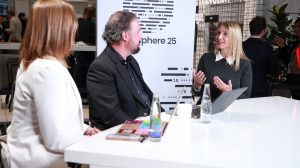
State of Oklahoma’s Janet Morrow talks with theCUBE about AI-led process intelligence.
“You need to create a value add,” Peters told theCUBE. “Sometimes it’s … value of money, so [it’s] very important for companies, but from a user point of view, you also want to improve … how they’re handling things. You need to build the trust. And we have a saying, ‘Technology sparks the change, but mindset and culture is doing the change.'”
In automotive manufacturing, the shift to object-centric process intelligence has enabled a new level of operational visibility. BMW now connects more than 500 data sources to Celonis, supporting over 120 active use cases across production, logistics and compliance, according to Marco Görgmaier, senior vice president of enterprise platforms and services, data and AI at BMW. The real transformation came when the company moved beyond siloed process improvements to a holistic view that tracks relationships between vehicles, parts and invoices across the entire enterprise.
“The biggest change here was that we very much shifted from just process intelligence to object-centric process intelligence,” Görgmaier said during the event. “There’s been a mind shift there with our teams; now they don’t just go from use case to use case with more of a siloed approach … we’re heading into a global optimum in the company.”
Process intelligence is also transforming public services, where efficiency directly impacts taxpayers. The State of Oklahoma deployed Celonis as a layer above legacy systems, using natural language queries to surface bottlenecks and accelerate decision-making across dozens of agencies, according to Janet Morrow, director of risk, assessment and compliance for the Office of Management and Enterprise Services at the State of Oklahoma. Teams that once required twelve people now operate with fewer than six, redirecting saved time toward improved service delivery.
“Celonis sits above all of our legacy systems,” Morrow told theCUBE. “It doesn’t necessarily replace the various tools because … we all have our own tools that we’re particular to. It sits above and it tells us, ‘Here’s where some inefficiencies are,’ and it pulls it all into a single pane of glass. We can see it in one place, versus someone [spending] 10 hours at one agency pulling data out of a platform, then we’ve got to bring in other platform data, and then we have to bring it together. [Instead] it’s right there for us to see live.”
Here’s theCUBE’s complete video with Marco Görgmaier:
For more insights from Celosphere 25, check out these information-packed interviews:
To watch more of theCUBE’s coverage of Celosphere 25, here is our complete video playlist:
(* Disclosure: TheCUBE is a paid media partner for Celosphere 25. Neither Celonis, the sponsor of theCUBE’s event coverage, nor other sponsors have editorial control over content on theCUBE or SiliconANGLE.)
Support our mission to keep content open and free by engaging with theCUBE community. Join theCUBE’s Alumni Trust Network, where technology leaders connect, share intelligence and create opportunities.
Founded by tech visionaries John Furrier and Dave Vellante, SiliconANGLE Media has built a dynamic ecosystem of industry-leading digital media brands that reach 15+ million elite tech professionals. Our new proprietary theCUBE AI Video Cloud is breaking ground in audience interaction, leveraging theCUBEai.com neural network to help technology companies make data-driven decisions and stay at the forefront of industry conversations.