 AI
AI
AI
AI



AI

The question is no longer whether to deploy AI — it’s why so many deployments stall before delivering returns. The answer usually comes down to a lack of trusted data foundation.
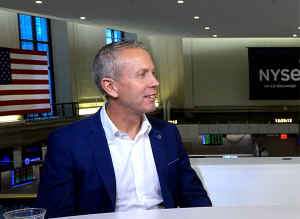
As research from Qlik Technologies Inc. and Enterprise Technology Research shows, data quality, availability and governance remain the top blockers to scaling agentic AI in production. That gap between ambition and outcomes has become the inflection point most enterprises now face, according to Chris Powell (pictured), chief marketing officer of Qlik.
“It’s not whether or not AI works, it’s whether or not the data works for AI,” Powell told theCUBE. “A lot of organizations are finding that it’s the data side of this, not [whether] the AI is working, because we can all see what it works like. If you see a demo, you can see the potential of it. It’s just making that demo work in the real world is what’s challenging.”
Powell spoke with theCUBE’s Rebecca Knight and Rob Strechay at Qlik Connect 2026, during an exclusive broadcast on theCUBE, SiliconANGLE Media’s livestreaming studio. They discussed how organizations can move past AI experimentation by building a trusted data foundation, embedding human expertise into agentic systems and managing cost as a strategic variable. (* Disclosure below.)
The shift to production requires more than better models. Instead, it demands an architecture built around three non-negotiable pillars, according to Powell. Organizations must be able to trust the data, understand the proprietary context of that data and preserve the flexibility to adapt as the technology evolves, he explained. Qlik addresses the trust dimension through its trust score for AI, a mechanism that evaluates whether a given piece of data is reliable enough to be input into a large language model, he added.
“When we talk about trust, sometimes it’s just [about] where did the data come from, sometimes it’s the lineage of the data. Who had access to it? When was it changed? Where did it come from? Where was it stored?” he said. “The provenance of where that’s been coming through, where it came from, who has had access to it, what it’s been sitting next to, how it’s changed over time — are these critical components that [organizations] are looking to build.”
The human element of AI deployment is equally decisive for enterprises operating in high-stakes domains. United Parcel Service Inc. illustrates how agentic systems that incorporate domain expertise to define when an agent can act autonomously — and when it must escalate to a human — are the ones moving most confidently toward scaled production, Powell noted. Critically, cost architecture cannot be an afterthought: Organizations that fail to bake cost controls into their AI systems early risk building environments that cannot scale.
“The ways that we can control costs of these environments — it has to be built in,” Powell said. “You have to make sure that somebody’s understanding the cost model of these systems you’re building or else they just won’t be sustainable and the next meeting you’ll be in is with finance talking about ROI.”
Here’s the complete video interview, part of SiliconANGLE’s and theCUBE’s coverage of Qlik Connect:
(* Disclosure: TheCUBE is a paid media partner for Qlik Connect. Neither Qlik, the sponsor of theCUBE’s event coverage, nor other sponsors have editorial control over content on theCUBE or SiliconANGLE.)
Support our mission to keep content open and free by engaging with theCUBE community. Join theCUBE’s Alumni Trust Network, where technology leaders connect, share intelligence and create opportunities.
Founded by tech visionaries John Furrier and Dave Vellante, SiliconANGLE Media has built a dynamic ecosystem of industry-leading digital media brands that reach 15+ million elite tech professionals. Our new proprietary theCUBE AI Video Cloud is breaking ground in audience interaction, leveraging theCUBEai.com neural network to help technology companies make data-driven decisions and stay at the forefront of industry conversations.