 AI
AI
AI
AI









AI

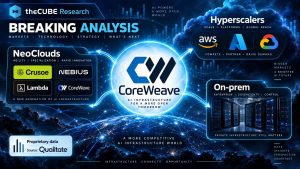
Artificial intelligence infrastructure is now the deciding force behind enterprise competitiveness.
What was once a backend concern has moved directly into the center of business strategy, shaping how companies deploy, scale and ultimately extract value from AI. The shift is exposing constraints in compute, data readiness and operational alignment while forcing leaders to rethink long-standing assumptions about architecture and partnerships, according to John Furrier (pictured, left), executive analyst at theCUBE Research.
“We had the big Jim Kavanaugh [CFO of IBM] launch of the Transformation Edge series, which got huge play as the narrative we thought was important is actually going viral in the sense of people were coming out of the woodwork … the CFO role is changing,” Furrier said. “Jim Kavanaugh has been a passionate person on this one thing. They call it Client Zero. But he laid out to me why and how it happened.”
On the latest episode of theCUBE Pod, Furrier and Dave Vellante (right), chief analyst at theCUBE Research, explored how AI infrastructure is reshaping enterprise strategy, competition and leadership priorities in the AI era.
AI infrastructure is no longer just about hardware or cloud capacity; it is becoming the operational layer that determines how effectively organizations can turn models into outcomes. That shift is pulling new stakeholders, including finance leaders, directly into the conversation around deployment and measurement, Furrier explained.
“This AI wave coming is a huge opportunity, and they’re moving fast to get their act together to … understand it, measure it, operate it,” he said. “You’re seeing an operational role of CFOs happening big time, as well as more partnership with the chief people officer. Agents are going to be workers too.”
The pressure to operationalize AI is exposing how unprepared many enterprises still are at the data and systems level. Infrastructure decisions now have to account for fragmented environments, from edge to cloud, while supporting real-time inference at scale, Furrier added.
“You’re seeing supply constraints, memory architectures, processor growth, subsystems like storage emerge,” he said. “If you look at it, it’s not apples to apples on the technology, but very similar market dynamics.”
That reality is expected to be front and center at upcoming industry gatherings, including Google Cloud Next, where theCUBE’s coverage will focus on how vendors are translating infrastructure investments into real enterprise outcomes, from model deployment to ecosystem expansion. At the same time, the competitive landscape is shifting toward partnerships between software platforms and large language model providers, redefining how value is created by combining distribution, intelligence and existing application ecosystems.
“That’s going to be the new combination that wins where the LLM provides the sort of intelligence and all the sort of generative AI power,” Vellante said. “Then you get the deterministic capabilities from the existing software companies. We’re seeing the future unfold right in front of us.”
Underneath it all, compute constraints remain the defining limitation. Demand for GPUs and alternative accelerators continues to outpace supply, pushing hyperscalers and large enterprises to invest in custom silicon, partnerships and vertically integrated stacks to secure capacity, Vellante added.
“Right now, compute is the resource that is limited,” he said. “This is why we’re just talking about it [now] with OpenAI.”
This scarcity is driving a new phase of infrastructure strategy, where organizations are no longer content to rely on a single vendor. Instead, they are building multi-layered approaches that blend proprietary systems with open ecosystems to maintain flexibility and control, according to Furrier.
“I see where [Meta CEO Mark Zuckerberg] is going with this second supplier source,” he said. “He could do that with neoclouds if he really wanted a better deal from Nvidia. I think this is a competitive strategy for Meta to say, ‘I gotta have my own chips.’”
Tim Crawford, chief information officer and strategic advisor at AVOA
Jim Kavanaugh, senior vice president and chief financial officer of IBM
Brian J. Baumann, founder of NYSE Wired and director of capital markets, technology at NYSE
Jensen Huang, president, co-founder and CEO of Nvidia
Arvind Krishna, chairman and CEO of IBM
Andy Jassy, president and CEO of Amazon.com
Rob Thomas, senior vice president, software and chief commercial officer of IBM
Lou Gerstner, former CEO of IBM
John F. Akers, former CEO of IBM
Ginni Rometty, Aspen economic strategy group member and former CEO of IBM
Samuel J. Palmisano, former CEO of IBM
Bill Tai, venture capitalist, athlete, adjunct professor
Jeremy Burton, CEO of Observe
Sam Altman, co-founder and CEO of OpenAI
Dario Amodei, CEO of Anthropic
Bret Taylor, chairman of the board at OpenAI
Elon Musk, chief executive officer of Tesla
Steve Jobs, co-founder and former CEO and chairman of Apple
Hock Tan, president and CEO of Broadcom
Mark Zuckerberg, CEO of Meta Platforms
Paul Gillin, enterprise editor at SiliconANGLE Media
Paul Nashawaty, principal analyst at theCUBE Research
George Gilbert, principal analyst at theCUBE Research
Here’s the full episode of this week’s theCUBE Pod:
Don’t miss out on the latest episodes of “theCUBE Pod.” Join us by subscribing to our RSS feed. You can also listen to us on Apple Podcasts or on Spotify. And for those who prefer to watch, check out our YouTube playlist. Tune in now, and be part of the ongoing conversation.
Support our mission to keep content open and free by engaging with theCUBE community. Join theCUBE’s Alumni Trust Network, where technology leaders connect, share intelligence and create opportunities.
Founded by tech visionaries John Furrier and Dave Vellante, SiliconANGLE Media has built a dynamic ecosystem of industry-leading digital media brands that reach 15+ million elite tech professionals. Our new proprietary theCUBE AI Video Cloud is breaking ground in audience interaction, leveraging theCUBEai.com neural network to help technology companies make data-driven decisions and stay at the forefront of industry conversations.