 AI
AI
AI
AI


AI

Google Cloud has long believed that one of most compelling benefits of artificial intelligence is that it helps people get more work done faster, and that’s the main purpose behind a slate of new capabilities being added to Google Workspace.
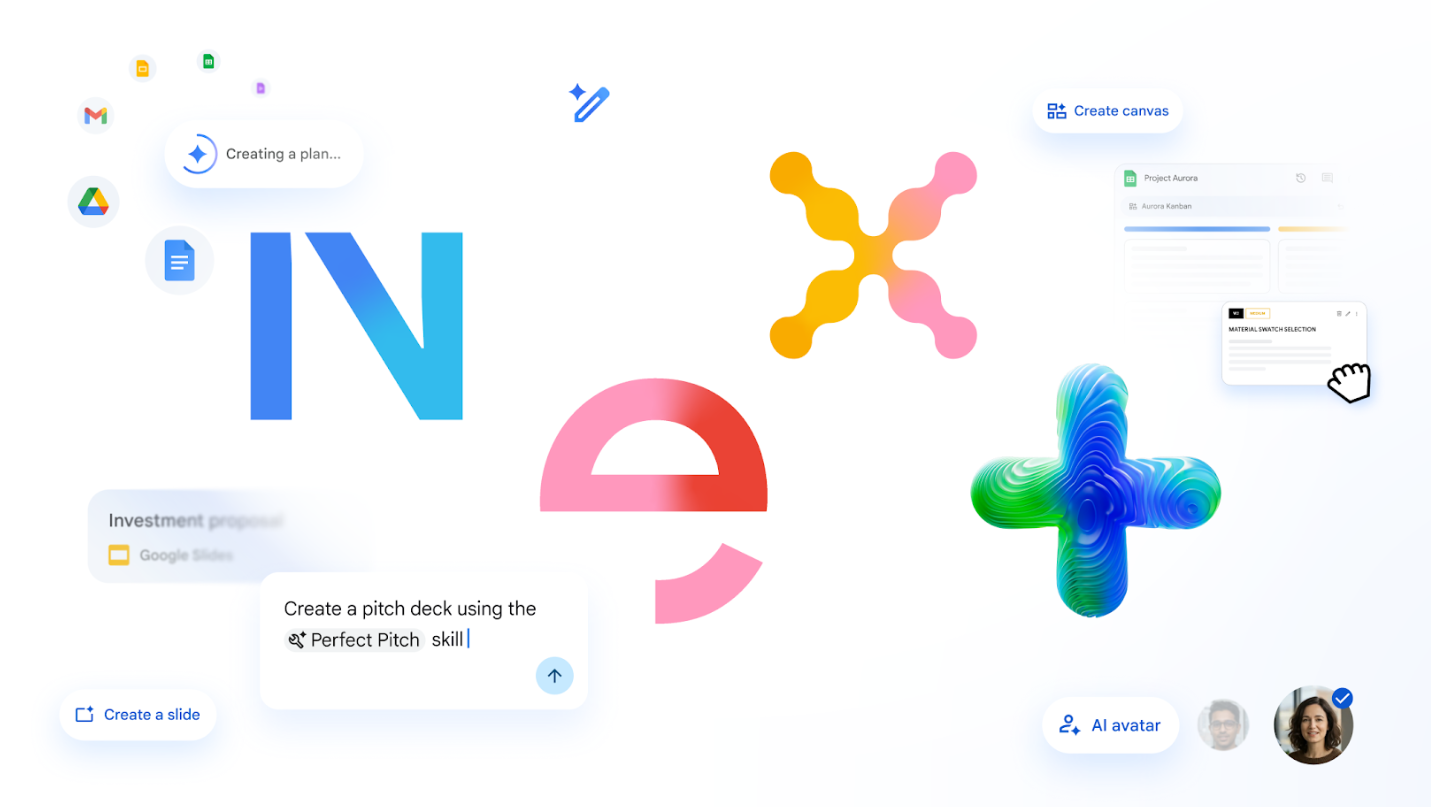
The main update is a new system called Workspace Intelligence, announced today at Google Cloud Next 2026, that helps transform simple applications into autonomous and collaborative AI agents. In a blog post, Google Workspace Vice President of Product Yulie Kwon Kim said the company is no longer content with AI serving as a passive assistant that just sits and waits for a prompt. Instead, it’s pushing the idea of “agentic work,” where AI understands the context behind the projects someone is working on, and possesses the organizational knowledge to start working on them autonomously.
According to Kim, modern work remains extremely fragmented, with most business workers spending days stitching together “scattered info” that lives across multiple platforms. This means wasting hours jumping between tabs and apps, hunting through emails and digging through chat threads, rather than getting tasks done.
Google’s philosophy is that AI needs to help people get things done faster, and Workspace Intelligence is meant to power this shift. It’s a secure, dynamic system that maps semantic relationships across Docs, Slides and Gmail in order to understand what users are trying to achieve and eliminate the bulk of this context switching that slows them down.
“Workspace Intelligence does more than just connect to your apps and pull from your data to create an output,” Kim said. “It is a secure, dynamic system that inherently understands complex semantic relationships within your Workspace apps (such as Docs, Slides, or Gmail) content, your active projects, your collaborators, and your organization’s domain knowledge.”
One way in which Workspace Intelligence aims to make its presence felt is by bridging the gap between raw data and finished work, and it has several features that should enable this. For instance, there’s a new, unified command line in Google Chat that aims to reposition the tool as a kind of central nervous system for enterprise work.
This is powered by Gemini, and allows users to simply state what they’re trying to accomplish, such as schedule a meeting for a particular project team, or dig up the latest budget file, and get it done instantly. Gemini handles all of the execution, Kim said.
Another useful new capability aims to solve the headaches associated with manual preparatory work. Gemini in Docs and Slides can now retrieve all of the relevant emails, chats and web information to transform a vague idea into a professionally formatted draft that mimics a company’s voice and branding. For each new idea, it will create a full, editable Slides presentation that follows corporate templates.
Meanwhile, Google is extending its AI Overviews feature to Gmail and Drive. Rather than scrolling through dozens of threads or browsing through endless files trying to find the information they need, users can simply generate the insights they need to know by asking Gemini questions. In Drive, the new Drive Projects tools makes it easy to organize files and emails centrally so that Gemini has the full context available for a specific project.
The updates aren’t limited to general intelligence, for there were additional updates that impact the broader Google Workspace ecosystem. For instance, there’s a new “Sheets canvas” that makes it quick and easy to create interactive mini-applications and dashboards on top of any dataset, including information stored in Salesforce and HubSpot.
In the “agentic” realm, Google introduced new “Skills” that make it easy for teams to build and deploy automated workflows across the Workspace suite. For instance, someone might create a new skill for agents to automatically review invoices by comparing new ones against historical documents, in order to flag any discrepancies.
Meanwhile, Google Vids is getting a boost with its new “digital avatars,” which can be customized with company branding and logos. They now support 24 languages, making it easier for international companies to create high-quality video messaging without a production studio.
Elsewhere, the “Take Notes for Me” feature in Google Meet is being expanded to capture summaries and action items, even on third-party platforms such as Zoom and Teams, so long as the user accesses that meeting from a Google device.
As AI agents become more autonomous, securing them becomes more important than ever, which is why Google is looking to address this with its new AI Control Centers and agent management tools. These give administrators everything they need to monitor and audit how agents interact with sensitive data, and for companies with strict regulatory needs, Google is also expanding its sovereign controls. This means that customers will soon be able to lock their data into a specific region, such as the U.S., the EU or specific countries such as India and Germany.
Support our mission to keep content open and free by engaging with theCUBE community. Join theCUBE’s Alumni Trust Network, where technology leaders connect, share intelligence and create opportunities.
Founded by tech visionaries John Furrier and Dave Vellante, SiliconANGLE Media has built a dynamic ecosystem of industry-leading digital media brands that reach 15+ million elite tech professionals. Our new proprietary theCUBE AI Video Cloud is breaking ground in audience interaction, leveraging theCUBEai.com neural network to help technology companies make data-driven decisions and stay at the forefront of industry conversations.