 CLOUD
CLOUD
CLOUD
CLOUD






CLOUD

The agentic AI era is forcing a fundamental redesign of enterprise infrastructure — not just in the cloud, but all the way to the on-premises data center. Regulated industries, governments and enterprises with strict data sovereignty requirements are now demanding AI-ready infrastructure that can run frontier models locally without surrendering control of their data.
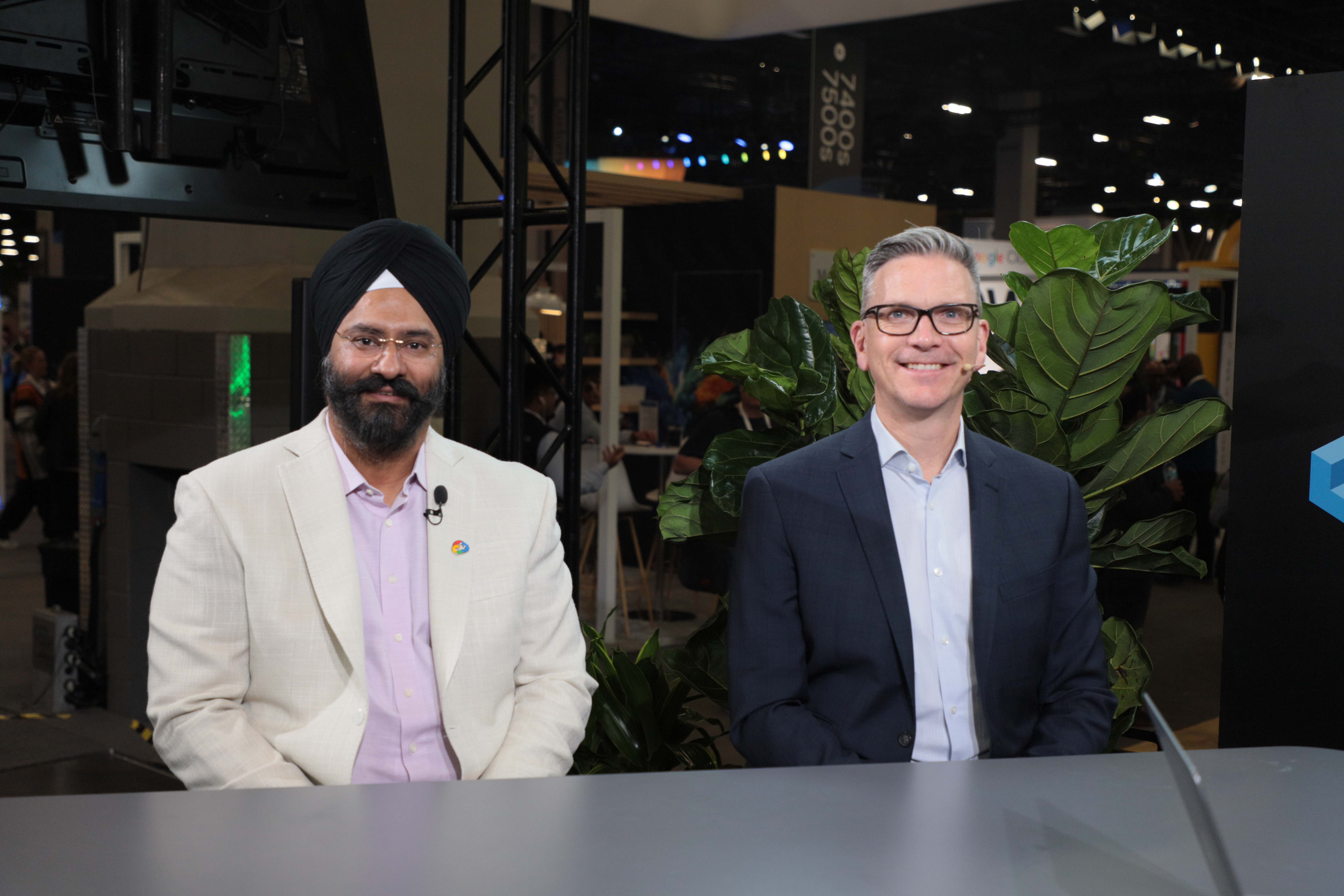
The cloud-native foundation that Kubernetes built over the past decade is emerging as the bedrock for agentic workloads, even as the on-premises edge of the stack requires entirely new thinking around compute, storage and governance. It is apparent that the infrastructure assumptions of the past are no longer sufficient for the agentic era, according to Muninder Sambi (pictured, left), vice president and general manager for networking and security at Google LLC. The solution starts with not forcing enterprises to choose between sovereignty and capability.
“The challenge is [enterprises] had a choice: Either you can be sovereign and be compliant, or give it up and go to the cloud,” he said. “With Google Distributed Cloud, we are actually bringing the power and the intelligence of Gemini and all that Google has to offer for an on-premises environment.”
Sambi and Drew Bradstock (right), senior product director for Kubernetes and Google Compute Engine at Google, spoke with theCUBE’s John Furrier at Google Cloud Next, during an exclusive broadcast on theCUBE, SiliconANGLE Media’s livestreaming studio. They discussed AI-ready infrastructure, sovereign AI deployment and Kubernetes as the operating system of the agentic era. (* Disclosure below.)
Google’s response to the on-premises demand is to bring Gemini foundation models to air-gapped and connected on-premises environments in partnership with Nvidia Corp. and Dell Technologies Inc, according to Sambi. Google also announced that Gemini Flash models are now available on Nvidia Blackwell B200 and B300 GPUs for on-premises deployment, enabling enterprises to run sovereign AI workloads without data leaving their environment.
“We are partnering with Nvidia and Dell on the hardware accelerators,” Sambi said. “I call it the AI engine — the difference [from an AI factory] being we are giving you the engine to build your own AI factory.”
On the orchestration side, Kubernetes has cemented its role as the control plane for AI — a position that was far from guaranteed when large language models first began displacing earlier infrastructure paradigms, Bradstock noted. The open-source community’s investment in making Kubernetes AI-compatible is now paying dividends as enterprises look to run agents across hybrid environments.
“Kubernetes has become that operating system for AI — from training to inference to [reinforcement learning],” Bradstock said. “This has really been the heart of everything. We’re finding ourselves on the gun a lot more to adapt Kubernetes quite quickly, even faster than the [open-source community] can keep up.”
The shift is also changing how infrastructure teams think about their end users — and the answer is no longer just keeping human developers in mind. As AI agents take on more of the engineering workload, Google is redesigning its tooling, documentation and interfaces around agent consumption as a core consideration.
“The north star for user experience for our group isn’t people anymore — it’s actually how we give the best experience for agents,” Bradstock said. “The new DevOps are just using Claude, using Gemini to do all their work, so we’re redesigning our UIs, our documentation … everything is now designed around skills.”
Here’s the complete video interview, part of SiliconANGLE’s and theCUBE’s coverage of Google Cloud Next:
(* Disclosure: Google sponsored this segment of theCUBE. Neither Google nor other sponsors have editorial control over content on theCUBE or SiliconANGLE.)
Support our mission to keep content open and free by engaging with theCUBE community. Join theCUBE’s Alumni Trust Network, where technology leaders connect, share intelligence and create opportunities.
Founded by tech visionaries John Furrier and Dave Vellante, SiliconANGLE Media has built a dynamic ecosystem of industry-leading digital media brands that reach 15+ million elite tech professionals. Our new proprietary theCUBE AI Video Cloud is breaking ground in audience interaction, leveraging theCUBEai.com neural network to help technology companies make data-driven decisions and stay at the forefront of industry conversations.