 AI
AI
AI
AI


AI

It has been just under a decade since Amazon Web Services Inc. launched Amazon Connect, taking its own internal contact center-as-a-service solution and commercialized it. At the time, there were many doubts about whether it could succeed in a mature market with several established vendors. The company loaded Connect up with artificial intelligence features long before AI was cool, and a unique utilization-based pricing model to disrupt, and it rapidly gained traction.
Today, it’s the primary customer experience platform for many major brands, including Capital One, Hilton Hotels, State Farm and Air Canada. AWS is repositioning the Connect brand as a family of agentic AI solutions that integrate into business workflows, not just the contact center.
The new portfolio comprises four products: Amazon Connect Decisions for supply chains, Amazon Connect Talent for high-volume hiring, Amazon Connect Customer for customer experience (the original Connect, rebranded), and Amazon Connect Health for healthcare delivery. As with Connect, these products are built on capabilities Amazon first used to run its own operations at massive scale, from optimizing a catalog of more than 400 million SKUs to hiring 250,000 seasonal workers in a single peak season.
A key design tenet across the suite is what AWS calls “humorphism” – the idea that AI should behave like a teammate, not a traditional application with menus and forms. Instead of adding AI features to existing software, the Connect products are built from the ground up for agents that can reason, remember, and act while collaborating with humans.
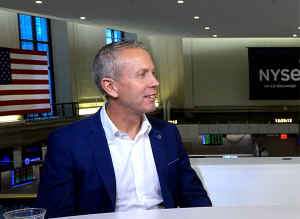
That shows up in patterns like agents proactively asking planners about upcoming promotions that could affect demand, or interviewing job candidates overnight and handing recruiters a curated brief in the morning. In our conversation, Pasquale DeMaio, vice president of Amazon Connect Customer and Talent, underscored that philosophy: The AI handles much of the screening and interviewing process, “but then moving forward after that, it hands off to a human recruiter,” so people still make the final call. He was crystal clear on our call that the Amazon Connect portfolio isn’t here to replace people but to let them work smarter and faster.
Connect’s evolution has been underway internally for some time. DeMaio told me it has “been over two years” since he last referred to Connect as a contact center, arguing that the market continued to pigeonhole the service as “just about pipes” even as Amazon shipped more AI-centric capabilities. Renaming the CX product Amazon Connect Customer is intended to make it unmistakable that “Connect is really an AI service.”
It’s worth noting that this isn’t about Amazon building speculative AI products and hoping customers will find a use for them. The company is productizing systems that already power core Amazon businesses: supply chain optimization powered by its SCOT foundation models, high-volume hiring tuned to its seasonal workforce, and healthcare workflows honed through One Medical and Amazon Pharmacy. As DeMaio put it, Amazon often “learns so much” and “does some amazing science” for internal tools, then spends time making them “enterprise-grade for a broader set of customers,” which is the original Connect story.
Amazon’s history of taking internal platforms external is well-known — AWS itself began as infrastructure for Amazon.com — but the Connect family is a more targeted version of the same playbook. Internally, Amazon used its hiring science to quickly identify the right candidates, maintain a high performance bar and systematically reduce bias. The new Amazon Connect Talent essentially packages that operating model for customers.
Because the tools are born in production, they start with clear outcome metrics: time-to-fill, offer-in-a-day targets, retention and evaluation consistency for Talent; forecast accuracy, exception resolution time and working capital impact for Decisions; and containment, handle time and NPS-style measures for Customer. DeMaio said the same science that lets Amazon “move very quick, but keep a very high bar for the hiring process” is what they’re now offering to enterprises grappling with weeks-long hiring cycles.
There’s also a go-to-market benefit: each of these workloads can reach departments that historically would never buy a contact center, and then lead them back toward the broader Connect platform. DeMaio acknowledged this dynamic, telling me he believes Talent will be a “backdoor” into the customer experience side, even though it’s intentionally sold as a standalone product that does not require adopting other parts of Connect.
Among the new offerings, Amazon Connect Talent may be the clearest signal of how far Connect has moved from its contact center roots. Talent is aimed squarely at high-volume hiring, where organizations constantly trade off speed and quality.
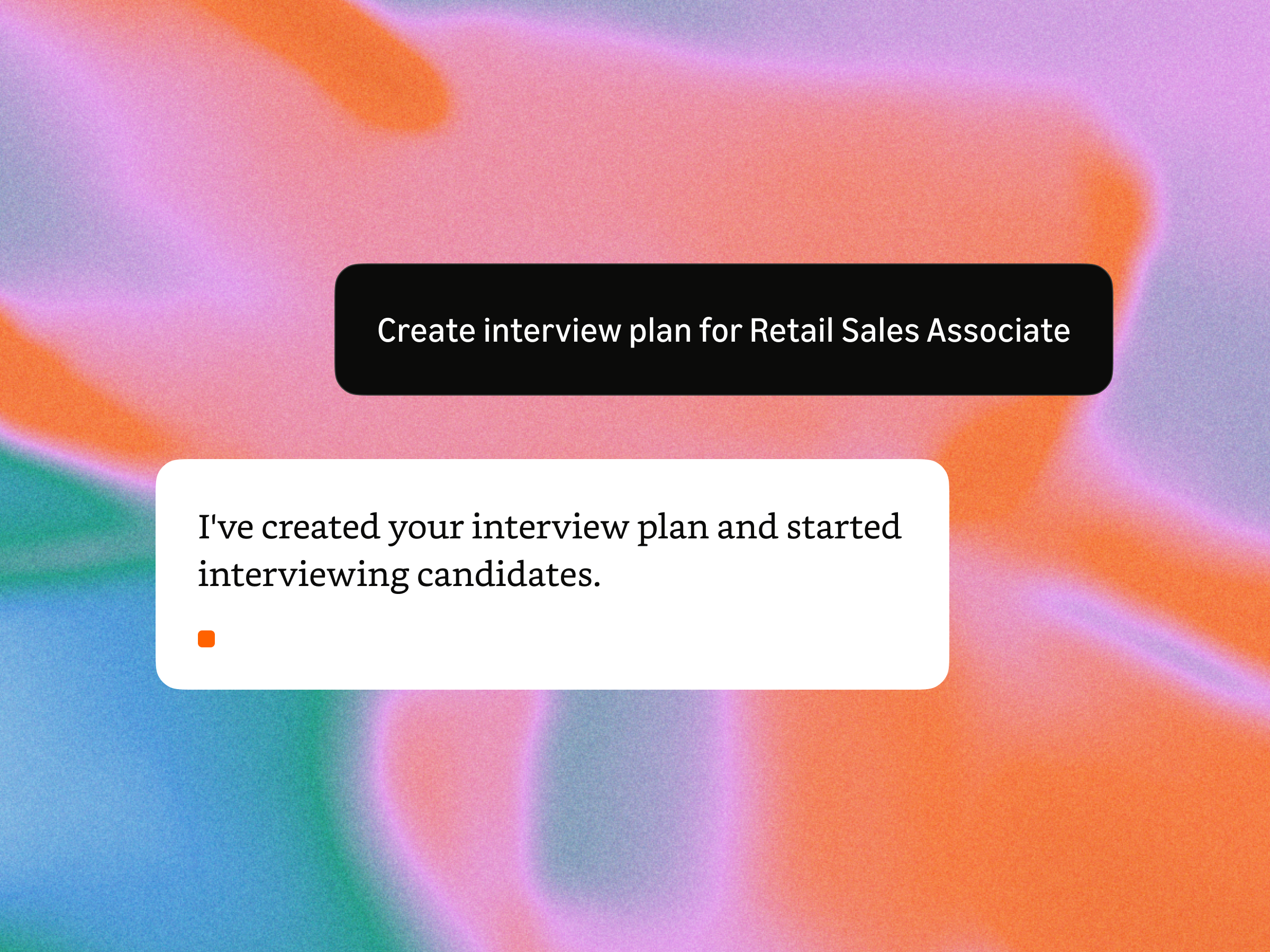
The workflow starts with an existing job description. AI agents generate a complete interview plan, including competencies, structured questions, and evaluation criteria, which recruiters can review and adjust. Candidates then interview on their own schedule, 24/7, via voice. The agent asks job-related questions, adapts to responses, and assembles a package of anonymized competency scores, transcripts, and notes for recruiters. DeMaio emphasized that this can compress hiring cycles from “a week or weeks” to “a day,” driving “5x, 10x improvement” in time-to-offer for many high-volume roles.
Equally important is the objectivity story. Candidate names and other identifying information are removed from recruiter dashboards, eliminating obvious bias vectors such as name, address, or accent. “You can never provably remove 100% of bias,” DeMaio cautioned, but Amazon’s goal is to give customers “good guardrails,” visibility into where bias might be creeping in, and tools to “prevent it on the front end” while keeping hiring a “shared responsibility.”
For customers, the immediate benefit of Amazon Connect Talent is speed and scalability without surrendering control. Recruiters tune the experience up front, using prompts, job descriptions, or other data, and can adjust thresholds as they observe how competency scores translate into retention or performance for their specific roles.
This also changes the recruiter’s day. Instead of starting a week buried under unread applications, they begin with a curated pipeline, consistent scores, and full transcripts when detail is needed. DeMaio described it as a “fundamental sea shift” in which recruiters no longer need to be involved in every touchpoint, freeing them to focus on relationships rather than repetitive administrative work. Over time, customers can build a library of interview templates for different job types while letting the agentic layer handle execution.
Even as Amazon expands into talent and healthcare, the rebranded Amazon Connect Customer remains the flagship for customer engagement. It now offers configuration tooling that enables business teams, not just developers, to stand up conversational experiences in weeks rather than months, covering identity verification, payments, recommendations and issue resolution. Enterprise customers like United Airlines have been able to go from concept to production in about three months, compared with six months or more with legacy stacks.
Amazon Connect Decisions shows how Amazon is extending the same agentic pattern deeper into operations. Built on more than 25 specialized supply chain tools and SCOT-backed forecasting models, Decisions continuously generates and tunes demand forecasts, then triages thousands of alerts into a small set of prioritized exceptions, each with root-cause analysis and suggested resolutions. Customers such as Wells Vehicle Electronics and TVS Motors are already using it to shift from weeks-long planning cycles to adjustments measured in minutes.
Taken together, the new Connect family is AWS’ answer to a key enterprise question: how do you operationalize AI beyond pilots in the contact center? By anchoring each product in a real business function and Amazon’s operational history, AWS is positioning Connect less as a channel-centric platform and more as a suite of AI teammates that sit wherever work actually happens.
DeMaio told me this rebrand is about “resetting the idea of what Connect is,” building on a decade-long brand that customers “trust and love,” and using it to “bring AI to enable AI as teammates to help people be better, not to remove connection.” If AWS executes, Connect may come to be known less as Amazon’s contact center and more as Amazon’s application layer for agentic AI across the enterprise.
Zeus Kerravala is a principal analyst at ZK Research, a division of Kerravala Consulting. He wrote this article for SiliconANGLE.
Support our mission to keep content open and free by engaging with theCUBE community. Join theCUBE’s Alumni Trust Network, where technology leaders connect, share intelligence and create opportunities.
Founded by tech visionaries John Furrier and Dave Vellante, SiliconANGLE Media has built a dynamic ecosystem of industry-leading digital media brands that reach 15+ million elite tech professionals. Our new proprietary theCUBE AI Video Cloud is breaking ground in audience interaction, leveraging theCUBEai.com neural network to help technology companies make data-driven decisions and stay at the forefront of industry conversations.