 AI
AI
AI
AI







AI

Governments worldwide are racing to show progress on AI, but the gap between declaring sovereign AI ambitions and actually deploying systems that mission operators will trust is widening fast.
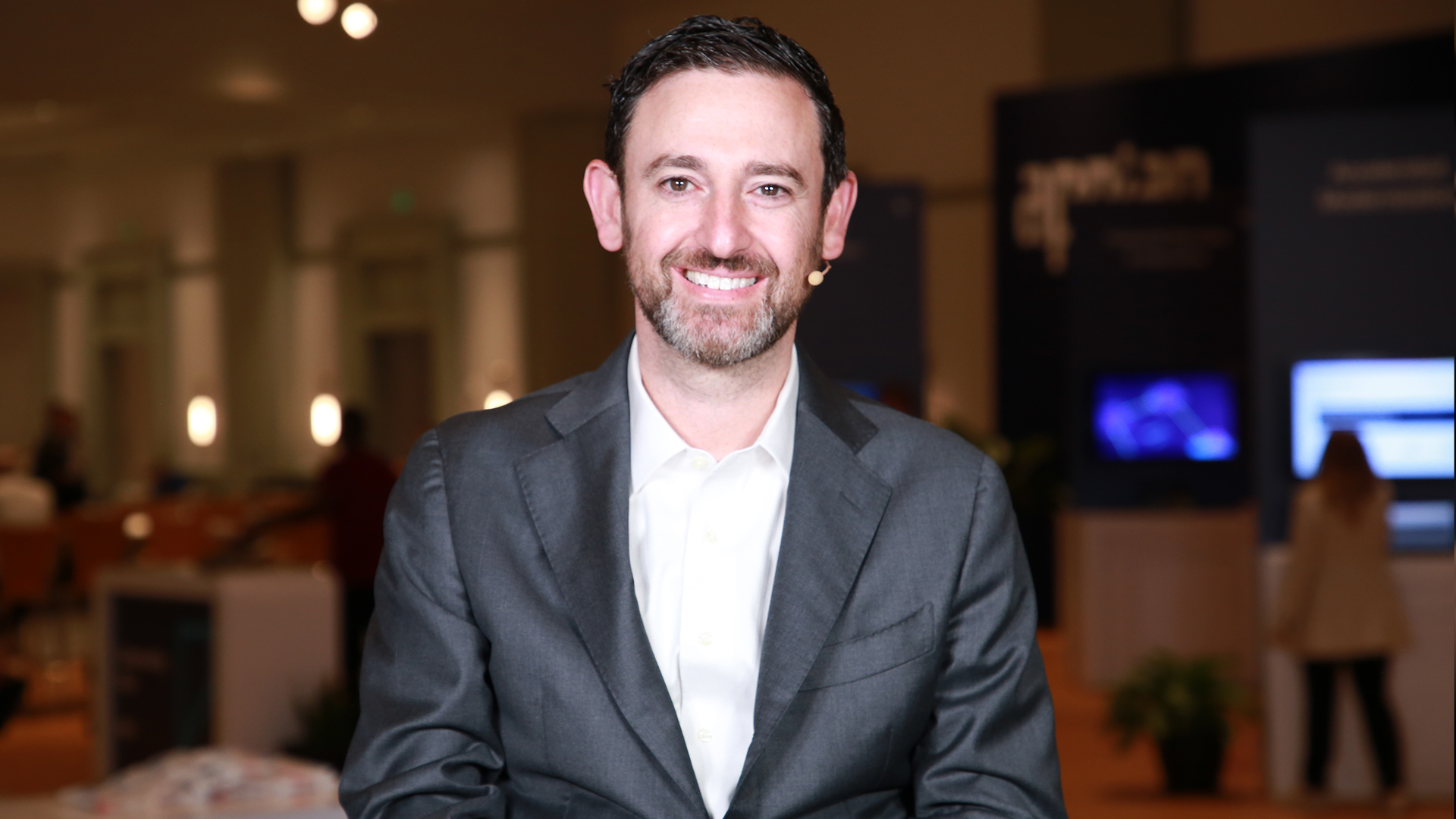
No place feels that tension more acutely than the public sector. As federal agencies face mounting pressure to move beyond chatbot pilots toward AI that can execute consequential workflows, the question is no longer whether to adopt sovereign AI — it is whether the institutional trust, governance policies and architectural flexibility exist to do it safely, according to Jason Adolf (pictured), vice president, global public sector, at Appian Corp.
“The level of hype versus reality in government has reached a level that is not necessarily sustainable for the agencies themselves,” Adolf said. “What you had was significant mandates to do AI. What everybody interpreted was, ‘I’m going to declare victory by building a chatbot.’ That’s not really where the actual value would be delivered for our mission customers. They want to do things that are more deterministic.”
Adolf spoke with theCUBE’s Dave Vellante and Alison Kosik at Appian World 2026, during an exclusive broadcast on theCUBE, SiliconANGLE Media’s livestreaming studio. They discussed the sovereign AI readiness gap in government, how Appian is architecting model-agnostic infrastructure and what transparency in agentic AI means for high-stakes mission operators. (* Disclosure below.)
The path from chatbot to governed agentic action requires more than technology — it requires a demonstrable proof of determinism that mission operators, from grant administrators to bank examiners, can verify firsthand, Adolf explained. The burden of proof for AI vendors working in the public sector has fundamentally shifted.
“My talk track when I travel has been all about certainty and transparency in AI,” he said. “We have to show it in a way that says, ‘You are going to perform these actions and now I’m going to have an agent do it — and the agent was going to do it the way you were going to do it, but I’m also going to show you the output. I’m going to allow you to audit it and give you some confidence that it is doing things the way that you would have done it had you designed this agent yourself.'”
The sovereign AI conversation has also taken on an explicitly geopolitical dimension, as nations move to insource their AI models and reduce dependence on U.S.-based providers. Countries including France have shown preference for domestic models such as Mistral, and Appian has re-architected its platform so that the underlying model can be swapped out without disrupting the application layer, Adolf noted.
“Originally, all of our services were based on Claude, and so we’ve now re-architected that so that when you’re in the [Appian] platform, you’re actually using our services, but what’s underneath that can now be something other than Claude,” he said. “Today, Claude is the best at certain things, but that pace could change tomorrow, or to solve a specific problem, it could be something entirely different in six months.”
That same architectural flexibility extends to the physical deployment environment. Appian has invested heavily in creating parity between its cloud offering and a Kubernetes-based architecture that can run in any country, on any hardware, including in classified and disconnected environments, Adolf explained. For defense customers, the company is already testing Appian deployments on edge devices — including purpose-built military hardware running Nvidia’s Jetson platform — with an eye toward shrinking the full application footprint to a single Android device in the field.
“The game now is, ‘Where can I run it? Can I run it in a secure environment? Can I run it on a ship? Can I run it in the field?'” Adolf said. “I used to have to build it custom, and I don’t want to build it custom — I want to build it [Commercial Off-The-Shelf], but I want my COTS thing to act as if it was custom. If you really get into our engineering effort, that’s what we’re doing.”
Here’s the complete video interview, part of SiliconANGLE’s and theCUBE’s coverage of Appian World 2026:
(* Disclosure: TheCUBE is a paid media partner for Appian World. Neither Appian, the sponsor of theCUBE’s event coverage, nor other sponsors have editorial control over content on theCUBE or SiliconANGLE.)
Support our mission to keep content open and free by engaging with theCUBE community. Join theCUBE’s Alumni Trust Network, where technology leaders connect, share intelligence and create opportunities.
Founded by tech visionaries John Furrier and Dave Vellante, SiliconANGLE Media has built a dynamic ecosystem of industry-leading digital media brands that reach 15+ million elite tech professionals. Our new proprietary theCUBE AI Video Cloud is breaking ground in audience interaction, leveraging theCUBEai.com neural network to help technology companies make data-driven decisions and stay at the forefront of industry conversations.