 AI
AI
AI
AI







AI

Sovereign AI is changing more than technology stacks — it’s forcing organizations to confront who governs the workforce and what the very nature of work itself has become.
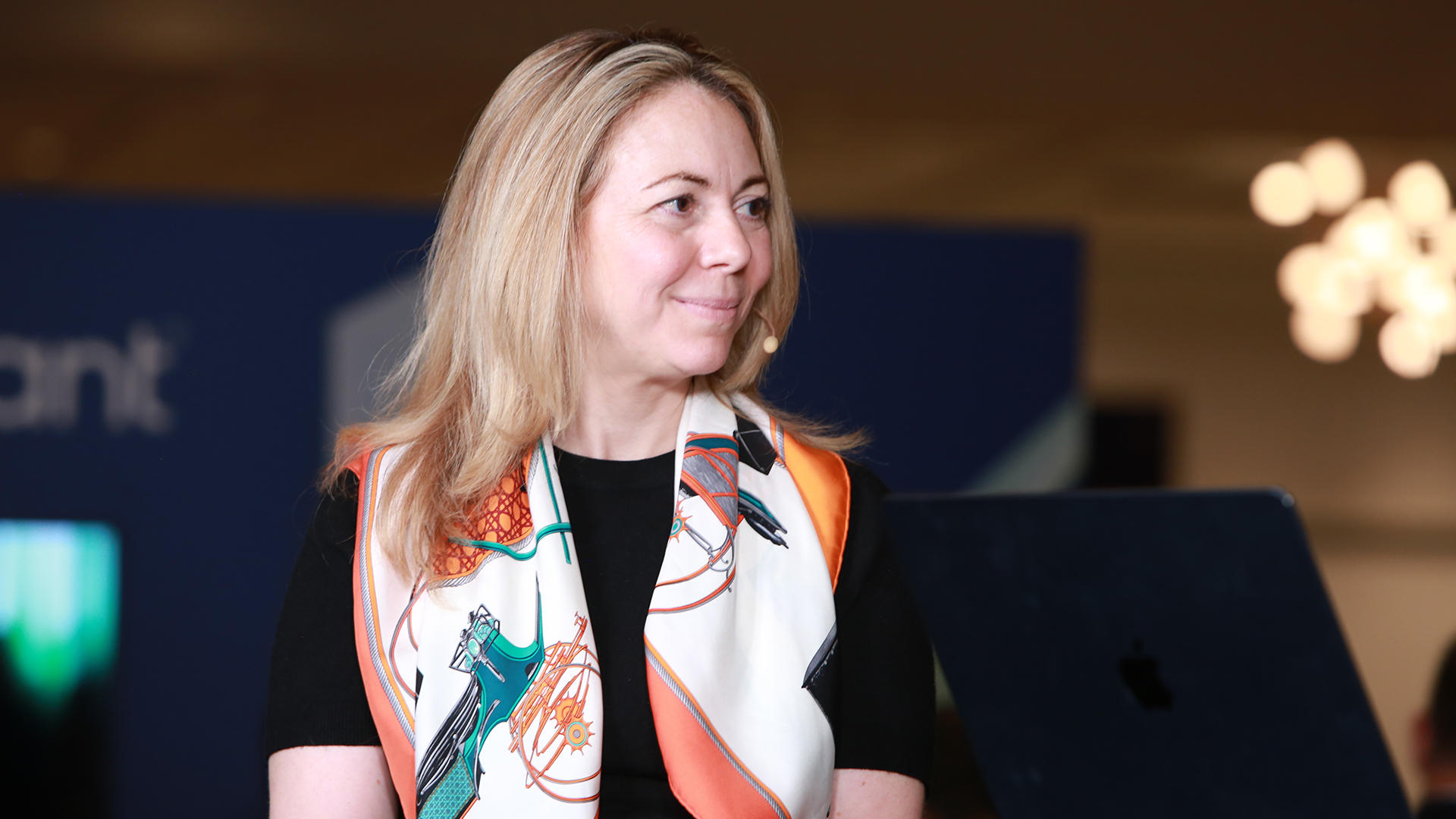
The shift is far more than just technical. As organizations embed AI directly into operations, the human layer — hiring, training, managing and motivating workers — must be redesigned from the ground up to account for sovereign AI principles: keeping humans in control of consequential decisions while agents handle the volume. That redesign begins with the job description itself, according to Susan Charnaux (pictured), chief people officer at Appian Corp.
“When we create new jobs, typically you write a job description and you say, ‘Here’s all the things that you should do,'” Charnaux said. “But we’re actually now right in the midst of moving out of that — from [job descriptions] being a list of tasks. Instead, this job description really has to paint the vision. We have to ask someone who can really design the future for that job, because instead of all the manual tasks they would have done, they can now have an agent do those. It starts fundamentally with having a completely different picture of what a job entails.”
Charnaux spoke with theCUBE’s Dave Vellante and Alison Kosik at Appian World 2026, during an exclusive broadcast on theCUBE, SiliconANGLE Media’s livestreaming studio. They discussed how AI is redefining job roles, workforce anxiety, hiring priorities and the evolving relationship between managers and agents. (* Disclosure below.)
The workforce anxiety surrounding AI is real, but it presents as much an opportunity as a threat, according to Charnaux. A 2025 Ernst & Young LLP survey found that 84% of employees are open to embracing agentic AI, yet 56% worry about job security — a tension organizations must address head-on.
“I do believe that there’s an opportunity for strong positivity in this moment,” she said. “All those things that were frustrating in my job before or that I felt, ‘Why am I here doing this?’ Now, instead, you might actually think, ‘What can I create? What is the good in the world or the good in the interactions that I have with other people in my workforce?'”
On hiring, Appian itself is already shifting what it looks for. Rather than using AI as a forcing function to cut headcount, the smarter question is what a more productive workforce can achieve together, Charnaux explained. Technical skills remain necessary to supervise AI and evaluate process outputs, but the premium is now on creativity, forward thinking and the interpersonal ability to lead others through change.
“We want people who are really creative — who are good at thinking ahead about what they need, who are going to be, of course, still those great, hardworking, reliable employees, but also have a sense of the bigger picture. The last thing, really importantly, is to have strong interpersonal skills,” she said. “Someone who can help lead a change, who can talk to someone else and bring them along in that change — that’s going to be more important than ever.”
Here’s the complete video interview, part of SiliconANGLE’s and theCUBE’s coverage of Appian World 2026:
(* Disclosure: TheCUBE is a paid media partner for Appian World. Neither Appian, the sponsor of theCUBE’s event coverage, nor other sponsors have editorial control over content on theCUBE or SiliconANGLE.)
Support our mission to keep content open and free by engaging with theCUBE community. Join theCUBE’s Alumni Trust Network, where technology leaders connect, share intelligence and create opportunities.
Founded by tech visionaries John Furrier and Dave Vellante, SiliconANGLE Media has built a dynamic ecosystem of industry-leading digital media brands that reach 15+ million elite tech professionals. Our new proprietary theCUBE AI Video Cloud is breaking ground in audience interaction, leveraging theCUBEai.com neural network to help technology companies make data-driven decisions and stay at the forefront of industry conversations.