 AI
AI
AI
AI








AI

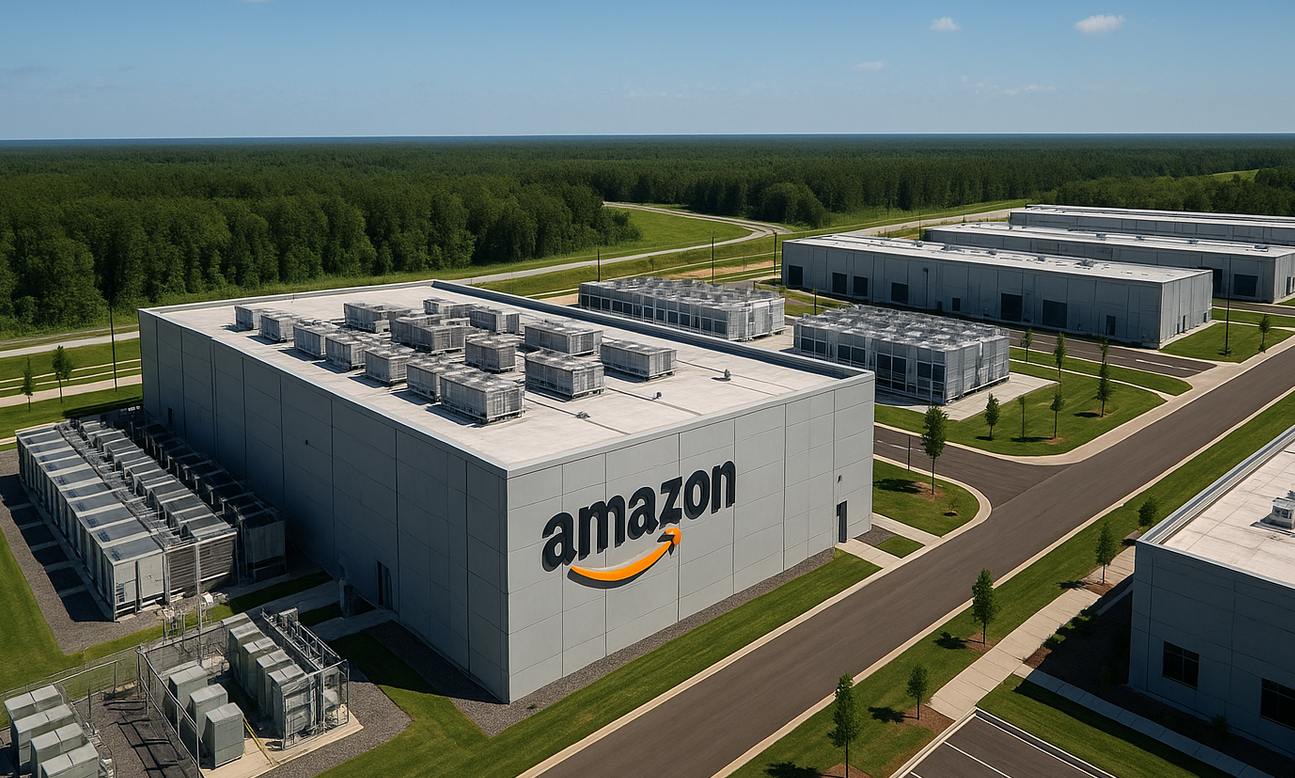
A data center facility being constructed by Amazon.com Inc. to host workloads for Amazon Web Services is set to become the single-largest source of pollution in the entire U.S., according to a report by the New York Times Saturday.
The company, which already operates more data center facilities globally than any other organization, has secured all of the necessary permits for the project, which will be powered by a natural gas plant located at the same site in Pecos County, Texas. According to those permits, the new plant will be equipped with 35 natural gas turbines capable of generating up to 7.65 gigawatts of power.
To generate that energy, the gas has to be burned, which is why the facility has been authorized to release 33 million tons of carbon dioxide into the atmosphere each year, more than any other power plant in the entire country, the report said.
Amazon is proceeding with the construction of the massive data center and power plant despite continuing to insist that it will meet an earlier promise to become fully carbon-neutral. In 2019, the company pledged to achieve net-zero carbon emissions across its global business operations by 2040 at the latest, at the same time as it co-founded a project called The Climate Pledge. The initiative is a voluntary coalition of more than 700 companies and their partners, which aims to encourage the world’s biggest corporations to eliminate their carbon footprints.
Despite making this pledge, Amazon has actually seen its total CO₂ emissions rise each year since 2019, mostly thanks to its decision to invest hundreds of billions of dollars in building new data centers to support the artificial intelligence boom. Globally, the company has several new data centers currently under construction, including the controversial Texas facility.
In a statement to the New York Times, Amazon acknowledged the negative impact of its AI buildout on its climate ambitions, but insisted that it remains fully committed to reaching its net-zero target. “The world looks different now than when we co-founded the climate pledge,” said Amazon spokeswoman Margaret Callahan, before adding that “our commitment hasn’t changed.”
Amazon’s statement echoes that of Microsoft Corp., which is reportedly struggling to achieve an even more ambitious promise of becoming carbon-neutral by the end of the decade. Last month, the Windows software maker revealed in its latest Environmental Sustainability Report that its net emissions increased 25% from the previous year, primarily due to its growing data center infrastructure and a decision to stop using short-term renewable energy certificates, which reduce its carbon footprint without adding clean energy to power grids. However, the company continues to insist it will achieve its 2030 goal.
Data center construction has increasingly become a political issue, as technology firms have faced a growing backlash over the environmental damage caused by the facilities, their high water usage and their impact on driving up energy costs. Last week, Texas said it was pausing new data center projects until state electricity regulators could fully audit each proposed new facility. In a statement announcing the move, Texas’ Republican Governor Greg Abbott said: “Simply put, Texans must come first.”
The governor’s office said that about 90% of new requests to tap into the Texas energy grid are from new data centers, which are seeking a combined total of 474 gigawatts of electricity. That’s five times more than the state’s peak electricity demand record. For its part, the Trump administration has been supportive of new data center projects, encouraging their construction by redeveloping federal land to host them.
To avoid impacting the energy grid, many data centers have switched to on-site power generation, as is the case with Amazon’s new facility. But although some companies are looking at renewable energy and nuclear sources, gas is the preferred energy source in the majority of projects given its wide availability. The Trump administration is backing this too, promoting fossil fuels such as oil, gas and coal over more sustainable energy sources.
Support our mission to keep content open and free by engaging with theCUBE community. Join theCUBE’s Alumni Trust Network, where technology leaders connect, share intelligence and create opportunities.
Founded by tech visionaries John Furrier and Dave Vellante, SiliconANGLE Media has built a dynamic ecosystem of industry-leading digital media brands that reach 15+ million elite tech professionals. Our new proprietary theCUBE AI Video Cloud is breaking ground in audience interaction, leveraging theCUBEai.com neural network to help technology companies make data-driven decisions and stay at the forefront of industry conversations.