 SECURITY



SECURITY

Agentic AI security is testing where enterprises place their trust as software gains the ability to access sensitive data and act on users’ behalf. The challenge extends from controlling individual requests to governing actions that can span multiple systems and business processes.
That expanding reach makes security an architectural and operational concern, with decisions about access, oversight and recovery increasingly connected. Enterprises must consider how those decisions affect their ability to keep operating through disruption, according to theCUBE Research’s Krista Case.
“With agentic AI, we have these new agentic-fueled attacks that are making all of the headlines,” she said. “When it comes to cyber resilience and business resilience, the impact that this has had is that it’s really become a part of the security conversation. [Resilience] really needs to be built in up front because there is a recognition that we cannot just build the fences high enough.”
Case and fellow analyst Dave Vellante examined these pressures during theCUBE’s coverage of Oracle’s “AI Cyberattacks Are Escalating: How to Secure Your Data Now” virtual event. The discussions brought together Oracle executives and technology experts to examine the changing threat landscape and its implications for enterprises. (* Disclosure below.)
Here’s theCUBE’s complete video discussion with Dave Vellante and Krista Case:
Here are three insights you may have missed from theCUBE’s coverage of Oracle’s “AI Cyberattacks Are Escalating: How to Secure Your Data Now” virtual event:
Agentic AI security requires a consistent authorization boundary as agents create new paths to enterprise data. Oracle Corp.’s approach shifts enforcement from individual applications into the database, reducing reliance on developers to implement protections separately, according to Juan Loaiza, executive vice president of Oracle Database Technologies at Oracle.
“People are very clever about how they can phrase things in order to make AI do things that you would have basically thought you had prevented by prompting the AI,” he told theCUBE. “If, at that data layer, we enforce that each end user can only see their data, then no matter what kind of prompt you put … the agent that’s acting on behalf of that user can only see that user’s data.”
Moving enforcement into the database also changes how enterprises manage security: Protections must hold regardless of which application or agent requests access. Oracle combines controls applied during database access with centralized security management, including cloud-based Oracle Data Safe and self-managed Oracle Database Security Central, explained Vipin Samar, senior vice president of Database Security at Oracle, who appeared alongside David Knox, vice president of Database Security product management at Oracle.
“AI can move very easily and naturally from one database to the other,” Samar said. “We have to have [a] full 360-degree view across [the] entire fleet, across your users, across your data. Only then can you really have effective security.”
For partners building agent-based applications, that architecture separates the queries an agent generates from the data it is authorized to retrieve. Accenture Enkitec Group used Oracle Deep Data Security to enforce access rules inside the database, allowing agents to query a shared knowledge repository while preserving different authorization levels, according to Roger Cornejo, technology innovation principal director of gen AI/AI at Accenture Enkitec Group.
“We have dozens, probably 40 or more agents that are hitting this application,” Cornejo told theCUBE. “We needed to make sure it would scale as well. Right now, we have tested it to scale to 300 simultaneous queries returning most of the results in 15 seconds or less.”
Here’s theCUBE’s complete video with Vipin Samar and David Knox:
Supporting agents requires enterprises to modernize the systems they depend on. Delaying adoption leaves organizations exposed to AI-powered threats while technical debt compounds, according to Holger Mueller, vice president and principal analyst at Constellation Research Inc.
“This year, everybody’s fighting about what is the better agentic framework,” he said. “Next year is going to be the big renaissance of scaling the backend systems.”
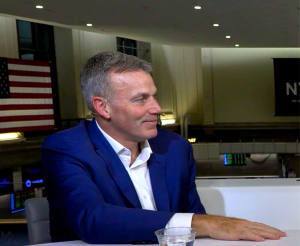
Readiness also requires knowing where agents are being built and which sensitive assets they can reach. That inventory helps organizations establish controls around delegated work, according to Johnnie Konstantas (pictured), group vice president, Oracle Cloud Engineering, at Oracle.
“Agentic AI brings to the fore this idea that an agent and several sub-agents functioning as a proxy of an individual can access data,” she told theCUBE. “So, identity takes on a new form in that the agent is kind of carrying those permissions along to access and [can] maybe even take action on a certain workflow. Have good identity in place to the extent that you can have it be uniform and pervasive.”
Those technical controls need organizational backing. Foundational governance, security basics and clearly understood customer and provider responsibilities remain gaps in enterprise AI deployments, according to Brennan Baybeck, senior vice president and chief information security officer of Oracle Customer Success at Oracle.
“Humans have never been more critical to help control these robots, as we call them,” he told theCUBE. “We used to say humans are the weakest link. But now, what I’m saying is that robots are the most powerful and potentially dangerous link, and humans are now an essential link.”
Here’s theCUBE’s complete video interview with Holger Mueller:
Agentic AI security must account for the possibility that production systems and backups will both become targets, according to Ashish Ray, senior vice president of Oracle Database, product management, at Oracle. Separate administrative controls and network segregation protect recovery assets, while Oracle’s Zero Data Loss Recovery Appliance checks backup integrity and recoverability.
“Data that is backed up but cannot be validated is Schrödinger’s data,” he said during the event. “The data could be backed up, and you cannot rest on the laurels because the moment when you start trying to restore, recover the data and use it, you may find out that the data cannot be used because maybe there was some underlying validation checks, underlying corruptions that happened.”
Security programs must also account for attackers discovering and exploiting weaknesses faster than people can test, approve and deploy fixes. Defenders’ knowledge of critical business assets helps them prioritize protection and remediation, according to Zulfikar Ramzan, former chief technology officer and chief digital officer of RSA Security USA LLC.
“Continuously learn from every incident that occurs,” he told theCUBE. “Look at those near misses where you got away with it, but maybe you shouldn’t have. Take that input, take that insight [and] feed it back into your security program on a regular basis.”
Here’s the complete video interview with Ashish Ray:
To watch more of theCUBE’s coverage of Oracle’s “AI Cyberattacks Are Escalating: How to Secure Your Data Now” virtual event, here’s our complete video playlist:
(* Disclosure: TheCUBE is a paid media partner for Oracle’s “AI Cyberattacks Are Escalating: How to Secure Your Data Now” virtual event. Sponsors of theCUBE’s event coverage do not have editorial control over content on theCUBE or SiliconANGLE.)
Support our mission to keep content open and free by engaging with theCUBE community. Join theCUBE’s Alumni Trust Network, where technology leaders connect, share intelligence and create opportunities.
Founded by tech visionaries John Furrier and Dave Vellante, SiliconANGLE Media has built a dynamic ecosystem of industry-leading digital media brands that reach 15+ million elite tech professionals. Our new proprietary theCUBE AI Video Cloud is breaking ground in audience interaction, leveraging theCUBEai.com neural network to help technology companies make data-driven decisions and stay at the forefront of industry conversations.