 APPS
APPS
APPS
APPS





APPS

As one of the venerable linchpins of Silicon Valley, Cisco Systems Inc. was originally founded on telecommunications and networking. In recent years, it has expanded its scope into natural growth areas: cloud, Internet of Things and Software-Defined Networking.
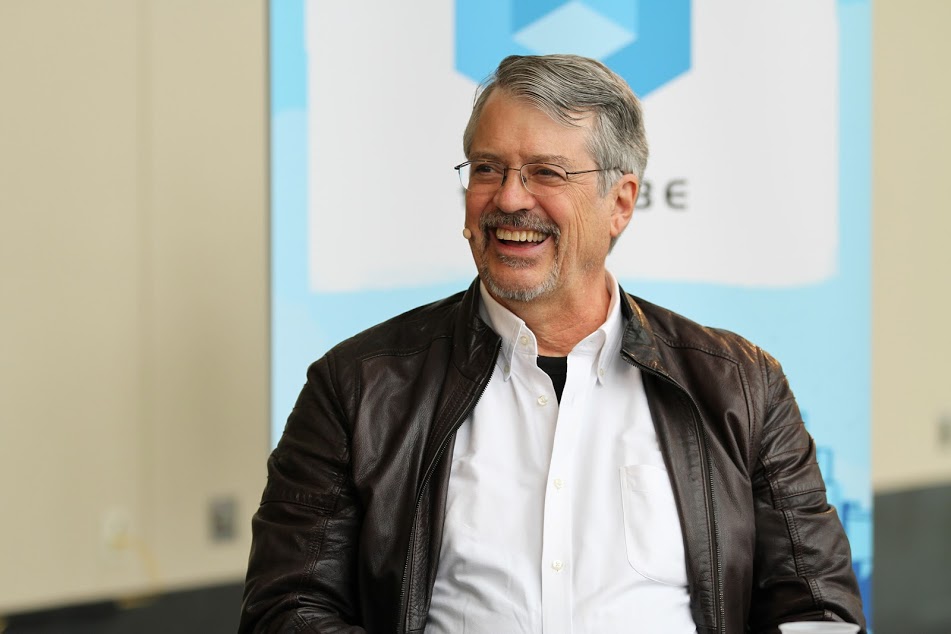
“I think that, like many companies, Cisco itself is going through a transformation,” said Lew Tucker (pictured), vice president and chief technical officer of cloud computing at Cisco Systems Inc.
As Cisco moves into the world of cloud computing, its emphasis is on helping enterprises build their own private clouds, especially in the telco space. This draws strongly on Cisco’s strengths, as it moves up the stack to offer additional services from the hybrid cloud.
During this week’s OpenStack Summit in Boston, Massachusetts, Tucker joined host Stu Miniman (@stu) and guest host John Troyer (@jtroyer), of theCUBE, SiliconANGLE Media’s mobile live streaming studio, to discuss Cisco’s foray into the cloud and the pain points of chief information officers and serverless computing. (*Disclosure below.)
“I find [technology] is coming at [CIOs] so fast, and their biggest challenge is, how do they keep up; how do they make choices; what do they commit to; what’s going to be around in two years?” Tucker stated.
Once a technology is embedded into an enterprise, it stays there for a while, so there’s a fear of making the wrong choices. He said it is imperative for CIOs to embrace change and to build training around being transformative within an enterprise.
Tucker also said that it’s fascinating that serverless computing is starting to get interesting at the same time as many open-source projects based on artificial intelligence, machine learning and big data.
“So if you want to build an application, your application is probably going to span three or four different service providers, cloud providers and your own data center. So serverless is the way to allow you to connect all of these together,” Tucker explained.
Going serverless allows a user to build those applications, such as an intelligent agent that can read a user’s email and schedule it on a calendar, he added.
Watch the complete video interview below, and be sure to check out more of SiliconANGLE’s and theCUBE’s independent editorial coverage of OpenStack Summit 2017 Boston. (* Disclosure: Cisco Systems Inc. sponsored this OpenStack Summit segment on SiliconANGLE Media’s theCUBE. Neither Cisco Systems nor other sponsors have editorial control over content on theCUBE or SiliconANGLE.)
Support our mission to keep content open and free by engaging with theCUBE community. Join theCUBE’s Alumni Trust Network, where technology leaders connect, share intelligence and create opportunities.
Founded by tech visionaries John Furrier and Dave Vellante, SiliconANGLE Media has built a dynamic ecosystem of industry-leading digital media brands that reach 15+ million elite tech professionals. Our new proprietary theCUBE AI Video Cloud is breaking ground in audience interaction, leveraging theCUBEai.com neural network to help technology companies make data-driven decisions and stay at the forefront of industry conversations.