 INFRA
INFRA
INFRA
INFRA





INFRA

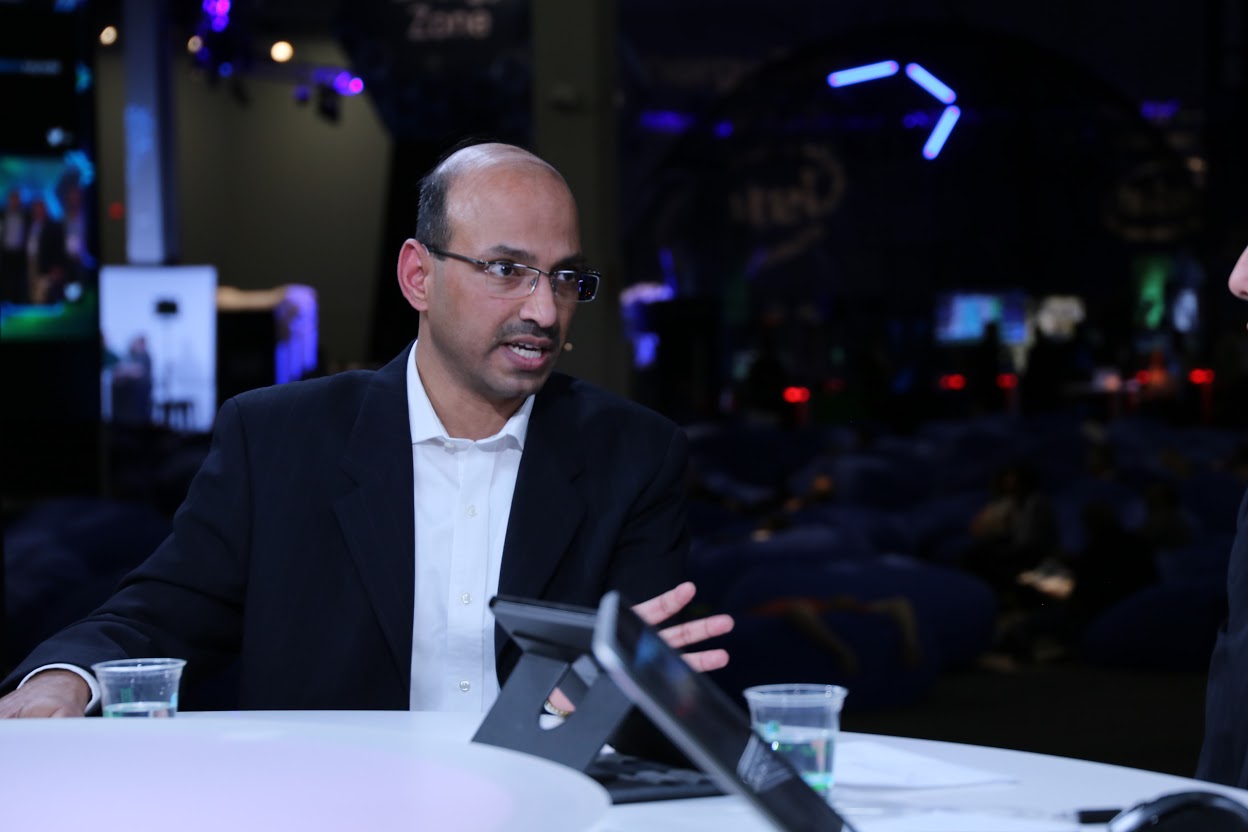
Sixty percent of data that exists are actually copies, which explains why copy sprawl management is now a $40-billion business, according to research from International Data Corp.. Flash storage that allows multiple users to work on a single copy might reduce the glut, but by itself is not a perfect solution, according to Chhandomay Mandal (pictured), director of product marketing at Dell EMC.
“The caveat to that is, when you are creating the copies and you want to run applications on the copies, your production should not be impacted, and the copies should also be able to deliver the same performance,” he said during Dell EMC World in Las Vegas, Nevada.
This is not always the case for copies in all-flash storage arrays — their many advantages over disk storage aside — Mandal told John Walls (@JohnWalls21) Paul Gillin (@pgillin), co-hosts of theCUBE, SiliconANGLE Media’s mobile live streaming studio. (* Disclosure below.)
To create copies sans compromise to performance or data services compatibility, Dell EMC’s new XtremIO X2 flash storage array uses intelligent content-aware in-memory data architecture, Mandal explained. So far, 3,000 customers have XtremIO arrays in production, and they are running workloads on 56 percent of the copies they make, not just backing them up for protection, he added.
“And all the IOs [input/output] that Xtrem arrays out there in the field are seeing, 40 percent of the IOs are because of the copies,” he said.
What about copy data management providers like Actifio Inc. and Catologic Software Inc. to solve the problem instead? With these services, “you are introducing another element, another software, another appliance, so to speak, to manage the copies,” Mandal said.
XtremIO seeks to converge and integrate storage as much as possible, reducing the number of copies needed by storing only what is unique, according to Mandal.
“You really do not need to worry about where and how the storage is going to be saved for your copies. You click on a button, and it should do all the steps necessary right from your application console down to the storage,” he said.
The consistently high-performance, low-latency array can improve business processes, application workflows and time-to-market, Mandal concluded.
Watch the complete video interview below, and be sure to check out more of SiliconANGLE’s and theCUBE’s independent editorial coverage of Dell EMC World 2017. (* Disclosure: TheCUBE is a paid media partner for Dell EMC World. Neither Dell nor other sponsors have editorial influence on content on theCUBE or SiliconANGLE.)
Support our mission to keep content open and free by engaging with theCUBE community. Join theCUBE’s Alumni Trust Network, where technology leaders connect, share intelligence and create opportunities.
Founded by tech visionaries John Furrier and Dave Vellante, SiliconANGLE Media has built a dynamic ecosystem of industry-leading digital media brands that reach 15+ million elite tech professionals. Our new proprietary theCUBE AI Video Cloud is breaking ground in audience interaction, leveraging theCUBEai.com neural network to help technology companies make data-driven decisions and stay at the forefront of industry conversations.