 BIG DATA
BIG DATA
BIG DATA



BIG DATA

As tech continues expanding to accommodate an ever-increasing amount of data, digital transformation is seeing an evolution into a new era of cognitive systems. To facilitate industry modernization, IBM Corp. is working to more seamlessly integrate artificial intelligence into existing enterprise systems — as well as cultures — by broadening the scope of its application development platforms.
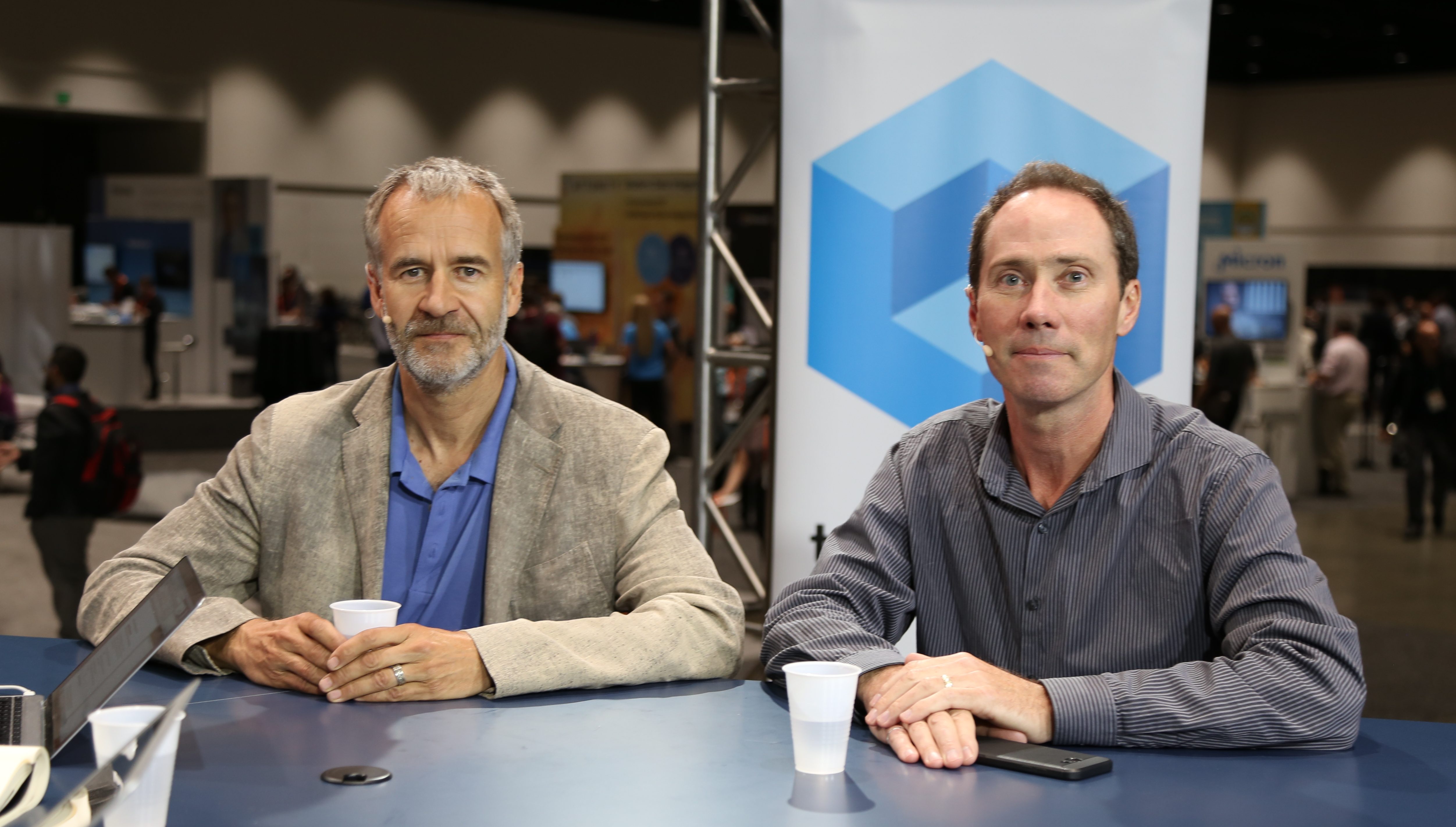
“The act of … the data [and] algorithmic processing for AI is very different than what you would have for traditional data workloads. We’re spending a lot of time thinking about how you co-optimize those systems so you can actually build a system that’s really optimized for the demands of AI,” said Tim Vincent (pictured, left), IBM fellow and vice president and chief technology officer of the IBM Analytics Group.
Vincent and Steve Roberts (right), big data solutions manager at IBM, are working together to create an enterprise paradigm shift around AI through IBM’s PowerAI Vision platform.
Vincent and Roberts spoke with Rebecca Knight (@knightrm) and James Kobielus (@jameskobielus), co-hosts of theCUBE, SiliconANGLE Media’s mobile livestreaming studio, during the DataWorks Summit in San Jose, California. They discussed the impact of AI on the market and how IBM is working with customers to leverage the power of machine learning despite a complex transition.
The efficiency advantages to automation in its ability to streamline unwieldy processes and cut lengthy production times are clear to most businesses, but shifting people and processes is not a simple undertaking. “We were seeing customers struggling with specific things … how to actually build a model if the training time is going to be weeks, and months, or let alone hours,” Vincent said.
With PowerAI Vision, IBM’s goal is to enable simpler integrations with data scientists and drive productivity through the availability of popular frameworks. “How do you allow somebody to build a model without knowing what a deep learning algorithm is?” One example of simplicity: IBM built a tool set that allows users to tag and label images automatically.
The platform also includes a feature that allows for visual inspections of a model’s accuracy, enabling greater visibility and saving manpower. “Before you invest in scaling over a cluster or large data set,” Roberts said, “you can get a visual indicator as to whether the model’s moving towards accuracy, or you need to go and test an alternate model.”
IBM’s focus on building out software with both AI and its human counterparts in mind is helping drive cohesive developments in machine learning, as well as in the industry overall. “Data science is a collaborative team sport,” Vincent said. “I think that’s missing to a great degree today, and it’s probably limiting the actual value AI in the industry.” Ultimately, he said, data scientists and application developers must work together.
Watch the complete video interview below, and be sure to check out more of SiliconANGLE’s and theCUBE’s coverage of the DataWorks Summit.
Support our mission to keep content open and free by engaging with theCUBE community. Join theCUBE’s Alumni Trust Network, where technology leaders connect, share intelligence and create opportunities.
Founded by tech visionaries John Furrier and Dave Vellante, SiliconANGLE Media has built a dynamic ecosystem of industry-leading digital media brands that reach 15+ million elite tech professionals. Our new proprietary theCUBE AI Video Cloud is breaking ground in audience interaction, leveraging theCUBEai.com neural network to help technology companies make data-driven decisions and stay at the forefront of industry conversations.