 INFRA
INFRA
INFRA
INFRA


INFRA

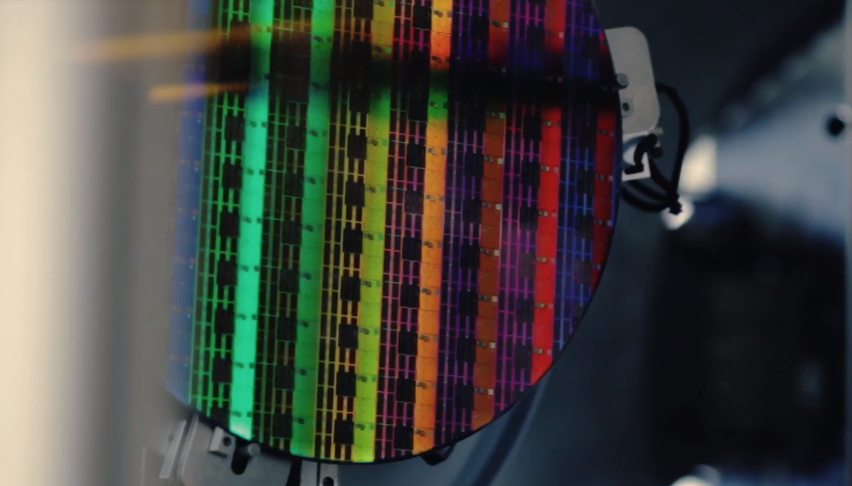
After years of setbacks, Intel Corp. today finally debuted Sunny Cove, the 10-nanometer chip architecture that will power its next generation of computer processors. But surprisingly, the long-anticipated unveiling was overshadowed by another announcement.
The chipmaker introduced the architecture alongside a second technology called Foveros that holds the potential to change fundamentally how central processing units are built. Intel said that it will provide the ability to stack Sunny Cove chips and other circuits atop one another to create a new breed of highly optimized, three-dimensional processors.
The concept of 3-D stacking is not new to the semiconductor world. A couple years ago, memory suppliers started shipping a type of high-density flash called 3-D NAND in which transistors are organized as vertical layers. But until now, there was no cost-effective way to apply the same approach to CPUs.
Intel has come up with a creative way to solve the challenges that were holding back the technology. Essentially, Foveros decouples the normally intermeshed components of a processor into modular building blocks known as chiplets. Intel believes that it will be capable of stacking these chiplets in a 3-D structure to pack more transistors into chips than what traditional two-dimensional CPUs allow.
The modularity of Foveros chiplets has another equally significant benefit. It will make it possible to mix and match circuits into combinations optimized for specific applications. A processor geared toward, say, low-power connected devices could be equipped with an entirely different set of circuits than a server CPU.
“Foveros is a giant leap in technology as it enables the best process for the right chip,” Patrick Moorhead, president and principal analyst at Moor Insights & Strategy, told SiliconANGLE. “New IP blocks can be added more quickly and I expect third party, non-Intel IP to be added in the future. This means mass customization of unique chips on a faster clip.”
That non-Intel intellectual property could potentially come from tech giants such Amazon Web Services Inc. and Google LLC. Silicon Valley’s top companies not only are among the biggest buyers of Intel silicon, but they also design some of their chip technology in-house.
Intel hopes to start shipping Foveros as early as 2019, around the same time as the planned introduction of the first 10-nanometer Sunny Cove chips. The architecture is hailed as a major improvement over the chipmaker’s existing 14-nanometer technology.
According to Intel, Sunny Cove can perform more computational operations in parallel and do so with lower latency than its current-generation processors. This speed bump is partially the result of the chipmaker increasing the size of the CPU caches in which data is kept immediately before it’s processed. Moreover, Intel has bumped up the amount of external memory that server makers can attach from 64 terabytes to a whopping four petabytes.
Over on the software side, Sunny Cove will introduce an expanded instruction set, which is the machine language in which CPU operations are expressed. The main enhancement is the addition of specialized instructions designed to speed up cryptography and data compression tasks. In a press demonstration, the company showed a Sunny Cove chip encrypting a file 75 percent faster than a comparable current-generation CPU.
And as if all that wasn’t enough, Intel took the opportunity to unveil the latest iteration of its CPU-integrated graphics card technology. The Gen11 architecture is the first in the series to achieve a teraflop of performance, or a trillion floating-point operations per second, a standard measure of computing speed. This represents something of a symbolic milestone for Intel’s push to launch a standalone graphics card in 2020.
Support our mission to keep content open and free by engaging with theCUBE community. Join theCUBE’s Alumni Trust Network, where technology leaders connect, share intelligence and create opportunities.
Founded by tech visionaries John Furrier and Dave Vellante, SiliconANGLE Media has built a dynamic ecosystem of industry-leading digital media brands that reach 15+ million elite tech professionals. Our new proprietary theCUBE AI Video Cloud is breaking ground in audience interaction, leveraging theCUBEai.com neural network to help technology companies make data-driven decisions and stay at the forefront of industry conversations.