 BIG DATA
BIG DATA
BIG DATA



BIG DATA

More data is concealed in company archives than is available on the web. But that data is in silos, secured behind firewalls, unsearchable by web crawlers. Some of it may even be sitting in paper files, stored in a warehouse and forgotten for decades. But as data becomes an ever stronger driving force in the economy, companies are starting to realize the value of these hidden assets.
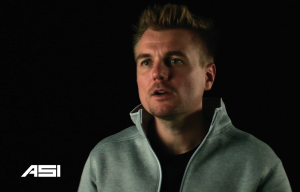
“More and more companies are removing the silos, bringing that dark data out,” said Gokula Mishra (pictured), business-driven information technology strategy expert and former senior director of global data analytics and supply chain at McDonald’s Corp. “The key to that is companies being able to value their data, and as soon as they’re able to value the data, they’re able to leverage a lot of the data.”
Mishra spoke with Dave Vellante, co-host of theCUBE, SiliconANGLE Media’s mobile livestreaming studio, during the MIT CDOIQ Symposium in Cambridge, Massachusetts. They discussed changes in how data is perceived and used and how new technology is driving innovation (see the full interview with transcript here). Answers have been condensed for clarity.
How do you see the use of data has evolved over the last 10 years?
Mishra: If you look at all the reporting that used to happen, it was primarily around metrics that are financials. As the capability of computing, and storage, and new technologies, and new techniques evolved, they were able to handle more variety and more volume of data. People quickly realized how much potential they had in the other data outside of the financial data reporting. So, some of the pioneers leveraged that. General Electric Co. comes to mind as one of the companies that actually leveraged data early on. Today, data is defining some of the multibillion-dollar companies, and all they have is data.
What’s different now, and why are we able to do so much more with data today?
Mishra: Because of the market changes, the forces that are changing the behavior of our consumers and customers. Everyone now is digitally engaging with each other. All the experiences now are being captured digitally; all the services are being captured digitally; all the products are creating a lot of digital exhaust of data. So, now companies have to pay attention to engaging with their customers and partners digitally. Therefore, they have to make sure that they’re leveraging data and analytics in doing so.
The other thing that has changed is the time to decision; the time to act on the data insight that you get is shrinking. So a lot more decision making is now going real-time. So you have a situation now where you have the capability, you have the technology, you have the data. Now you have to make sure that you convert that, and what I call programmatic data decision-making. Obviously, there are people involved in more strategic decision-making, so that’s more manual. But at an operational level, it’s going more programmatic decision-making.
You talked about how data could contribute to monetization revenue, cost reduction, efficiency, risk and innovation. Could you elaborate on that?
Mishra: It starts with doing what we do today cheaper, better, faster. And doing more comes after that. Because if you don’t understand (and data is the way to understand) how your current processes work, then you won’t take the first step. So the first step is to understand: How can I do this process faster? Then you focus on cheaper, and then you focus on better.
Could you give us an example of how you’ve seen data contribute to innovation?
Mishra: In the pharmaceutical industry, the development of new drugs is a long process. One of the initial processes is to figure out what molecules they should be exploring in the next step. And you could have a thousand different combinations of molecules that could treat a particular condition.
Now, with … data analytics, they’re able to do this in a virtual way, kind of creating a virtual lab where they can test out thousands of molecules. And then once they can bring it down to fewer molecules, the physical aspect of the testing starts. I think about this as really shrinking the process.
Here’s the complete video interview, part of SiliconANGLE’s and theCUBE’s coverage of the MIT CDOIQ Symposium:
Support our mission to keep content open and free by engaging with theCUBE community. Join theCUBE’s Alumni Trust Network, where technology leaders connect, share intelligence and create opportunities.
Founded by tech visionaries John Furrier and Dave Vellante, SiliconANGLE Media has built a dynamic ecosystem of industry-leading digital media brands that reach 15+ million elite tech professionals. Our new proprietary theCUBE AI Video Cloud is breaking ground in audience interaction, leveraging theCUBEai.com neural network to help technology companies make data-driven decisions and stay at the forefront of industry conversations.