 AI
AI
AI
AI


AI

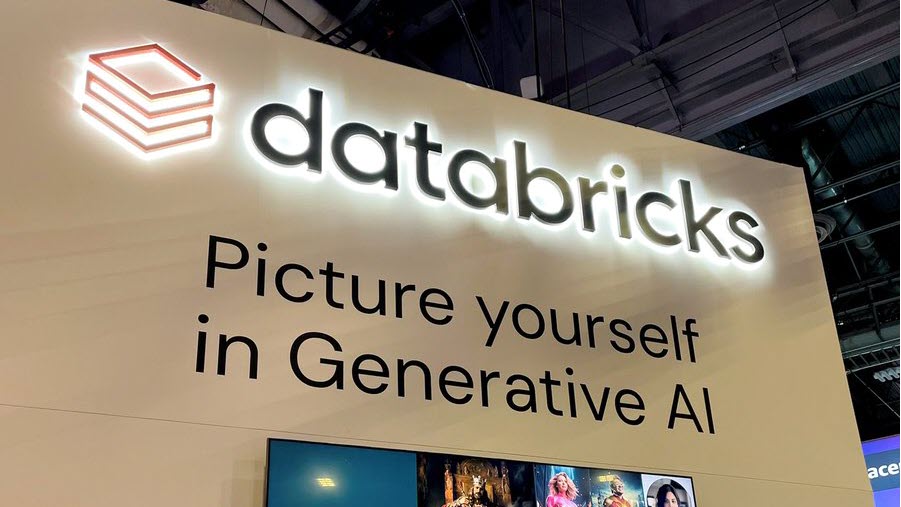
Continuing a deluge of announcements clustered around making it easier for enterprises to build artificial intelligence-based agents and applications, Databricks Inc. today is wrapping up its Data+AI Summit with Lakebridge, a migration tool intended to simplify and accelerate the notoriously difficult process of migrating legacy data warehouses.
Databricks said the free offering automates up to 80% of the migration lifecycle and can be used as part of a strategy to modernize analytics and AI infrastructure. The company said demand is surging for its Databricks SQL data warehouse as companies seek an alternative to slow and expensive legacy systems.
Lakebridge aims to address migration complexity with automation, deep profiling, intelligent SQL conversion and built-in validation. It’s comprised of three main components.
The Analyzer scans a company’s legacy environment – including tables, views, extract/transform/load jobs and stored procedures — and classifies them by complexity. That clarity helps teams scope and sequence migrations more effectively. The Converter translates SQL from other data warehouses like Teradata Inc.’s BTEQ, Microsoft Corp.’s, T-SQL and Oracle Corp.’s PL/SQL into Databricks SQL or Apache Spark SQL. And the Validator ensures that data quality and logic remain intact post-migration, with reconciliation tools built into the platform. Dashboards and multi-tabbed reports embedded in the user interface help teams stay on track.
Databricks is betting that many companies are ready to move away from proprietary platforms to more open alternatives. Databricks SQL isn’t open source, but it’s built on and supports several open-source technologies, including Apache Spark, Delta Lake and ANSI SQL. Lakebridge converts legacy syntax into ANSI-compliant SQL, helping customers shift toward open catalogs and interoperable platforms.
Databricks said Lakebridge can cut project timelines in half while supporting migrations from more than 10 popular systems, including Teradata Inc., Snowflake Inc., Microsoft Corp. SQL Server and Informatica Inc. Additional connectors are in private preview.
Lakebridge integrates technology from BladeBridge Inc., a migration engine it acquired earlier this year. BladeBridge is said to bring robust capabilities for SQL parsing, code conversion and validation.
In the coming months, Lakebridge will be upgraded with AI-powered code conversion using reinforcement learning for better translation accuracy. A dedicated data migration module and a graphical user interface are also in the works.
Databricks also announced two strategic partnerships aimed at expanding its AI capabilities and cloud footprint. An expanded collaboration with Google LLC’s Cloud brings Google Gemini models natively into the Databricks Data Intelligence Platform. Customers can access Gemini 2.5 Pro and the smaller Flash models — including a “Deep Think” mode — directly through SQL queries and model endpoints.
Deep Think is a specialized inference mode for Gemini 2.5 Pro introduced last month that enables models to traverse multiple reasoning paths in parallel, The integration means enterprise data can remain within Databricks while being processed by Google’s advanced models without the need for data duplication or complex integrations.
Databricks and Microsoft are also extending their longstanding partnership with deeper integrations with Azure AI Foundry, Microsoft’s low-code Power Platform and the upcoming SAP Databricks offering. The partnership aims to streamline data access, governance and AI development.
The new partnerships with Google and Microsoft further reinforce Databricks’ goal of becoming the default data and AI operating system across clouds. Integrating leading foundation models natively and without data movement addresses a major friction point for enterprise AI deployments.
Support our mission to keep content open and free by engaging with theCUBE community. Join theCUBE’s Alumni Trust Network, where technology leaders connect, share intelligence and create opportunities.
Founded by tech visionaries John Furrier and Dave Vellante, SiliconANGLE Media has built a dynamic ecosystem of industry-leading digital media brands that reach 15+ million elite tech professionals. Our new proprietary theCUBE AI Video Cloud is breaking ground in audience interaction, leveraging theCUBEai.com neural network to help technology companies make data-driven decisions and stay at the forefront of industry conversations.