 CLOUD
CLOUD
CLOUD
CLOUD










CLOUD

Updated with Wednesday’s closing stock price:
Oracle Corp. missed Wall Street’s expectations as it delivered its latest financial results today, but nobody cared because it said it’s anticipating future revenue growth that’s far in excess of the most optimistic forecasts — and its stock soared by almost 36% on Wednesday.
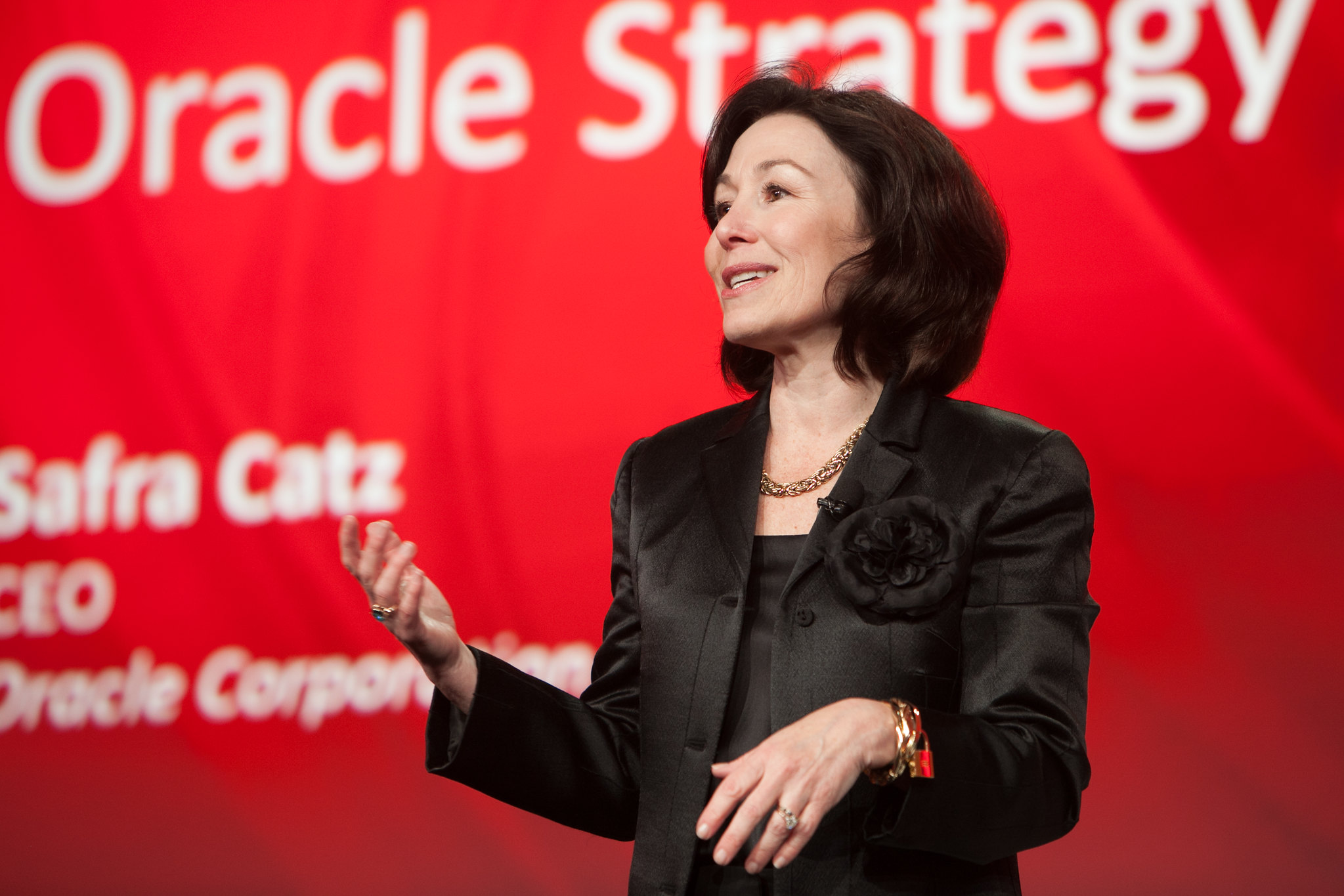
In a statement, Oracle Chief Executive Safra Catz (pictured) said the company signed four multibillion-dollar contracts with three separate customers in the quarter. As a result, its remaining performance obligations soared to $455 billion, up by a staggering 359% from a year earlier. RPO is a number that refers to contracted revenue that has not yet been booked, but almost certainly will be in the future.
“It was an astonishing quarter, and demand for Oracle Cloud Infrastructure continues to build,” Catz said. “Over the next few months, we expect to sign-up several additional multibillion-dollar customers and RPO is likely to exceed half a trillion dollars.”
According to Catz, the sheer scale of Oracle’s RPO growth means it can make a large upward revision to its long-term cloud infrastructure revenue forecast. She said OCI revenue is expected to hit $18 billion in the current fiscal year, before rising to $32 billion in fiscal 2027, $73 billion in fiscal 2028, $114 billion in fiscal 2029 and then $144 billion by fiscal 2030.
Catz said that most of the revenue from the long-term forecast is included in the reported RPO. She added that the company plans to share more about this forecast during its annual meeting with financial analysts next month. It exceeds some of the most optimistic estimates from independent analysts. Kirk Materne of Evercore, who already holds a buy rating on Oracle’s stock, said in a note prior to the results that he’s anticipating $108 billion in fiscal 2029 cloud infrastructure sales.
The forecast demonstrates how Oracle’s cloud infrastructure business is growing relative to its major rivals, too. In July, Microsoft Corp. revealed $75 million in revenue from its Azure cloud infrastructure business, while Amazon Web Services Inc.’s cloud revenue was about $112 billion. Oracle’s stock jumped more than 27% after-hours, and if that gain holds it would represent its best single-day performance since June 1999, according to data from FactSet. Update: It not only held, it went even higher, up nearly 36% Wednesday.
The numbers show that Oracle’s huge investments in its cloud infrastructure over the last few years are really beginning to reap dividends for the company, Valoir analyst Rebecca Wettemann told SiliconANGLE. “The market is really reacting to Oracle’s confidence as much as to what it reported this quarter,” she said. “Oracle is forecasting out earnings growth in infrastructure for years, which is really unusual in this space, particularly as uncertainty about the size and growth of future AI workloads that depend on cloud infrastructure.”
Dave Vellante, founder and chief analyst of theCUBE Research, SiliconANGLE Media’s sister organization, said the numbers show that Oracle has joined the ranks of the so-called hyperscalers. “Its business has a lot of momentum, and so investors will overlook the quarter,” he added.
Oracle’s forecast was so impressive that nobody cared in the slightest that the company actually missed expectations on both earnings and revenue in its fiscal first quarter.
The cloud and database giant reported earnings before certain costs such as stock compensation of $1.47 per share on revenue of $14.93 billion, up 12% from a year earlier. That trailed Wall Street’s forecasts of $1.48 per share in earnings and $15.04 billion in revenue. Net income for the period remained flat at $2.93 billion.
Normally, those sorts of figures would see a negative reaction from investors, but everyone is focused on what will happen in the future, and the company seems to have spent most of its time focused on making sure it’s a good one. For instance, Oracle signed an agreement with OpenAI during the quarter that will see it develop 4.5 gigawatts of U.S. data center capacity as part of its ongoing Startgate initiative that was announced in January.
Alongside Nvidia Corp. and the other cloud hyperscalers, Oracle has emerged as one of the biggest winners of the artificial intelligence boom. It has benefited from its priority access to Nvidia’s graphics processing units, which are needed to power large AI workloads. Oracle is partnering with other AI players too. For instance, it recently signed a deal that will see Google LLC’s Gemini AI models become available on its cloud platform in the coming months.
Oracle’s stock hit a record high in August, and with today’s after-hours gains it’s very close to beating that. In the year to date, it has gained 45%, lifting its market capitalization to more than $800 billion, while the broader S&P 500 index has risen just 11% in the same timeframe.
In a statement, Oracle co-founder, Chairman and Chief Technology Officer Larry Ellison said the company will launch its highly anticipated Oracle AI Database service in October. That offering is designed to run large language models from OpenAI, Anthropic PBC, xAI Corp., Google and others that can tap into data from Oracle’s own databases. Oracle has become one of OpenAI’s closest partners, and last month it became one of the first cloud providers to integrate the new GPT-5 large language model in its cloud applications.
Wettemann said she expects a big impact from this offering, because Oracle’s database revenue continues to drive significant gains for the company as well.
“When the other hyperscalers win, Oracle wins too, because since it started partnering with AWS, Microsoft and Google to provide data center infrastructure, growth for those partners drives more growth for Oracle,” she said. “With Oracle’s AI database, it’s setting itself up to be the underlying data infrastructure for enterprise AI initiatives.”
For the current quarter, Oracle is looking at earnings of $1.61 to $1.65 per share, with revenue growth of 14% to 16%. Wall Street is targeting earnings of just $1.62 per share on sales of $16.21 billion, which implies growth of 15%.
Support our mission to keep content open and free by engaging with theCUBE community. Join theCUBE’s Alumni Trust Network, where technology leaders connect, share intelligence and create opportunities.
Founded by tech visionaries John Furrier and Dave Vellante, SiliconANGLE Media has built a dynamic ecosystem of industry-leading digital media brands that reach 15+ million elite tech professionals. Our new proprietary theCUBE AI Video Cloud is breaking ground in audience interaction, leveraging theCUBEai.com neural network to help technology companies make data-driven decisions and stay at the forefront of industry conversations.