 AI
AI
AI
AI



AI

Artificial intelligence has spent years in the hype cycle. Now, as budgets tighten and boards demand clear evidence of return on investment, the focus has shifted to one metric above all others: AI ROI.
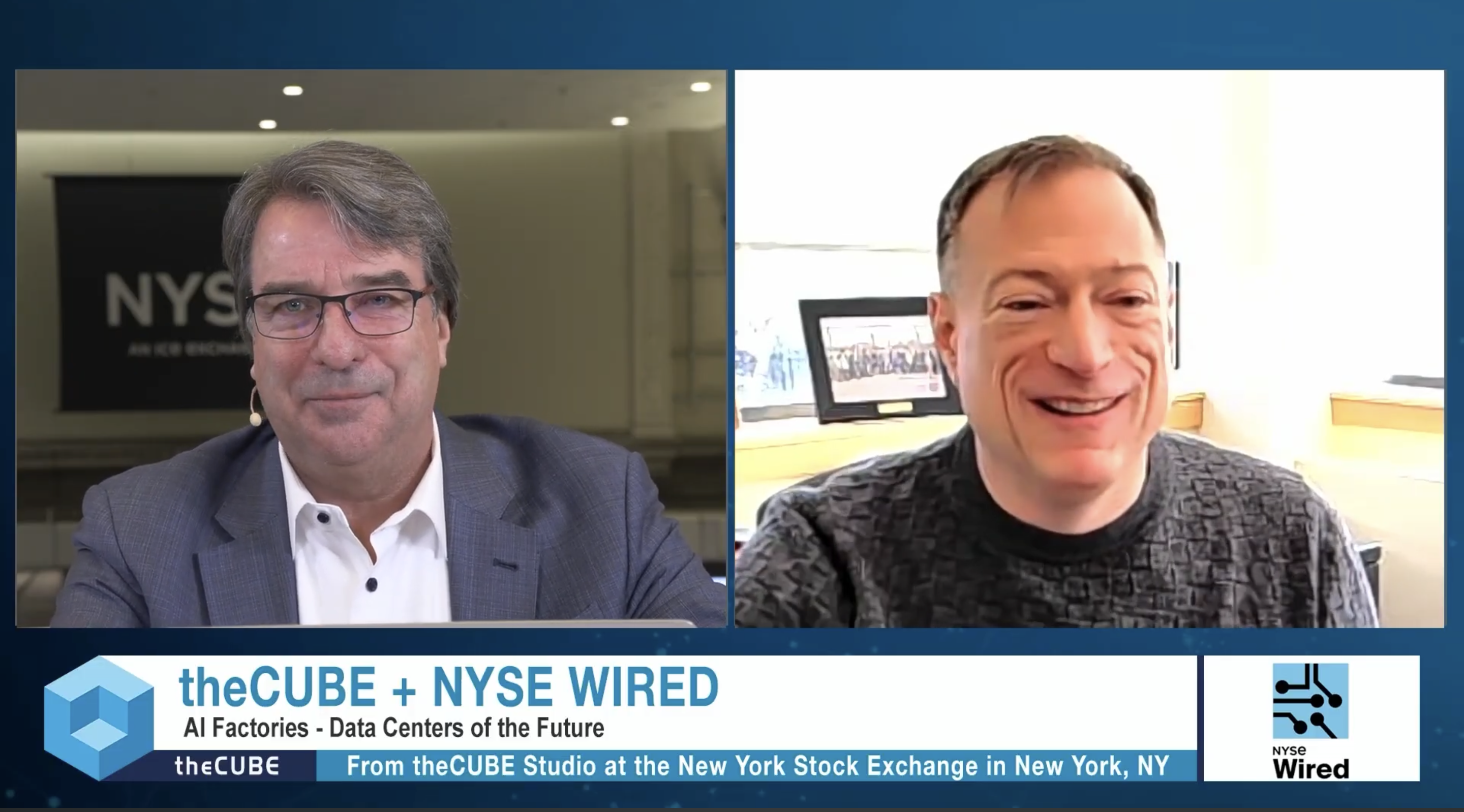
Dell Technologies Inc. sits at the center of some of the world’s largest AI infrastructure and transformation projects, giving its leaders a unique vantage point on how enterprise adoption is developing. What’s clear is the frontrunners are turning to AI for specific use cases — and only now are they truly connecting AI investments to tangible, impactful returns, according to John Roese (pictured, right), global chief technology officer and chief AI officer of Dell.
“They’re transforming their cost of sales, they’re transforming their supply chain, they’re changing the way they develop products, and that’s really the magic,” Roese told theCUBE. “It took a little while to get everybody aligned [so] that you connect the dots between a value proposition of impactful ROI to your business and your investment in AI, and that has largely started to fall into place over the last year in the enterprise.”
Roese spoke with theCUBE’s John Furrier (left) for theCUBE + NYSE Wired: AI Factories – Data Centers of the Future interview series, during an exclusive broadcast on theCUBE, SiliconANGLE Media’s livestreaming studio. They discussed autonomous agents and data hygiene emerging as the through-line between the AI factory’s promise and measurable enterprise returns.
Dell has spent the past year positioning itself as a key builder of AI factories for enterprises and governments. But beyond the headlines and inside the company’s own operations, AI is already changing how work gets done. The company has been running fully autonomous agents for more than a year and a half, granting them valuable insights, Roese noted.
“We were very early in experimenting and developing these technologies, and what we learned this year … is whatever you thought agents were going to do for you and how they were going to exist in your organization, you’re wrong. It’s going to be different. It’s going to be bigger and more disruptive,” he said. “Our prediction for next year is that the incorporation of agents into the enterprise will not manifest as agents being tools for people exclusively. Today, we think about an agent as, ‘Oh, it’s an AI that’ll book my travel for me.’ That’s interesting, but that’s not actually what’s going to happen in totality.”
Of course, that kind of disruption only pays off if it’s anchored in something defensible. That’s why Dell is betting that what’s driving AI ROI isn’t the model, but the data behind it. The companies that win are the ones that can wrap large language models around knowledge graphs that capture their deepest expertise and domain insight, Roese noted.
“Michael [Dell] has said this for years — that data is the most important asset in your enterprise — and if you control the data, you will get value,” he said. “Up until now, it was generally direct value to human beings. In the AI cycle, especially with agents, if you control proprietary data that is unique to your company, that is the manifestation of your expertise [and] you now have a tool called autonomous agents that can scale that.”
This potential is significant, but Dell emphasizes that governance and profitability must remain in lockstep. When autonomous agents leverage proprietary data, it invites the risks of unfocused experimentation and wasted resources. The companies achieving transformative AI ROI are those that narrow their scope, enforce strong governance and advance at least one high-impact use case into full production, while others remain stalled in the proof of concept phase, Roese explained.
“If you are still meandering around with a thousand POCs, you are late,” he said. “If, on the other hand, you have one project, just one, that is tipped into production at scale and it’s saving you tens of millions of dollars and transforming a piece of your business, you’re doing great, because then you just got to replicate that over and over again.”
Here’s the complete video interview, part of SiliconANGLE’s and theCUBE’s coverage of theCUBE + NYSE Wired: AI Factories – Data Centers of the Future interview series:
Support our mission to keep content open and free by engaging with theCUBE community. Join theCUBE’s Alumni Trust Network, where technology leaders connect, share intelligence and create opportunities.
Founded by tech visionaries John Furrier and Dave Vellante, SiliconANGLE Media has built a dynamic ecosystem of industry-leading digital media brands that reach 15+ million elite tech professionals. Our new proprietary theCUBE AI Video Cloud is breaking ground in audience interaction, leveraging theCUBEai.com neural network to help technology companies make data-driven decisions and stay at the forefront of industry conversations.