 INFRA
INFRA
INFRA
INFRA











INFRA

For years, the industry conversation around stadium technology has been stuck on a single, albeit important, metric: How many thousands of fans can simultaneously post a selfie to Instagram?
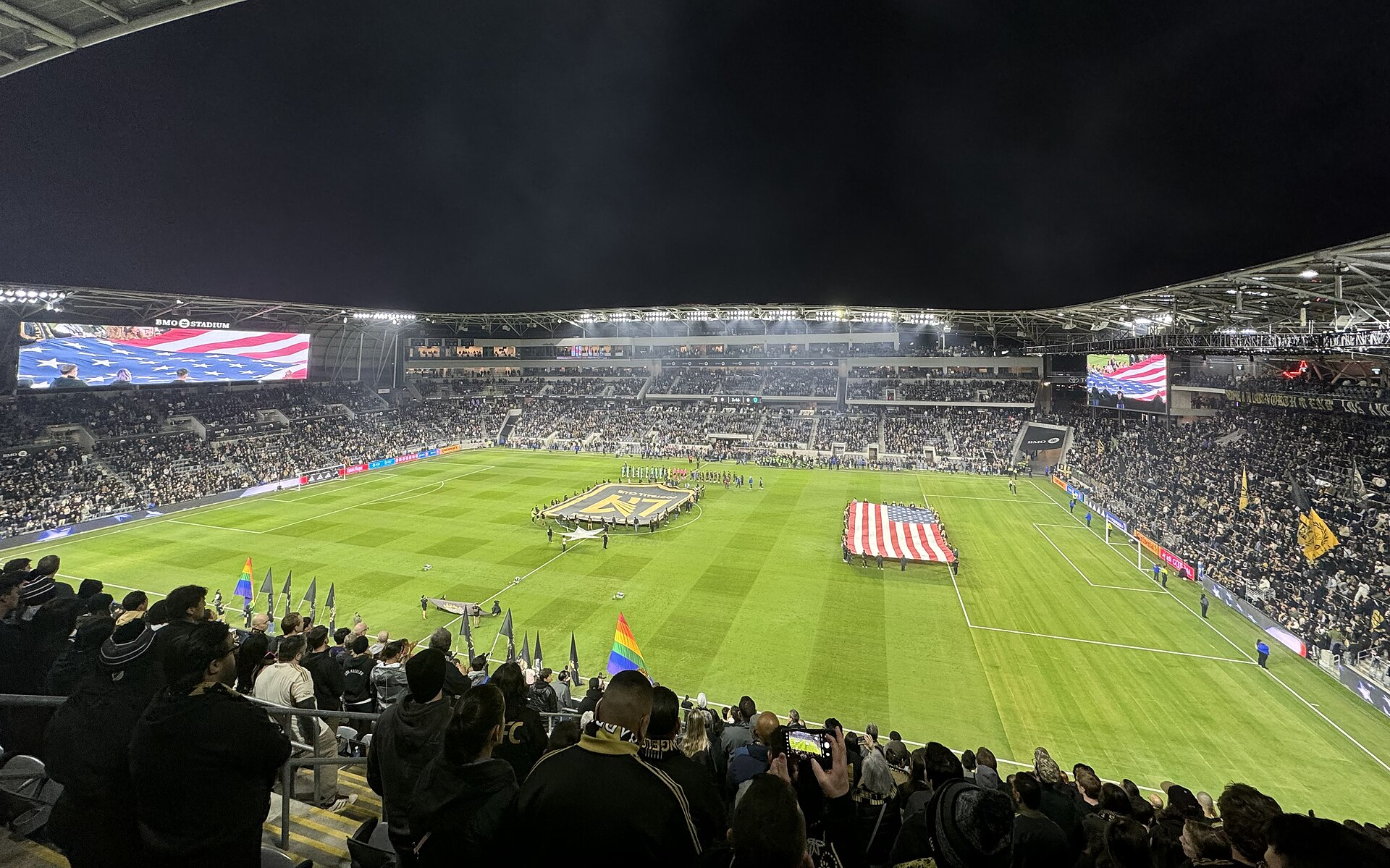
Though the “connected stadium” was once a differentiator, it has rapidly become a baseline requirement. I recently talked to the leadership at Ruckus Networks and the Los Angeles Football Club about the recent deployment of Wi-Fi 7 at BMO Stadium (pictured), and one of the big takeaways is the narrative around high-density Wi-Fi has shifted.
The measuring stick is no longer “more bars” or faster social media uploads. Instead, the Wi-Fi network is shifting from an on ramp for a connected spectator experience to a highly deterministic, operationally intelligent digital ecosystem.
The catalyst for this shift is the arrival of Wi-Fi, which is more than just a speed upgrade from older generations. While the industry has been busy debating the merits of private cellular versus Wi-Fi, the reality is that Wi-Fi 7, with its ultra-wide channels, multi-link operation and improved reliability is turning the stadium into a high-performance lab for innovation.
The biggest limitation of previous Wi-Fi generations in high-density environments was the “best effort” nature of the connection. In a stadium filled with 22,000 shouting fans — all armed with mobile devices — the sheer noise floor could lead to latency spikes and dropped packets. For a fan trying to check a score, this is an annoyance. For a stadium operator relying on that network to process a payment, verify a ticket or scan a biometric identity, it is a business risk.
Wi-Fi 7 changes the equation. By introducing features like preamble puncturing, which allows the network to “ignore” or “carve out” interference in a channel rather than abandoning the entire spectrum, stadiums can now achieve a level of determinism that previously required expensive, dedicated private cellular infrastructure.
As LAFC Chief Technology Officer Christian Lau noted in our recent discussion, the network has evolved from a utility to a mission-critical asset. “Selecting Ruckus to build the first Wi-Fi 7 network in MLS was a strategic decision to extend our leadership on and off the pitch,” he said. “This network is the backbone for our entire digital ecosystem, ensuring seamless experiences from mobile ticketing and concessions to immersive fan engagement for every one of our 22,000 guests.” When you have a mission-critical system, like biometric access control or automated retail, one can’t afford “best effort.” Guaranteed latency is mandatory.
So, what does this new level of connectivity look like in practice? It is enabling a new generation of operational flexibility that wasn’t possible even three years ago.
A common point of contention is whether private cellular will displace Wi-Fi in sports venues. Though I think there was serious debate with venue operators a few years ago, reality has set in, and the future of the stadium is a converged, multi-access environment.
Private cellular remains ideally suited for broad coverage and high-mobility use cases — such as like tracking assets moving across a vast parking lot. However, for the high-density environment of the seating bowl, Wi-Fi 7 is the superior economic and technical choice. Furthermore, the ability to offload data traffic from expensive cellular networks onto the stadium’s Wi-Fi is a major revenue opportunity that venue operators are only just beginning to monetize.
As Bart Giordano, senior vice president and president of Ruckus Networks, emphasized, “this installation isn’t just about faster Wi-Fi; it’s about providing a reliable, enterprise-grade digital foundation that LAFC can build upon for years to come — powering new applications and revenue opportunities that engage a new generation of fans.”
The most forward-thinking chief information officeres in the industry, such as those at LAFC, have stopped thinking of the network as a “utility” and started thinking of it as an “asset.” When a stadium can dynamically reconfigure its connectivity based on the event, it isn’t just saving on cabling costs; it is opening up new revenue streams and operational efficiencies.
The transition to Wi-Fi 7 is about much more than speed tests or bragging rights. It’s about building a digital foundation that is flexible, reliable and intelligent enough to support the next decade of fan engagement. The stadiums that embrace this shift won’t just be “connected” — they will be future-proofed.
Zeus Kerravala is a principal analyst at ZK Research, a division of Kerravala Consulting. He wrote this article for SiliconANGLE.
Support our mission to keep content open and free by engaging with theCUBE community. Join theCUBE’s Alumni Trust Network, where technology leaders connect, share intelligence and create opportunities.
Founded by tech visionaries John Furrier and Dave Vellante, SiliconANGLE Media has built a dynamic ecosystem of industry-leading digital media brands that reach 15+ million elite tech professionals. Our new proprietary theCUBE AI Video Cloud is breaking ground in audience interaction, leveraging theCUBEai.com neural network to help technology companies make data-driven decisions and stay at the forefront of industry conversations.