 AI
AI
AI
AI



AI

Neocloud expansion is redefining how AI infrastructure is built, monetized and scaled across the enterprise.
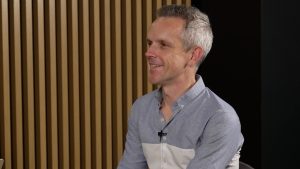
The market is moving rapidly from experimentation to production, and the economics are shifting with it. Infrastructure is no longer just about capacity; it is becoming a direct driver of revenue and competitive advantage. That shift is increasingly visible in how platforms are designed and how value is captured, according to John Furrier (pictured, left), executive analyst at theCUBE Research.
“It is very clear that Nvidia is full throttle in the AI factory, and they’re focused on money-making, which this year was a big surprise,” Furrier said. “That was one of the top storylines was monetization.”
On the latest episode of theCUBE Pod, Furrier and Dave Vellante (right), chief analyst at theCUBE Research, explored key findings from the Nvidia GTC event, including how neocloud expansion and AI monetization are transforming enterprise infrastructure and growth models.
The rise of neocloud providers is reshaping how enterprises access compute and deploy AI workloads. Instead of relying solely on hyperscalers, organizations are expanding into a broader ecosystem of specialized providers. That shift is increasing supply while also accelerating competitive dynamics across infrastructure markets, Furrier explained.
“If you look at the growth of the neoclouds, for instance, I think [Nvidia CEO Jensen Huang] might even be sandbagging even more,” he said. “We don’t know. Again, China’s sales are turning up … there’s even more upside baked in.”
At the same time, demand signals are becoming harder to interpret. What appears to be incremental growth may reflect a deeper structural shift driven by inference workloads and sustained enterprise adoption. The scale of demand is increasing, but so is the complexity behind it, Vellante noted.
“I see through 2027, at least a trillion dollars in demand for Blackwell and Vera Rubin,” he said. “We’re talking about going from $250 billion a year to $500 billion a year. If that’s the case, then that is a huge deal.”
This expansion is also changing how infrastructure is designed. The focus is moving from individual components to tightly integrated systems that optimize performance across the full stack. That systems-level approach is becoming a defining characteristic of modern AI platforms, according to Furrier.
“It’s not a one-chip problem anymore. It’s a systems problem,” he said. “Their strategy is really good. They have a great land-grab strategy.”
That shift is enabling more flexible consumption models, where enterprises align spending with outcomes rather than static capacity. Infrastructure is increasingly delivered as a portfolio of options tied directly to business needs and performance requirements, Furrier continued.
“They’re basically introducing tiering, essentially,” he said. “You want the high-end stuff? Pay more … it’s a portfolio approach. They’re just giving more options and letting people pay for what they want.”
The economics of AI are moving toward usage-based models built around tokens, inference and responsiveness. Enterprises are no longer just investing in infrastructure; they are building systems designed to generate revenue directly from AI workloads. This transition is reshaping how technology investments are evaluated, Furrier emphasized.
“Tokens equal money. Software eats tokens. Tokens is the new architecture. Deep tech is replacing software,” he added. “This is the big takeaway I’m seeing. Nvidia didn’t fall short of having great content on Omniverse, robotics and the system … they hit all the normal boxes on Nvidia GTC.”
This model introduces a more dynamic approach to pricing and value creation. Organizations can align costs with outcomes, whether through throughput, latency or user experience. That flexibility is opening new revenue streams tied directly to how AI is consumed, Vellante pointed out.
“Every CEO in the world needs to understand where they fit on that Pareto,” he said. “Are you making money through throughput … or customer experience, i.e., latency and responsiveness, or both? Because that is the future revenue model.”
As these models mature, spending patterns are expected to shift significantly. Technology is moving from a cost center to a central engine of growth, with organizations allocating a larger share of revenue to AI-driven capabilities.
“At the macro, organizations spend on average 4% of revenue on tech,” Vellante added. “That number’s going to explode. They’re going to be spending 10%, 12%, 15% of revenue on tech. Why? Because they’re going to be able to scale without as much labor, and they’re going to be developing new revenue streams as a result of tapping into token generation through APIs, accessing intelligence via tokens, via APIs.”
The broader implication is that AI is extending beyond traditional IT boundaries into core business operations. It is influencing everything from customer engagement to internal workflows, creating new pathways for value creation, according to Vellante.
“That’s where they’re going to spend money, and it’s going to shift from legacy provisioning IT to generating and applying intelligence. That’s profound,” he said.
The competitive landscape is increasingly defined by control of the full technology stack. Vertical integration combined with horizontal scalability is emerging as a dominant approach, allowing providers to optimize performance while maintaining flexibility across different use cases, Furrier noted.
“[Huang] made it clear in the keynote [at Nvidia GTC] that Nvidia is now a vertically integrated computing company,” he said. “Chips, CPUs, networking, storage, models, orchestration software is being tightly engineered together in what he calls the extreme co-design.”
This approach is reinforced by a highly structured model of system design, where the architecture is defined centrally and ecosystems align around it. That dynamic is influencing how partners, developers and enterprise buyers engage with AI platforms, Vellante explained.
“Extreme co-design … is probably 90%-plus their own internal efforts,” he said. “I don’t think they’re sort of diluting their internal efforts by going out and trying to create consensus with the community.”
At the same time, the broader industry is mobilizing around these shifts. Upcoming events such as RSAC, KubeCon + CloudNativeCon EU and Google Cloud Next are expected to highlight how organizations are operationalizing AI infrastructure, security and cloud-native strategies at scale.
“Inference changes everything. It’s real-time, latency-sensitive, massively distributed … it’s not just GPUs, it’s the interconnects, it’s the networking,” Furrier said.
Jensen Huang, president, co-founder and CEO of Nvidia
Jim Cramer, investment pro and TV personality
Brian Gracely, senior director portfolio strategy at Red Hat
Aaron Delp, global head of technical marketing at Mistral AI
Erwan Menard, SVP product management at Crusoe
Kevin Cochrane, chief marketing officer of Vultr
Jason Calacanis, internet entrepreneur
Michael Dell, chairman and CEO of Dell Technologies
Craig Nunes, fleet AI leader at Sonatus
Ofer Shapiro, co-founder and CEO chairman of Resolight
Jim Kavanaugh, CEO of World Wide Technology
Jon Oltsik, principal analyst for cybersecurity at SiliconANGLE Media
George Kurtz, CEO of CrowdStrike
Jay Chaudhry, founder and CEO of Zscaler
Nikesh Arora, chairman and CEO of Palo Alto Networks
Nick Schneider, president and CEO of Arctic Wolf Networks
Here’s the full episode of this week’s theCUBE Pod:
Don’t miss out on the latest episodes of “theCUBE Pod.” Join us by subscribing to our RSS feed. You can also listen to us on Apple Podcasts or on Spotify. And for those who prefer to watch, check out our YouTube playlist. Tune in now, and be part of the ongoing conversation.
Support our mission to keep content open and free by engaging with theCUBE community. Join theCUBE’s Alumni Trust Network, where technology leaders connect, share intelligence and create opportunities.
Founded by tech visionaries John Furrier and Dave Vellante, SiliconANGLE Media has built a dynamic ecosystem of industry-leading digital media brands that reach 15+ million elite tech professionals. Our new proprietary theCUBE AI Video Cloud is breaking ground in audience interaction, leveraging theCUBEai.com neural network to help technology companies make data-driven decisions and stay at the forefront of industry conversations.