 INFRA
INFRA
INFRA
INFRA










INFRA

Cloud-native AI infrastructure is gaining ground fast in the enterprise — but what separates deployment at scale from stalled ambition?
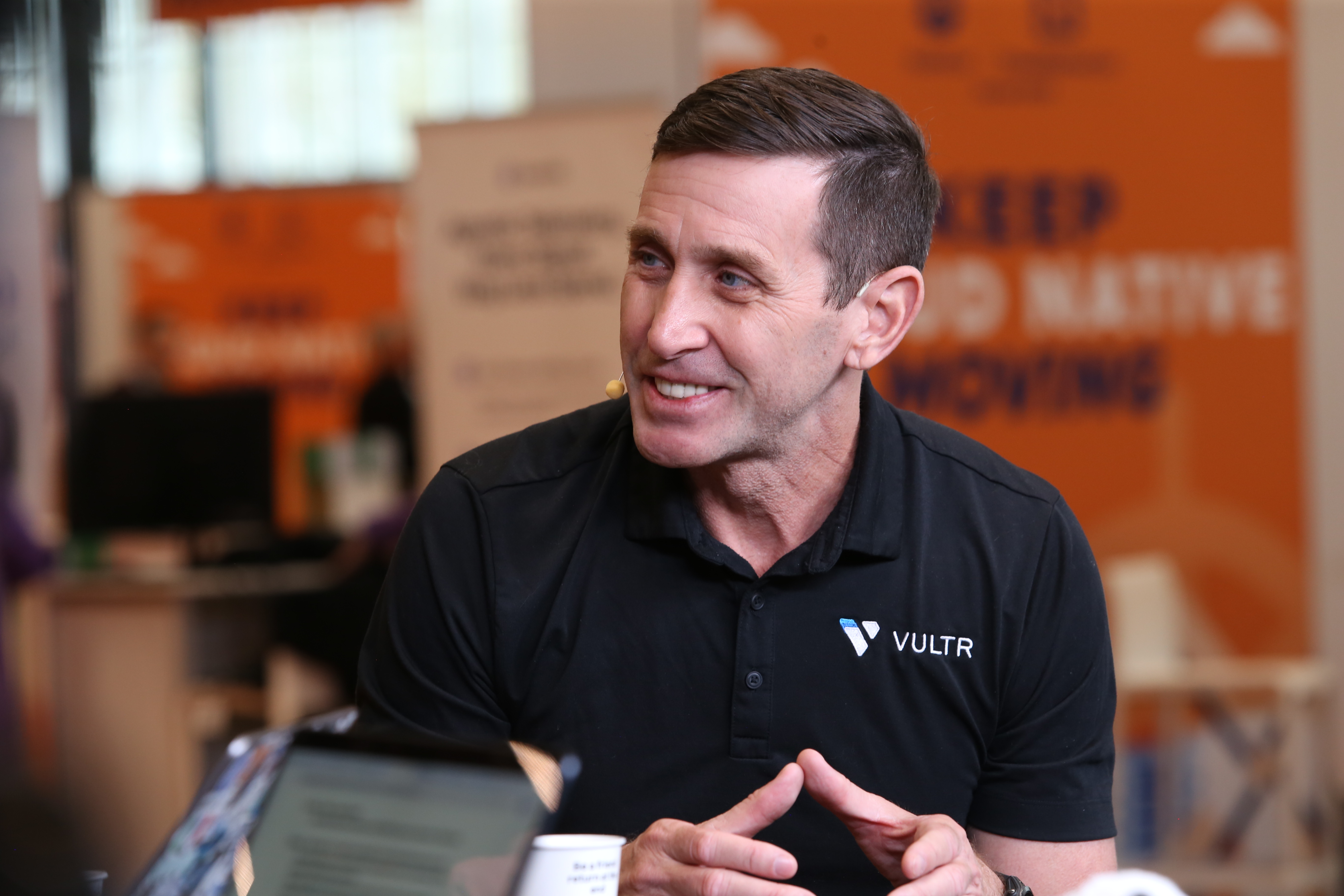
The convergence of cloud-native and AI-native computing is pushing engineers and application developers to retool existing workloads to embed agentic services at scale. The gap between an enterprise’s AI ambition and its ability to deploy governed, sovereign infrastructure is now the most consequential bottleneck in the stack, according to Kevin Cochrane (pictured), chief marketing officer at Vultr, a trademark of The Constant Company LLC.
“It’s really important to note that if you look at the future of AI infrastructure, it’s all about the developer experience. It’s all about unlocking developer productivity,” Cochrane told theCUBE. “The reason why Vultr was able to grow and scale so rapidly as an alternative public cloud platform was because of our developer experience just being so simple, so high-performant, so cost-effective.”
Cochrane spoke with theCUBE’s Rob Strechay and Paul Nashawaty at KubeCon + CloudNativeCon EU 2026, during an exclusive broadcast on theCUBE, SiliconANGLE Media’s livestreaming studio. They discussed how Vultr’s open composable stack and developer-first model are positioning the company to capitalize on the cloud-native AI infrastructure buildout. (* Disclosure below.)
The transition from AI inference announcements to practitioner-grade deployment is defining the arc at KubeCon + CloudNativeCon. Developers are looking to embed Nvidia Dynamo and Nemotron into production applications — but the complexity of spinning up GPU and CPU clusters across multiple sovereign regions is a hard blocker, Cochrane noted. Vultr’s answer is a platform that abstracts that complexity entirely. That allows a generalist developer to simply declare intent and have compliant, governed infrastructure materialize in as little as 90 seconds, he added.
“Imagine a future where your platform engineering team can work with all of the members of the [infrastructure, operations and cloud strategies] team, the server engineers, the network engineers, the cloud engineers, the [site reliability engineering] team, et cetera,” Cochrane said. “Then [they can] pre-build all of the composable stacks, pre-build the skills that can be exposed to every front-end developer that’s building an application, so that when they’re using Cloud Code, they can simply say, ‘deploy.’ And then, all of the AI infrastructure can automatically be spun up on-demand … it’s governed, it’s secure, it’s compliant.”
Europe’s regulatory backdrop compounds the urgency. The EU Cyber Resilience Act requires all applications to be compliant by the end of 2027, which is pushing organizations to hire generalists over specialists — placing the full burden of compliance abstraction squarely on the platform. But Cochrane framed data sovereignty not as a compliance checkbox but as an architectural default: Every inference cluster must run in the region where data originates, and agents must operate within jurisdictional boundaries autonomously.
“What we make easy for enterprises is setting up a globally compliant AI infrastructure,” he said. “When you’re building and deploying an application, suddenly you’re not just deploying it in North America — then you’re taking all your data out of Germany and pumping it into a vector database in New Jersey. You can’t do that in today’s day and age. The principles of sovereignty are what we look to build into every single enterprise deployment.”
Here’s the complete video interview, part of SiliconANGLE’s and theCUBE’s coverage of KubeCon + CloudNativeCon EU:
(* Disclosure: Vutlr sponsored this segment of theCUBE. Neither Vutlr nor other sponsors have editorial control over content on theCUBE or SiliconANGLE.)
Support our mission to keep content open and free by engaging with theCUBE community. Join theCUBE’s Alumni Trust Network, where technology leaders connect, share intelligence and create opportunities.
Founded by tech visionaries John Furrier and Dave Vellante, SiliconANGLE Media has built a dynamic ecosystem of industry-leading digital media brands that reach 15+ million elite tech professionals. Our new proprietary theCUBE AI Video Cloud is breaking ground in audience interaction, leveraging theCUBEai.com neural network to help technology companies make data-driven decisions and stay at the forefront of industry conversations.