 AI
AI
AI
AI



AI

The fight for the agent control plane is underway — and it might determine who controls enterprise artificial intelligence for the next decade.
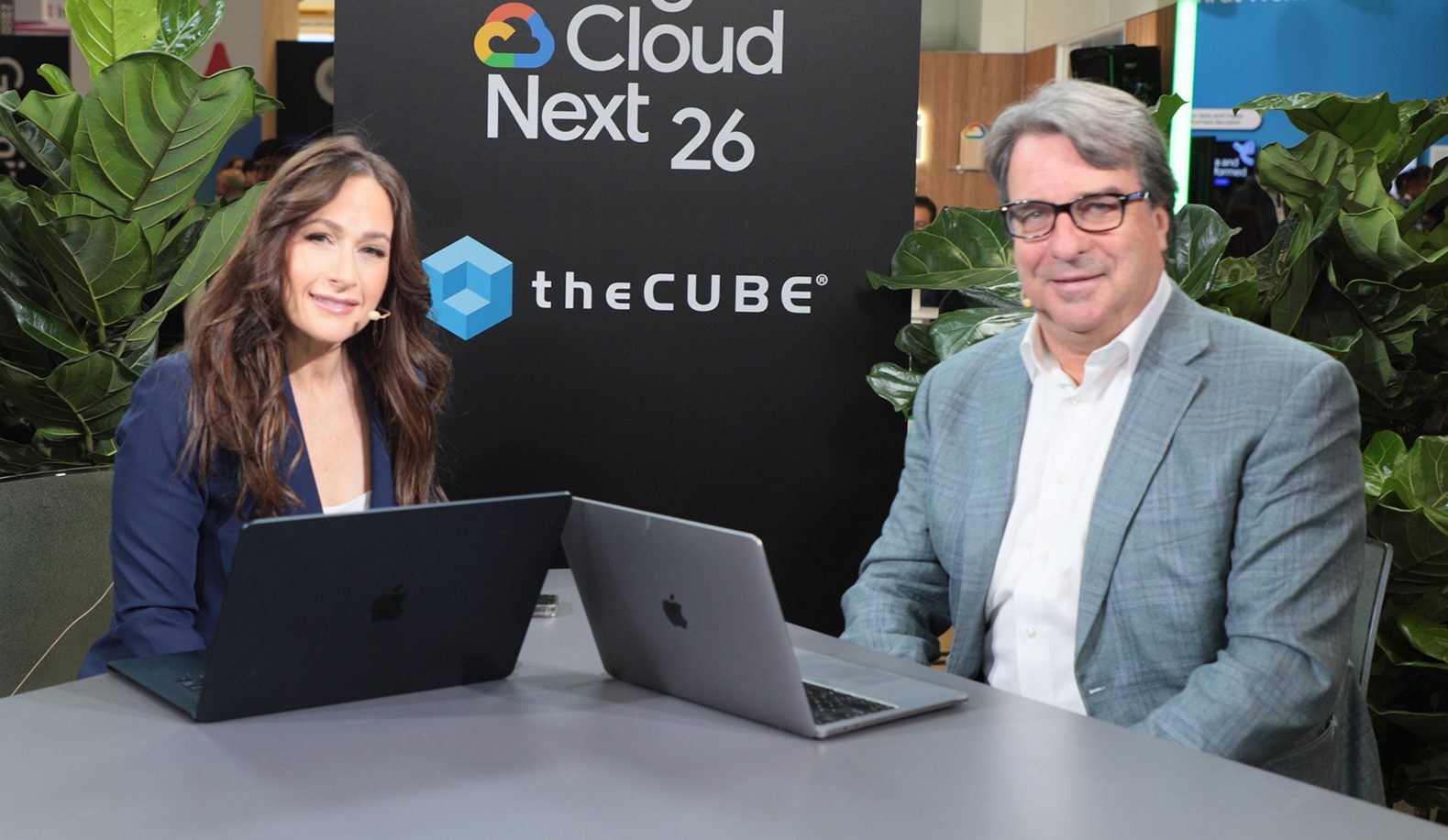
Google LLC came into Google Cloud Next 2026 with a clearer positioning for Gemini: less as a standalone model and more as a connective layer. The emphasis is shifting toward how it ties together data systems, applications and the agent runtimes enterprises are starting to move into production, according to John Furrier (pictured, right), co-founder and chief executive officer of SiliconANGLE Media Inc.
“The control plane is that horizontal layer that moves data around and it connects to all the systems,” Furrier said. “It’s like the main nerve center. It’s like the backbone, the spine of all the systems — and whoever owns the control plane kind of wins.”
Furrier and co-host Alison Kosik (left) conducted a day one keynote analysis at Google Cloud Next, during an exclusive broadcast on theCUBE, SiliconANGLE Media’s livestreaming studio. They discussed Google’s competitive positioning and what enterprise AI adoption really requires. (* Disclosure below.)
No hyperscaler has fully established control over enterprise AI or the agent control plane — a gap that this year’s conference is focused on addressing. Multi-agent usage on Databricks’ platform grew 327% in just four months, a signal that production deployment has already crossed an inflection point, Furrier emphasized. That growth underscores the stakes for Google: As agent orchestration becomes the enterprise default, the platform that routes those workflows wins.
“The AI-native applications are real and you’re starting to see coding become almost done by agents 100%,” he said. “I saw Databricks set a stat that said they’ve crossed over — less humans coding than machines. That’s a major milestone.”
The model leaderboard, meanwhile, may be the wrong scoreboard entirely. Enterprise value is being created at the systems layer — in the infrastructure, data pipelines and agent runtimes that models run on — not in model capability alone, Furrier noted. That’s the layer Google is targeting with Gemini, positioning itself as the platform agents depend on to function.
“As I pointed out … all the enterprises and all the real action is not what the models [are,] that’s what the models are interfacing with,” he said. “Those are the systems.”
But a strong product won’t be enough on its own to navigate the contested market. Agentic AI is restructuring the enterprise from the inside out, with CFOs becoming operators and people officers managing agent workforces, Furrier explained. Consequently, the unit of value inside these organizations is shifting.
“You have a new kind of currency going on with tokens and that’s changing the organizational structures,” he said. “That’s changing how people are organizing their teams. That’s changing how people work. It’s a complete reset in the corporate world.”
Here’s the complete video interview, part of SiliconANGLE’s and theCUBE’s coverage of Google Cloud Next:
(* Disclosure: TheCUBE is a paid media partner for Google Cloud Next. Sponsors of theCUBE’s event coverage do not have editorial control over content on theCUBE or SiliconANGLE.)
Support our mission to keep content open and free by engaging with theCUBE community. Join theCUBE’s Alumni Trust Network, where technology leaders connect, share intelligence and create opportunities.
Founded by tech visionaries John Furrier and Dave Vellante, SiliconANGLE Media has built a dynamic ecosystem of industry-leading digital media brands that reach 15+ million elite tech professionals. Our new proprietary theCUBE AI Video Cloud is breaking ground in audience interaction, leveraging theCUBEai.com neural network to help technology companies make data-driven decisions and stay at the forefront of industry conversations.