 SECURITY
SECURITY
SECURITY






SECURITY

The post-quantum security transition is emerging as one of the most pressing challenges facing enterprise and government infrastructure. In “harvest now, decrypt later” attacks, adversaries steal encrypted data today to unlock it once quantum computers mature.
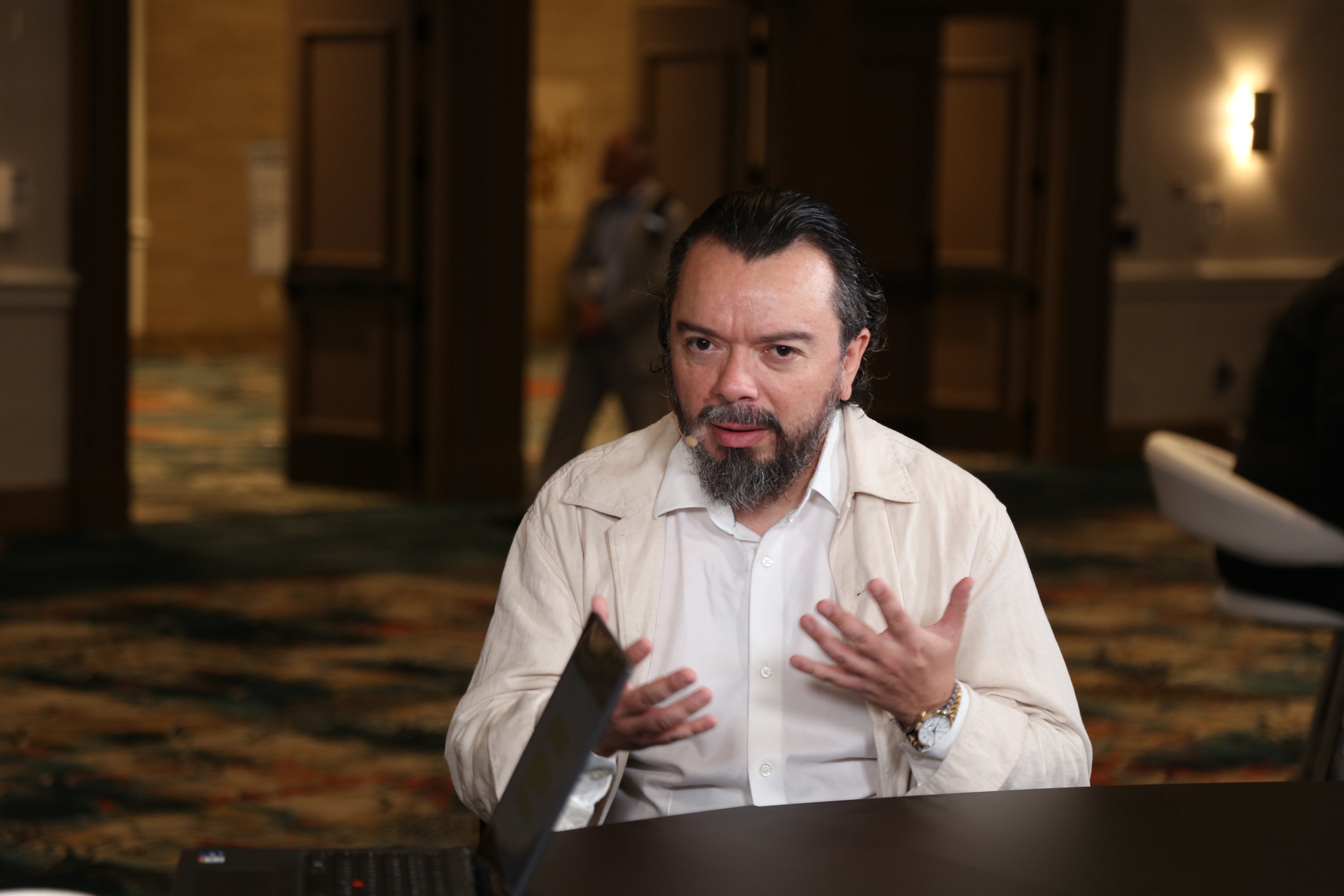
Estimates for when quantum machines become a credible threat have steadily compressed from mid-century toward the end of this decade, and regulators are responding. In June, a U.S. executive order set new federal post-quantum deadlines for the most sensitive systems. Yet the underlying issue is not quantum-specific, according to José R. Rosas-Bustos (pictured), chief executive officer of EigenQ Inc.
“The fact is that this is not a quantum problem. This is a crypto agility problem,” Rosas-Bustos said. “This is a problem that we have been facing as an industry for a long time. If we had already implemented countermeasures for crypto agility in the past, we would not be facing the issues that we’re facing today.”
Rosas-Bustos spoke with theCUBE Research’s Krista Case at Black Hat USA, during an exclusive broadcast on theCUBE, SiliconANGLE Media’s livestreaming studio. They discussed post-quantum security readiness, crypto agility and how leaders can protect existing infrastructure investments while preparing for a quantum future. (* Disclosure below.)
Compute infrastructure must be protected first, and enterprises can’t simply replace their entire server fleet to prepare for post-quantum threats. EigenQ, an applied quantum technology company, has embedded quantum-resistant protection at the hardware level, including new capabilities designed to prepare deployed Intel Xeon systems for CNSA 2.0-aligned migration. The company also launched an OEM server with Hewlett Packard Enterprise Co. and Intel Corp., though broad market options remain scarce, Rosas-Bustos noted.
“We launched on June 17th, the first compute infrastructure server that has quantum-resistant technology integrated by the manufacturer along with HPE and Intel, but there is not a wide offering,” he said. “Even if you want to try to do the low-hanging fruit, actually you don’t have so many options.”
Post-quantum security timelines have moved forward from the early 2030s, with some critical sectors now looking toward 2027, according to Rosas-Bustos. That urgency, he argued, exposes the weakness of treating each new cipher as a fix.
“If you are recommending a solution that is only upgrading a cipher, you are just putting a Band-Aid on an underlying issue,” he said. “Upgrading a cipher is not enough. Implementing crypto agility, on the other hand, creates a skill that provides the organization a strength that is long-lasting.”
Here’s the complete video interview, part of SiliconANGLE’s and theCUBE’s coverage of Black Hat USA 2026:
(* Disclosure: EigenQ sponsored this segment of theCUBE. Neither EigenQ nor other sponsors have editorial control over content on theCUBE or SiliconANGLE.)