 AI
AI
AI
AI


AI

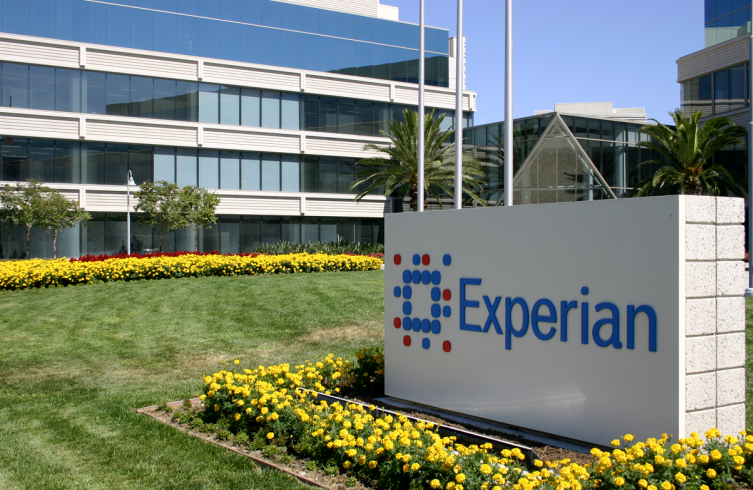
Having launched an artificial intelligence-based virtual assistant in the spring, Experian plc is driving AI deeper into its operations with a commercial agent-based platform designed to bring its risk, identity and decision-making capabilities into enterprise workflows.
The Agent Operating System aims to provide customers with high-quality information more quickly, increase the number of clients the company can serve, and bring new customers into the fold.
Agent OS is a platform capability supporting commercial products, rather than a standalone product, Mehta said. For example, a customer could incorporate the credit rating giant’s model risk management capabilities into an existing governance, risk and compliance system. Other immediate applications include employee onboarding and verification.
The deployment builds on years of experimentation with machine learning and other forms of AI. Experian believes the technology can process information faster and identify patterns that earlier approaches missed, potentially helping lenders assess consumers with little or no credit history, said Vijay Mehta, Experian’s new chief AI officer. They also help the computer fight fraudsters, nearly all of whom now use advanced AI themselves.
“We’re not in the proof-of-concept phase anymore; we’re in the enterprise scaling phase,” Mehta said. “That’s very different than someone just using ChatGPT to get a little bit of extra efficiency.”
ServiceNow Inc. is the first partner to deploy the new capabilities. Its agents will connect to Experian’s Ascend analytics and development platform, enabling customers to integrate trusted data, decisioning and governance capabilities into existing enterprise workflows.
ServiceNow gives Experian access to a wide range of business and technology processes, allowing it to sell additional services to existing customers and reach new ones, Mehta said.
Early adopters are primarily using Experian’s model risk management service. Initial target customers include insurers, financial services providers and lenders, but any organization using ServiceNow is a prospect. Additional products are planned.
Experian is going all in on agents in the wake of a July hacking incident in which agents from OpenAI Group PBC broke into servers at Hugging Face Inc., stole files and customer information, and bypassed guardrails meant to prevent them from accessing the Internet.
Operating in a highly regulated industry, Experian was well aware of the risks when it built the service and has taken pains to ensure that agents can’t overstep their bounds, Mehta said.
A common gateway provides controls over agent traffic, including model selection, prompts, data leaving the environment and policy enforcement. Identity and access management is tightly controlled, with logging and monitoring also forming part of that control system.
Experian’s model checks agent activity against applicable regulatory requirements and uses adversarial testing, in which one agent tests another’s actions for compliance with rules and policies.
“No agent can escape into the wilderness without us knowing and without us being able to kill it,” Mehta said.
Access permissions follow a familiar principle: Give an agent only the authority required by its task. “We grant the minimum access that an agent needs to fulfill its job, much like a new employee,” Mehta said.
Some customer service and back-office processes can operate autonomously while regulated decisions retain human involvement, Mehta said. Humans are also included in major yes-or-no decisions involving regulated outcomes. “The last step is still deterministic and human-in-the-loop,” he said.
The company is making its agentic capabilities accessible through application programming interfaces and a Model Context Protocol server that connects AI applications to tools and data. It can operate with a user interface or be “headless” behind the scenes of another application.
The Agent OS can switch underlying models according to the workload. Mehta said many financial services tasks can run on simpler, less expensive models rather than costly frontier models. The service uses a mix of commercial, open-weight and open-source options.
Experian builds agents with a range of commercial tools, including Amazon Web Services Inc.’s Bedrock, as well as its own technology. It maintains a registry and repository to make agents, skills and content reusable across an organization employing more than 1,000 data scientists.
The supporting architecture includes a semantic layer that provides common definitions for data across Experian’s portfolios. Knowledge graphs connect that information so agents can use it consistently. The global company links distributed data assets rather than moving everything into a single central repository.
Mehta said the combination of consistent data definitions, controls and metering provides building blocks that can survive changes in models and tools.
Testing includes sandbox environments, synthetic data and other test sources, followed by monitoring of deployed agents. Linking model activity to underlying data helps support explainability and validation, Mehta said. Accountability follows Experian’s federated structure, with regional support teams and central technology and platform teams sharing operational responsibilities. Mehta’s group builds capabilities that business units can use in products for external customers.
Experian sees AI as the future of its business and is making sure everyone comes along for the ride. There’s mandatory employee training on responsible AI use, prompting and connecting data to tools. Mehta said the goal is to free employees for other work but declined to discuss specific job impacts.
“When e-commerce started, the initial reaction was, ‘I’m afraid of it,’” he said. “Now we’re all comfortable sending and exchanging goods and services online. I think we’ll see the same thing happen with AI. You’ll have more specialists, so you have to upskill and train your talent to do other jobs.”
The challenge now is to turn that shared foundation into repeatable deployments with measurable results. Experian is positioning its data, controls and reusable infrastructure as the basis for that expansion, while the early ServiceNow rollout will test how readily those capabilities translate into broader enterprise workflows.
Support our mission to keep content open and free by engaging with theCUBE community. Join theCUBE’s Alumni Trust Network, where technology leaders connect, share intelligence and create opportunities.
Founded by tech visionaries John Furrier and Dave Vellante, SiliconANGLE Media has built a dynamic ecosystem of industry-leading digital media brands that reach 15+ million elite tech professionals. Our new proprietary theCUBE AI Video Cloud is breaking ground in audience interaction, leveraging theCUBEai.com neural network to help technology companies make data-driven decisions and stay at the forefront of industry conversations.