 CLOUD
CLOUD
CLOUD
CLOUD



CLOUD

Private cloud modernization is shifting from a virtualization refresh into a broader effort to build an operating foundation for production artificial intelligence. As enterprises move models and autonomous agents into core workflows, infrastructure decisions must account for cost, security, governance and where increasingly diverse workloads should run.
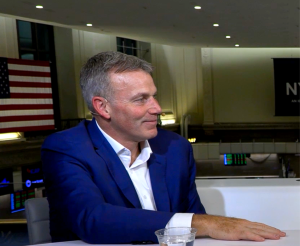
At this year’s VMware Explore, private cloud modernization became the central conversation. In an opening analysis, theCUBE Research’s Christophe Bertrand predicted that the event would connect its individual announcements and discussions to a broader enterprise transition.
“We’re going to see that VMware technology is front and center when it comes to AI transformation,” he said. “And we’re going to see that the topics around agentic AI, around economics, around how to really evolve into this new world, both for partners supporting customers and end users, is going to become a lot clearer.”
Bertrand offered that forecast alongside co-host Alison Kosik during theCUBE’s coverage of VMware Explore. They also talked with industry experts about how private cloud modernization is unfolding through production-ready infrastructure, operational security and partner-led deployment choices. (* Disclosure below.)
Here’s the complete video analysis with Christophe Bertrand and Alison Kosik:
Production AI requires an operating environment that can accommodate new workload demands without abandoning the control enterprises expect from their own infrastructure. Broadcom Inc. has positioned VMware Cloud Foundation as that common foundation, bringing cloud-like development and deployment capabilities together with private infrastructure, according to Krish Prasad, senior vice president and general manager of the VMware Cloud Foundation Division at Broadcom.
“We have taken the goodness that people see in the public cloud, which is the developer experience, the agility, and we have combined that with the things people like in the private infrastructure, which is security, which is cost controls, the resiliency,” Prasad told theCUBE. “The combination is what VCF is all about, and that’s why customers are very interested in deploying it.”
A common platform, however, must also preserve flexibility as model requirements, accelerators and deployment choices change. Enterprises need to make software architecture central to their planning so they can use local or cloud models and avoid tying future options to premature infrastructure purchases, according to Chris Wolf, global head of AI and advanced services, VMware Cloud Foundation Division, at Broadcom.
“‘Buy your hardware first, figure out the software later’ — no, that’s a horrible idea, because you have to make sure that your software choices are compatible with the hardware you bought,” he said. “Software is what’s giving you the ability to have autonomy in terms of the accelerators you use, to have the flexibility to ensure that I can use cloud models when I need to [or] use local models when I need to.”
Here’s theCUBE’s complete video interview with Chris Wolf:
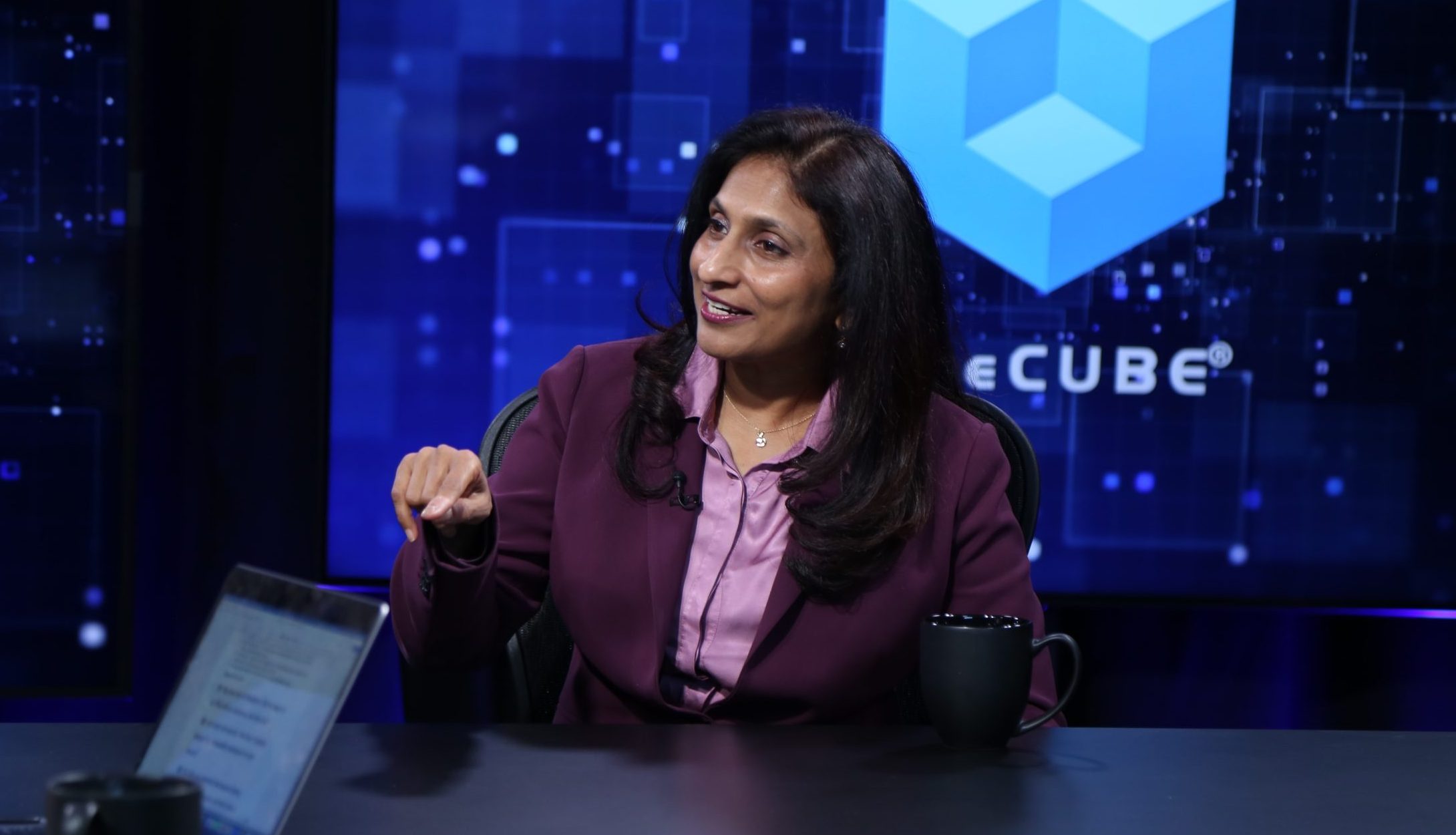
As private cloud modernization moves into production, a flexible infrastructure foundation requires controls designed for autonomous software. Agentic applications can write code, process claims and execute business workflows, making platform-level governance essential, according to Purnima Padmanabhan (pictured), general manager of the Tanzu Division at Broadcom. Her work on Tanzu Platform Agent Foundations focuses on giving agents carefully bounded access to enterprise resources.
“The right way to secure an agent is to put it in a black box and give it nothing, but then you won’t get any intelligence,” she told theCUBE. “I want to give it on my terms in a curated way with identity, with [role-based access control], with credential management. Being able to connect it to curated data sets all on a single platform means I can move faster.”
Those controls must extend beyond the runtime as autonomous actors make rapid calls across enterprise systems. Broadcom’s infrastructure security approach combines network visibility with signed machine identities, policy enforcement and inspection of application programming interface traffic. It also identifies agentic AI components, including models and Model Context Protocol servers, and flags unauthorized activity, according to Umesh Mahajan, vice president and general manager of the Application Networking and Security Division at Broadcom, and Clayton Donley, vice president and general manager of the Identity Management Security Division at Broadcom.
“We’ve had 50 years of figuring out how to manage your employees or customers or other people accessing your computer systems,” Donley said. “We’ve had about 15 minutes to figure out how to do it for AI agents. The problem is that we’re giving these agents more and more autonomy, more ability to do things on their own without those controls.”
Operational flexibility also extends to where existing applications run. Amazon Elastic VMware Service gives customers direct control of VMware Cloud Foundation on Amazon Web Services Inc. infrastructure while addressing data center exits, disaster recovery needs and hardware constraints, according to Andy Reedy, senior manager of EC2 product management at AWS.
“It’s really a menu of options, and it’s almost on an application-by-application basis as to what works best for that workload,” he told theCUBE. “For VMware workloads in particular, what we’re seeing is you don’t necessarily have to refactor these applications or change these workloads. It is possible to get the benefits and the advantages of the cloud infrastructure without having to change the applications themselves.”
Here’s the complete video interview with Purnima Padmanabhan:
Private cloud modernization increasingly depends on partners that can turn an integrated platform into a validated, deployable system. Broadcom Inc. and Advanced Micro Devices Inc. are combining platform automation with validated hardware configurations so enterprises can add AI alongside existing traditional applications and containerized workloads, according to Raghu Nambiar, corporate vice president of software and solutions at AMD, and Prashanth Shenoy, chief marketing officer and vice president of the VMware Cloud Foundation Division at Broadcom.
“A lot of our customers are looking at private cloud in an on-premises environment to deploy their production AI workloads at scale,” Shenoy said. “But as they’ve been trying to do this, it’s been a very complex process from what we call the metal to model. Setting up GPUs, servers, networking, Kubernetes, containers, AI software stack, testing, validating which models to use. It’s an extremely manual and complex process.”
That partner role also becomes economic as private cloud modernization expands to memory-intensive AI workloads amid rising dynamic random access memory costs. Broadcom and Lenovo Group Ltd. have validated memory tiering in VMware Cloud Foundation 9.1 on Lenovo ThinkAgile VX V4 systems. The configurations can double virtual machine density while retaining more than 90% of performance, according to Stuart McRae, executive director of Lenovo’s Enterprise Storage, Software and Solutions Offering Group, and Mark Chuang, head of product marketing, VMware Cloud Foundation, at Broadcom.
“I was talking to a customer here at Explore, and they did their calculations, and they said they can save up to $70,000 per server if they configured it this way versus if they go pure DRAM,” Chuang told theCUBE. “It’s just crazy nowadays; a stick of memory is like the cost of a car.”
Broadcom and Cisco Systems Inc. extend that model by sizing AI factory infrastructure to the workload rather than offering one fixed configuration. Their validated design combines VMware Cloud Foundation with Cisco Unified Computing System infrastructure, including Cisco AI POD configurations, for environments ranging from edge inference to demanding data center workloads. The approach matches compute to requirements such as latency and concurrent users, according to Sabina Anja, chief technologist in Broadcom’s VMware Cloud Foundation Division, and Jeff Nichols, technical leader at Cisco.
“Really, the philosophy behind the AI factory is that the end user doesn’t have to be in there, and the IT department doesn’t have to be a perpetual AI infrastructure architect or builder,” Nichols said. “They become AI consumers. The AI factories are shipped on-site, fully built, fully configured and, with VCF on top, they’re ready to go on day one and two.”
Here’s the complete video interview with Raghu Nambiar and Prashanth Shenoy:
To watch more of theCUBE’s coverage of VMware Explore, here’s our complete video playlist:
(* Disclosure: TheCUBE is a paid media partner for VMware Explore. Sponsors of theCUBE’s event coverage do not have editorial control over content on theCUBE or SiliconANGLE.)
Support our mission to keep content open and free by engaging with theCUBE community. Join theCUBE’s Alumni Trust Network, where technology leaders connect, share intelligence and create opportunities.
Founded by tech visionaries John Furrier and Dave Vellante, SiliconANGLE Media has built a dynamic ecosystem of industry-leading digital media brands that reach 15+ million elite tech professionals. Our new proprietary theCUBE AI Video Cloud is breaking ground in audience interaction, leveraging theCUBEai.com neural network to help technology companies make data-driven decisions and stay at the forefront of industry conversations.