 INFRA
INFRA


INFRA

Hammerspace Inc., which provides high-speed access to distributed data, is expanding beyond its traditional role as a software provider to offer complete, integrated data systems for artificial intelligence workloads, adding its own high-performance flash storage hardware and new data intelligence capabilities to its existing data orchestration platform.
The company said the Hammerspace Data System combines data discovery, management, orchestration and storage into a single offering designed to simplify the infrastructure needed to support AI training and inference. Customers can purchase fully configured systems with hardware, software and support or continue deploying Hammerspace software on existing infrastructure.
The announcement marks a significant expansion of Hammerspace’s business model as enterprises increasingly seek turnkey infrastructure for AI applications rather than assembling systems from multiple vendors.
“We also see plenty of opportunities, particularly in the AI space, where they just want one [stock-keeping unit],” said Floyd Christofferson, vice president of product marketing at Hammerspace. “They want a system, end-to-end, hardware, software, fully integrated and supported.”
While software companies have historically had limited success expanding into hardware, Hammerspace’s approach is more than just a bundled, said Mark Nossokoff, research directory at Hyperior Research Holdings LLC.
“Hammerspace is working with distribution partners to develop and fulfill a branded system optimized for their software stack, maintaining their software business model,” he said in e-mailed comments. “This can be advantageous when the hardware is based on an emerging standards-based platform, such as the Open Flash Platform, until the hardware platform becomes a standard offering from multiple suppliers.”
Hammerspace has traditionally specialized in providing unified access to data distributed across different storage systems, data centers and clouds. Its software creates a global namespace that allows applications to locate and access files regardless of their physical location, eliminating the need for large-scale data migrations.
In March, the company introduced an AI-focused data platform that automates the discovery and delivery of enterprise data directly to graphics processing units. The technology builds on Hammerspace’s parallel Network File System, which uses enhancements to Linux to accelerate data access without requiring proprietary client software.
The new offering extends those capabilities with integrated hardware and data intelligence.
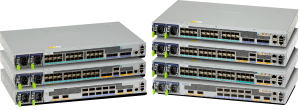
A major addition is the Hammerspace Open Flash Platform, a high-density storage system built around data processing units rather than conventional storage servers. The architecture integrates processing, networking and solid-state drives into compact hardware designed to reduce power consumption, cooling requirements and rack space.
Hammerspace said the platform achieves throughput of 350 gigabytes per second per rack unit. Broader performance testing is still underway.
The storage complements the company’s existing Tier 0 technology, which aggregates local Non-Volatile Memory Express storage across GPU servers into a shared resource. That capacity can be used to store key-value caches for AI inference, allowing applications to reuse previously computed context rather than repeatedly processing the same information.
“The flash subsystem employs a unique design and touts some impressive performance and storage density metrics,” said Hyperion’s Nossokoff. “More compelling will be results based on end user workloads, including relative improvements and comparisons with respect to performance, performance/power, and cost/performance metrics, among others.”
The company said customers can combine tier 0 storage, the new flash platform and lower-cost disk or object storage within a single namespace. The new hardware is optional. Customers can continue using third-party storage systems, with Hammerspace handling data access and orchestration across the infrastructure.
Another addition is a data intelligence module that extends Hammerspace’s existing metadata management capabilities.
The software can catalog distributed files, index detailed metadata and scan content to identify sensitive information, including personally identifiable information and regulated data. Users can search the catalog using natural language and translate requests into automated data management policies.
For example, an administrator could identify files containing personal information and establish policies preventing that material from entering an AI training pipeline.
Christofferson said the new capabilities extend beyond the file attributes traditionally used to manage storage.
The module also supports integration with existing enterprise catalogs and governance tools through application programming interfaces, avoiding the need to replace established systems.
For current Hammerspace customers, the intelligence capabilities will be added through a software upgrade. The company said existing deployments won’t need to change their underlying architecture.
Hammerspace will assemble, install and support systems using configurable server hardware, metadata nodes and storage components based on customer requirements. The company will continue basing software pricing on the capacity of data under management. Hardware configurations will be priced individually, with no standardized public price list.
Senior Product Marketing Director Eric Bassier said the company doesn’t intend to collect hardware revenue or impose a hardware markup. Instead, components will flow through suppliers and distribution partners, while Hammerspace provides integrated deployment and support.
The strategy addresses the struggles customers often encounter with the logistics of acquiring servers, storage and other components, said Molly Presley, senior vice president of global marketing.
“They’re looking to their vendors to simplify getting things deployed to start with,” he said. “As long as Hammerspace doesn’t dilute their resources and continues to prioritize their investments on addressing the needs of the growing scientific and engineering communities adopting AI into their advanced technical workflows, they appear well poised for continued momentum.”
Nossokoff said Hammerspace’s distributed data architecture using a global namespace is well suited to emerging AI workload requirements. “Hammerspace has been building out their Data Intelligence software stack to address the requirements of the AI pipeline,” he said. The expansion follows a $100 million funding round in April 2025 that supported Hammerspace’s international expansion. The company says its customers include Meta Platforms Inc. and the U.S. Department of Defense.
Support our mission to keep content open and free by engaging with theCUBE community. Join theCUBE’s Alumni Trust Network, where technology leaders connect, share intelligence and create opportunities.
Founded by tech visionaries John Furrier and Dave Vellante, SiliconANGLE Media has built a dynamic ecosystem of industry-leading digital media brands that reach 15+ million elite tech professionals. Our new proprietary theCUBE AI Video Cloud is breaking ground in audience interaction, leveraging theCUBEai.com neural network to help technology companies make data-driven decisions and stay at the forefront of industry conversations.